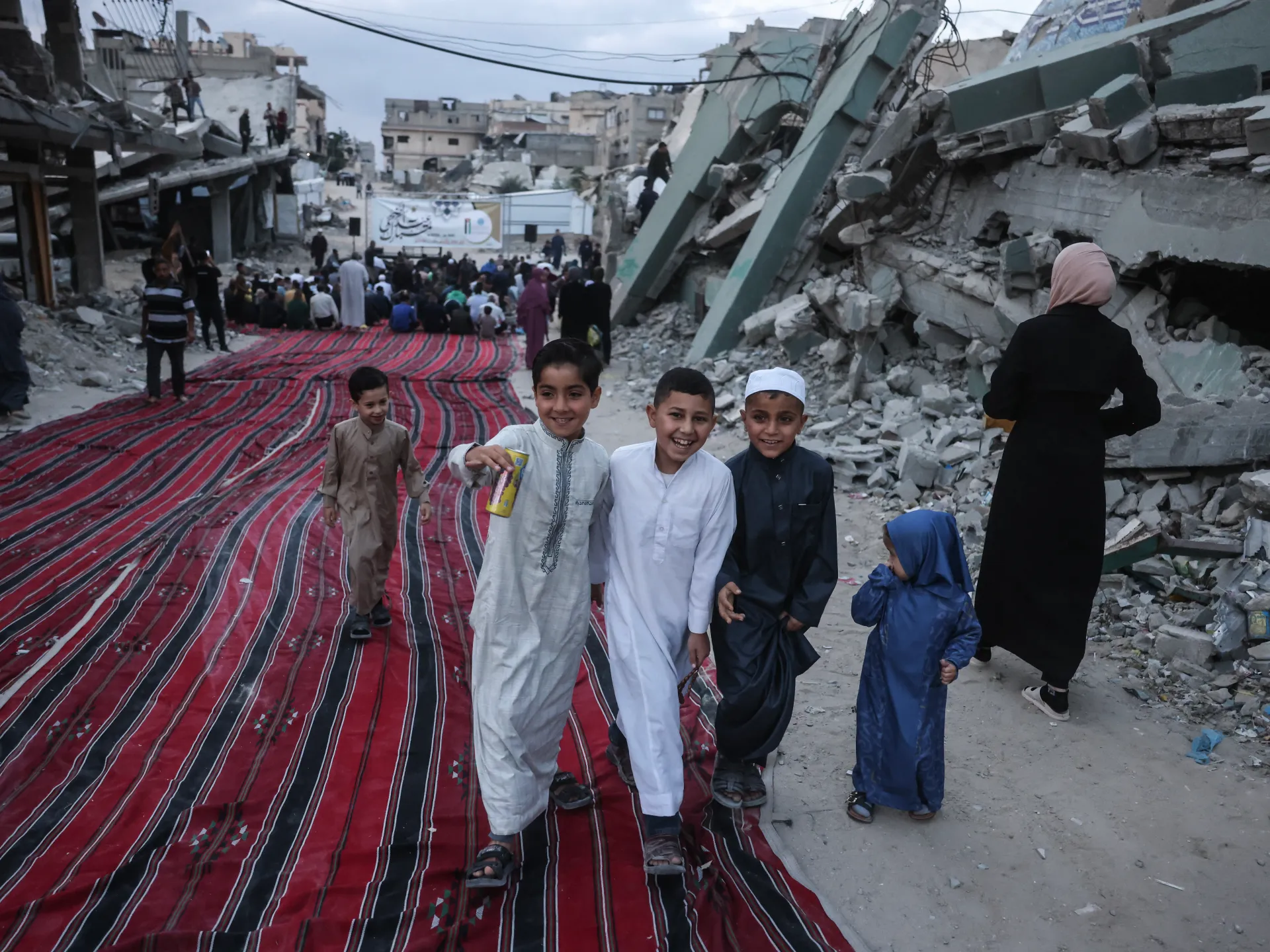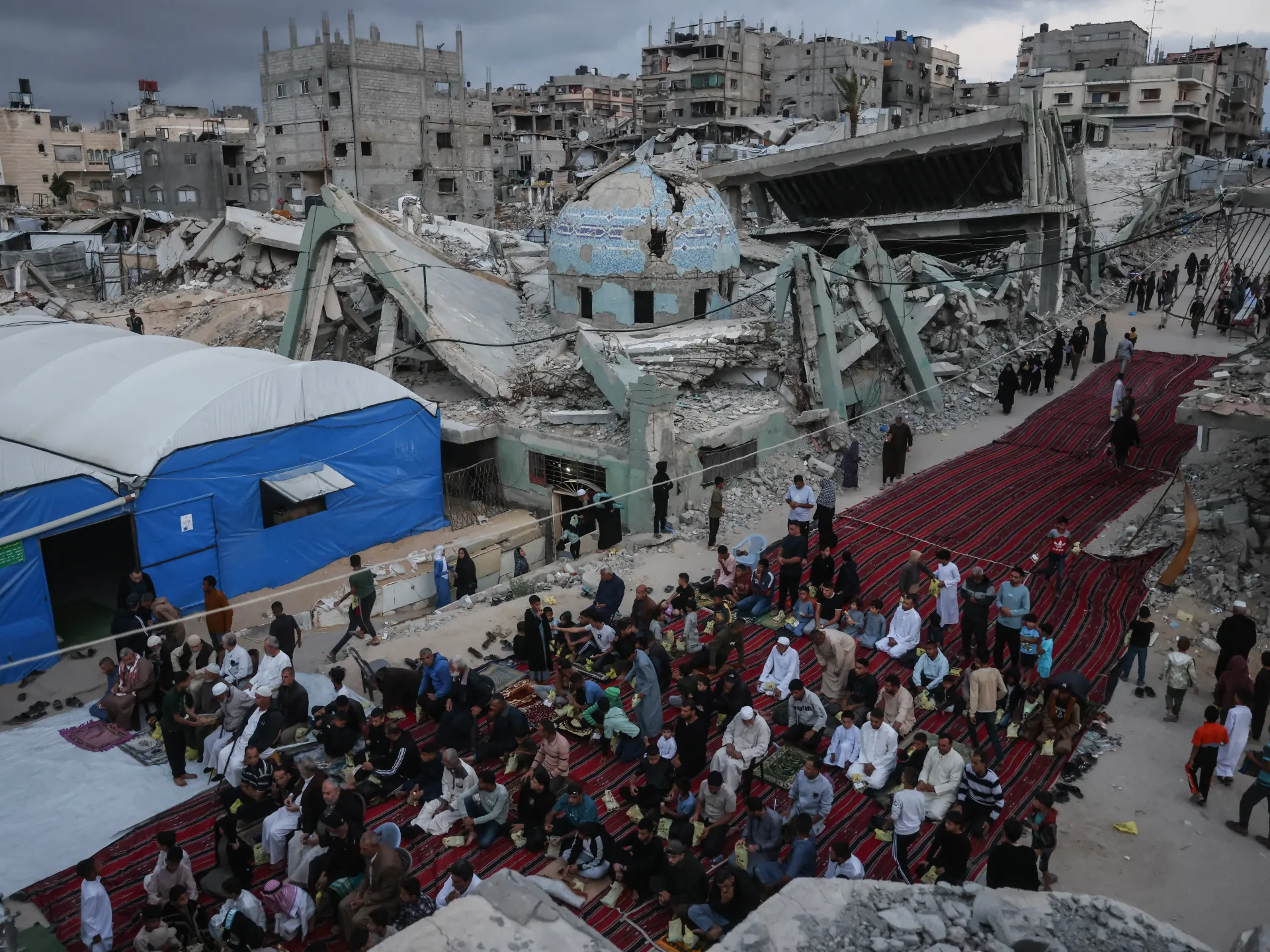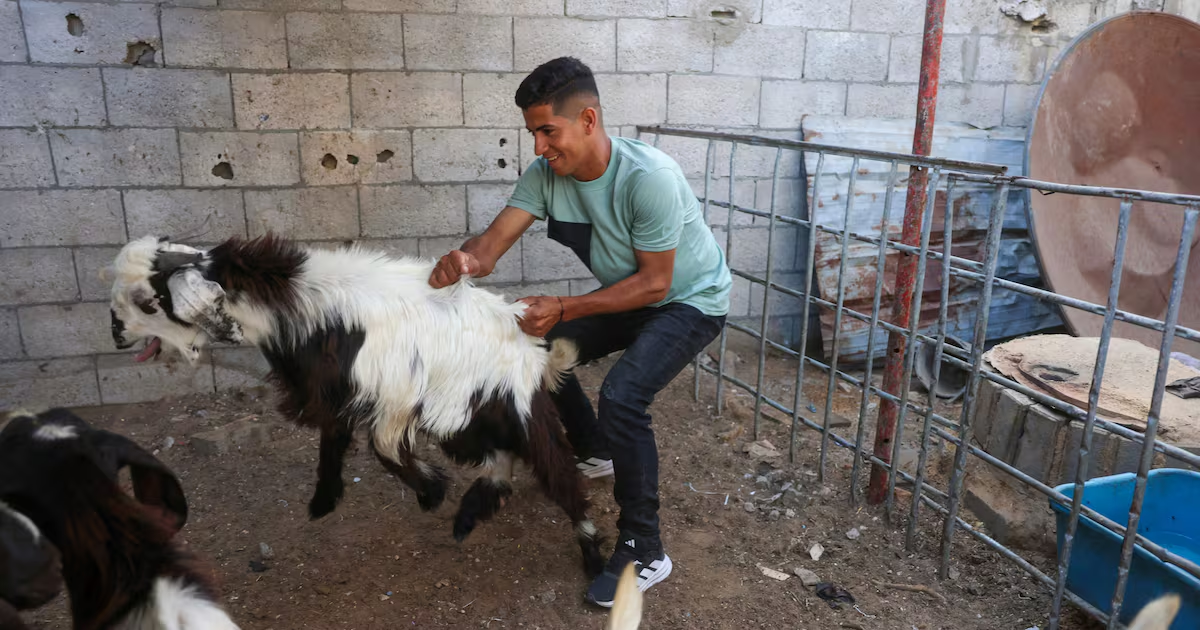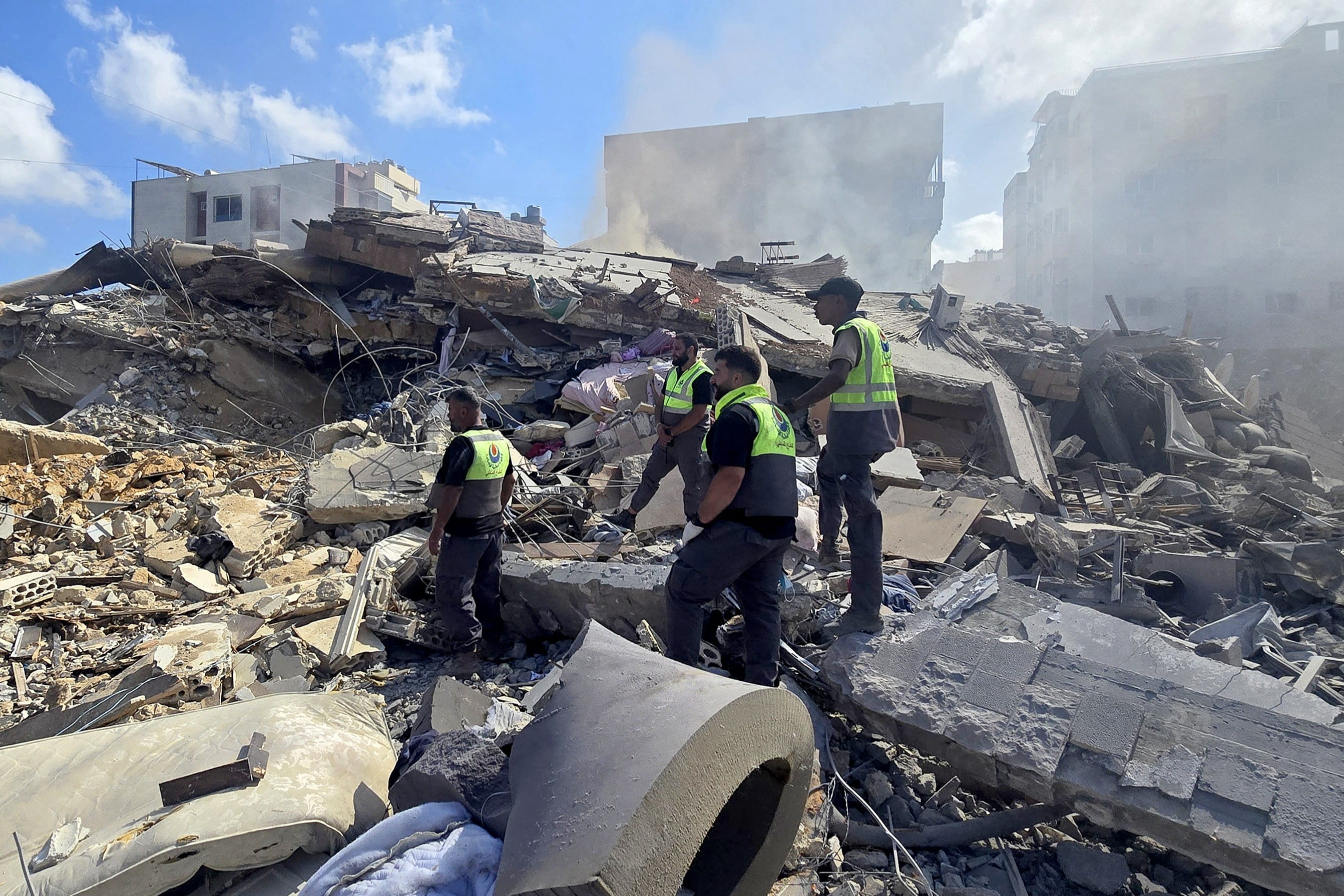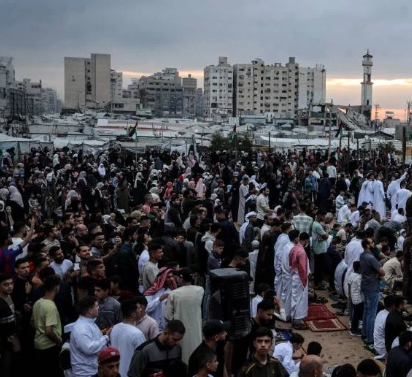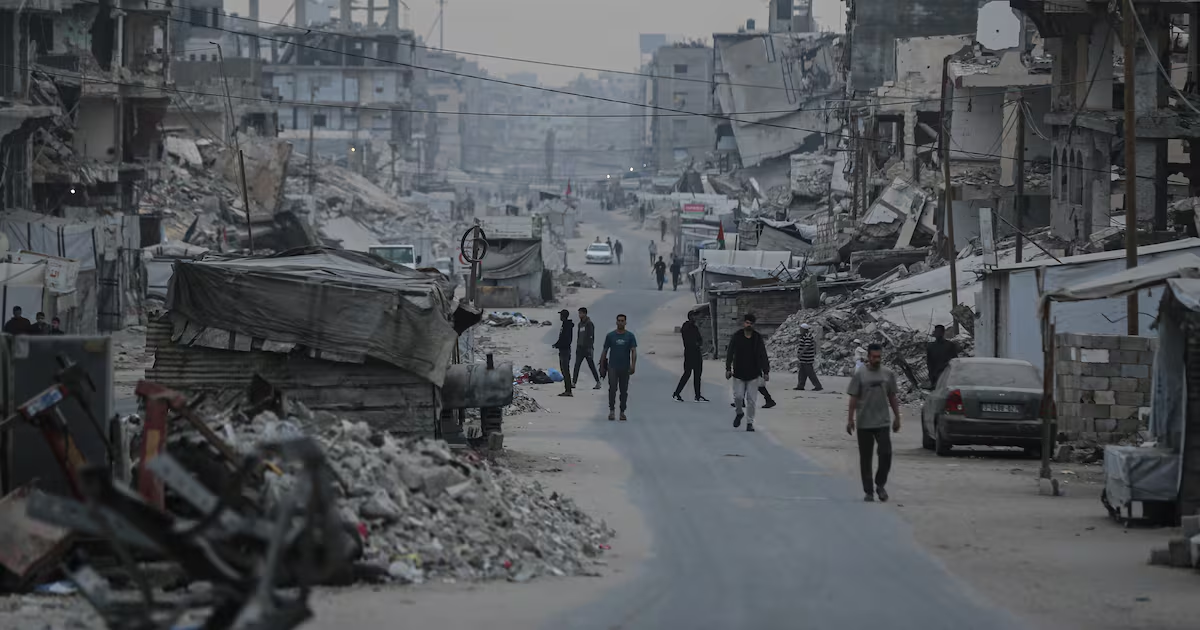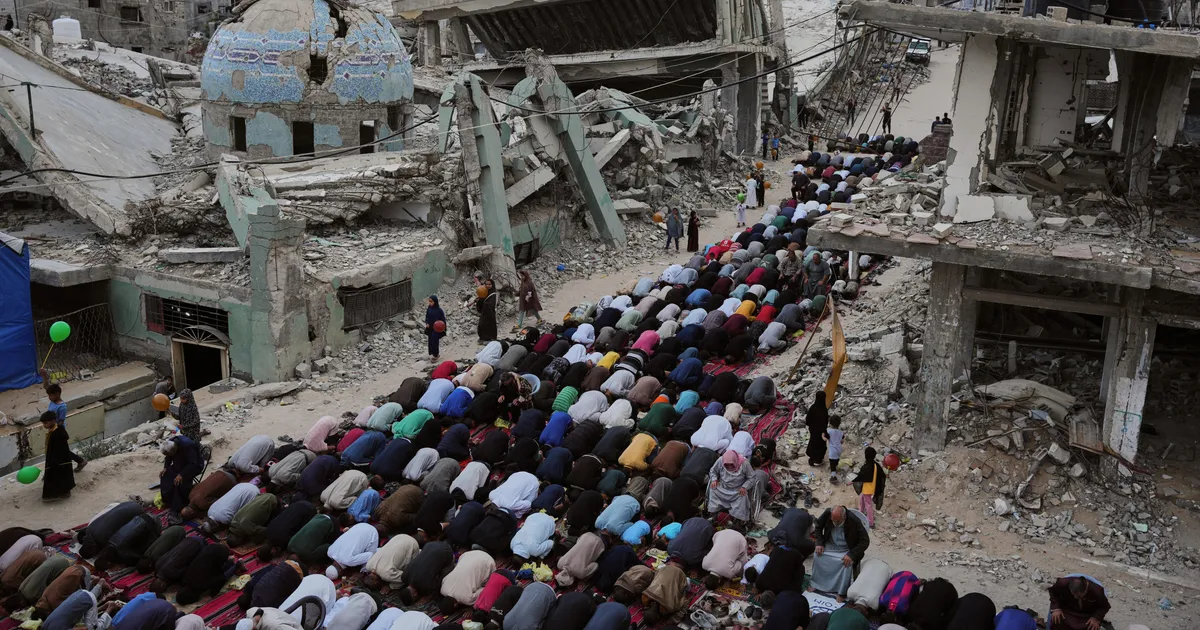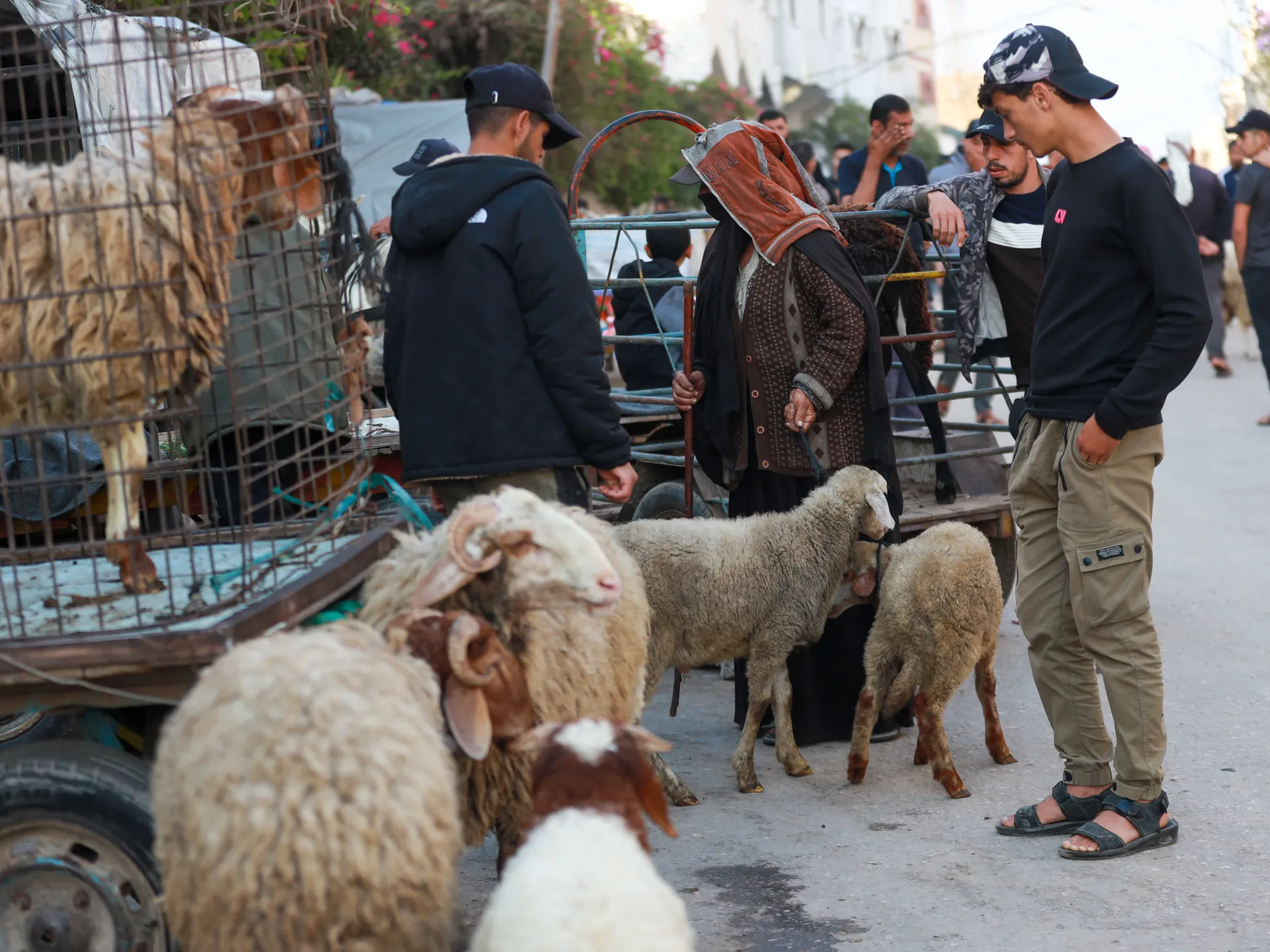
Gaza City — In her tent, where she has spent much of Israel’s genocidal war on Gaza, 68-year-old I’tidal Hamdan prepares for her third consecutive Eid al-Adha away from home.Hamdan imagined this year would be different. She had hoped to fulfil a lifelong dream of performing Hajj, one of the five obligatory pillars of Islam, with her husband. But she has no chance of leaving Gaza, and her husband, 67, was killed in an Israeli strike last year.“Maybe I’ve been dreaming about it for more than 10 years,” she told Al Jazeera. “My husband wanted Hajj so much … and he was killed before he could fulfil his wish.”Israeli restrictions on exit points in Gaza mean that for a third year, there are no pilgrims departing for Hajj – the pilgrimage coinciding with Eid al-Adha.Many displaced families are unable to return to their homes, if the buildings are still standing, and decorate them with Eid ornaments due to Israeli restrictions on movement.The Israeli siege and war on Gaza mean that few cattle or sheep survived, so the custom of animal sacrifice – another important feature of the festival – will be marked by few families this year.Before the war, Hamdan’s name, alongside her husband’s, appeared on the 2024 Hajj list, with strict allotments on the number of pilgrims allowed from each country due to high demand among the world’s 2 billion Muslims. But the Israel’s genocidal war on Gaza has indefinitely postponed this once-in-a-lifetime event for Hamdan.From the first days of the war, Hamdan, a mother of 11, and her family were forced to flee their home when Beit Hanoon in northern Gaza came under heavy Israeli bombardments.In addition to losing her husband, two of her sons and six of her grandchildren were also killed in separate Israeli strikes during the war.Despite everything, Hamdan clings to the hope that she will eventually end a long journey of grief and pain by performing Hajj, but not this year.Eid atmosphere has completely vanished in Gaza amid harsh conditions, as people have been living in tents and displacement for more than two and a half years [Abdelhakim Abu Riash/ Al Jazeera]Eid without sacrificesEmad Suhweil, 43, a displaced father of five from Beit Lahiya in northern Gaza, says that the absence of livestock in the markets means that Eid al-Adha has lost another component.“Every year we used to sacrifice … we would slaughter, be happy, eat together, and distribute to the poor, those were beautiful days” he told Al Jazeera. “I used to buy a sheep or share in a calf.”The sacrifice traditionally ends with a feast that brings the whole family together around one table, creating a sense of joy and warmth. But amid the loss and the hardships, feasting is far from the minds of many people in Gaza this year.“What is Eid al-Adha without sacrifices or Hajj. Today, people don’t even think about sacrifices … they can’t even afford two kilos of vegetables,” he adds. “We are all suffering to secure the most basic needs due to soaring prices.”Although there are limited number of livestock in Gaza, buying an animal is far beyond the financial abilities of most families, says Suhwell.“The sheep that used to cost around 400–500 Jordanian dinars ($560–$700), or about 2,000 shekels, before the war now costs around 16,000–17,000 shekels ($4,400–$4,700) for a 50-kilogramme [110-pound] animal, and it is very weak,” he adds in astonishment.There are reports that an animal that might typically cost $400 to $600 in previous years might now sell for as much as $6,000.Fawzi Hamdan last year he replaced the sacrifice with a can of canned meat [Abdelhakim Abu Riash/ Al Jazeera]‘We are besieged’Since the war began in October 2023, Gaza’s livestock sector has suffered utter devastation. More than 90 percent of livestock farms have been destroyed or damaged due to Israeli attacks and restrictions on the movement of goods essential for the farming sector, according to Gaza’s Chamber of Commerce and Industry.Israel has also prevented the entry of live animals into the enclave, which might have relieved some of the pressures caused by domestic shortages.There are other customs common in Eid that will be lost this year.“Now, I cannot buy new clothes for my children because of the price; many people are like me,” says Suhweil.“Women, girls, young men, and children are all standing in aid queues. We feel as if we are a different sect of Muslims, unable to perform any of the Eid rituals.”Fawzi Hamdan, 63, a father of seven, says that three years of war have transformed the image of the Eid he once knew.“I was saving to perform Hajj with my wife … but circumstances did not allow it,” Hamdan told Al Jazeera.“We are besieged … we cannot go out or in, cannot perform Hajj, cannot receive treatment, cannot do anything normally.”Eid al-Adha in 2025 was spent by many in Gaza living under famine-like conditions, with the absence of even the most basic provisions.“Last year, I replaced the sacrifice with a can of canned meat … this year, I don’t know,” he jokes. “Maybe it will be permissible for us to slaughter a chicken as a sacrifice … or buy frozen meat?”Emad Suhweil says Eid al-Adha rituals have completely disappeared due to the ban on bringing sacrificial animals into the Gaza Strip [Abdelhakim Abu Riash/ Al Jazeera]Unbearable hardshipIntisar Awda, 56, displaced mother of 10 from Beit Hanoon, recalls a time when Gaza’s homes were full of motion, visits, and preparations for children’s joy.“We used to prepare Eid tables full of the best kinds of meat and dishes … we used to feel the sacrifice, feel Eid, feel joy,” she says.Awda has lost her 35-year-old daughter, and her three grandchildren were later scattered among different family members. Despite all this suffering, she says the war has taught her the lesson of patience.“We are displaced and suffering unbearable hardship … but we still hold onto hope despite all losses,” she says.“I hope the next Eid comes without war … I always say, ‘Oh God, do not take me before I visit the Kaaba … my husband and I, together.’”
‘No livestock but still hope’: Palestinians prepare for Eid al-Adha in Gaza
Gaza Palestinians will mark a third Eid under war-like conditions, with a shortage of food and joy.
1,018 words~5 min read