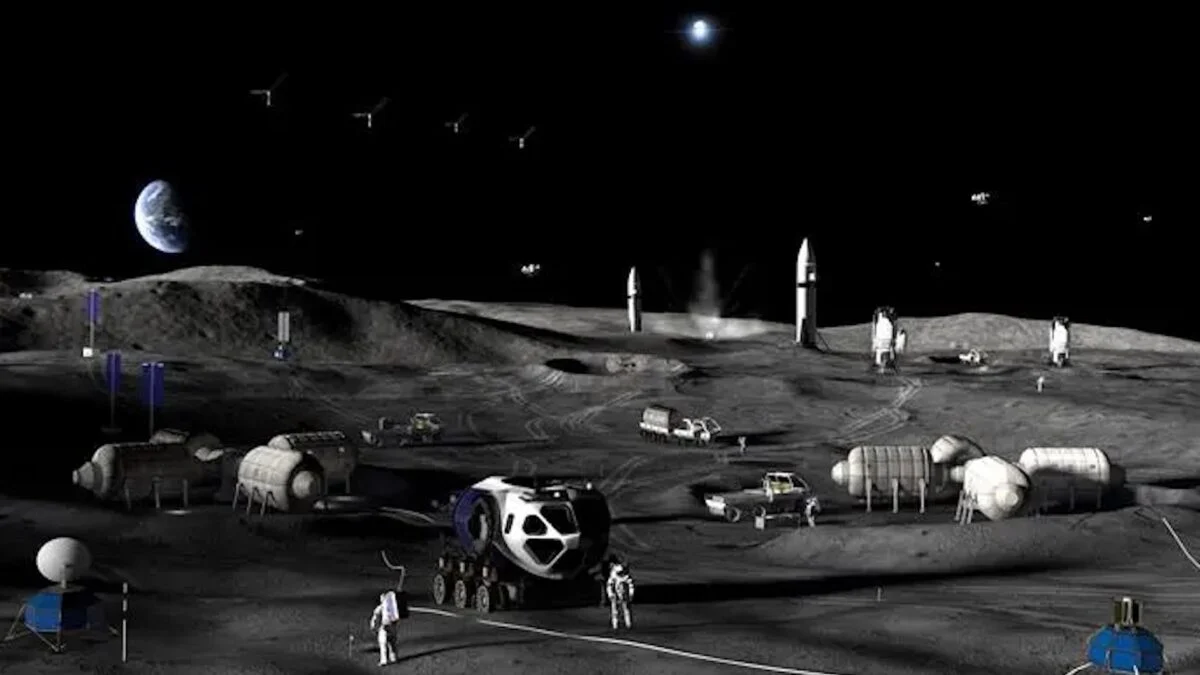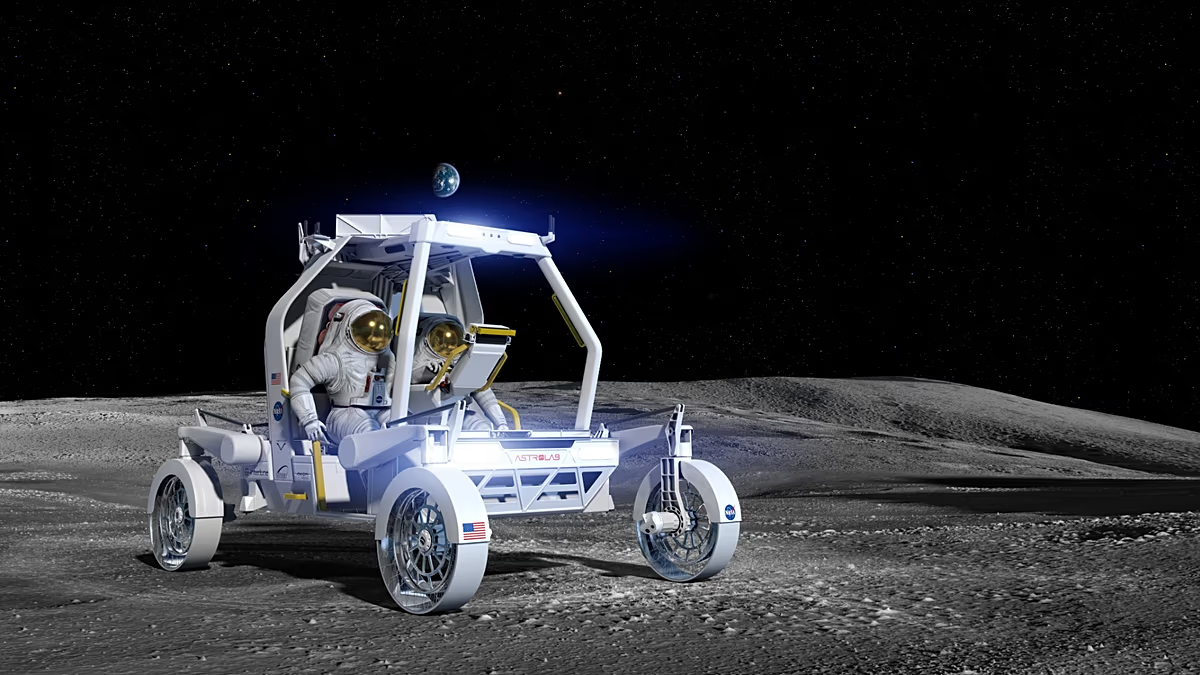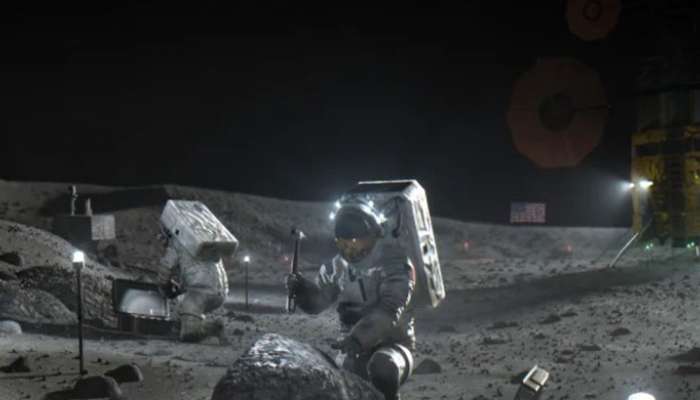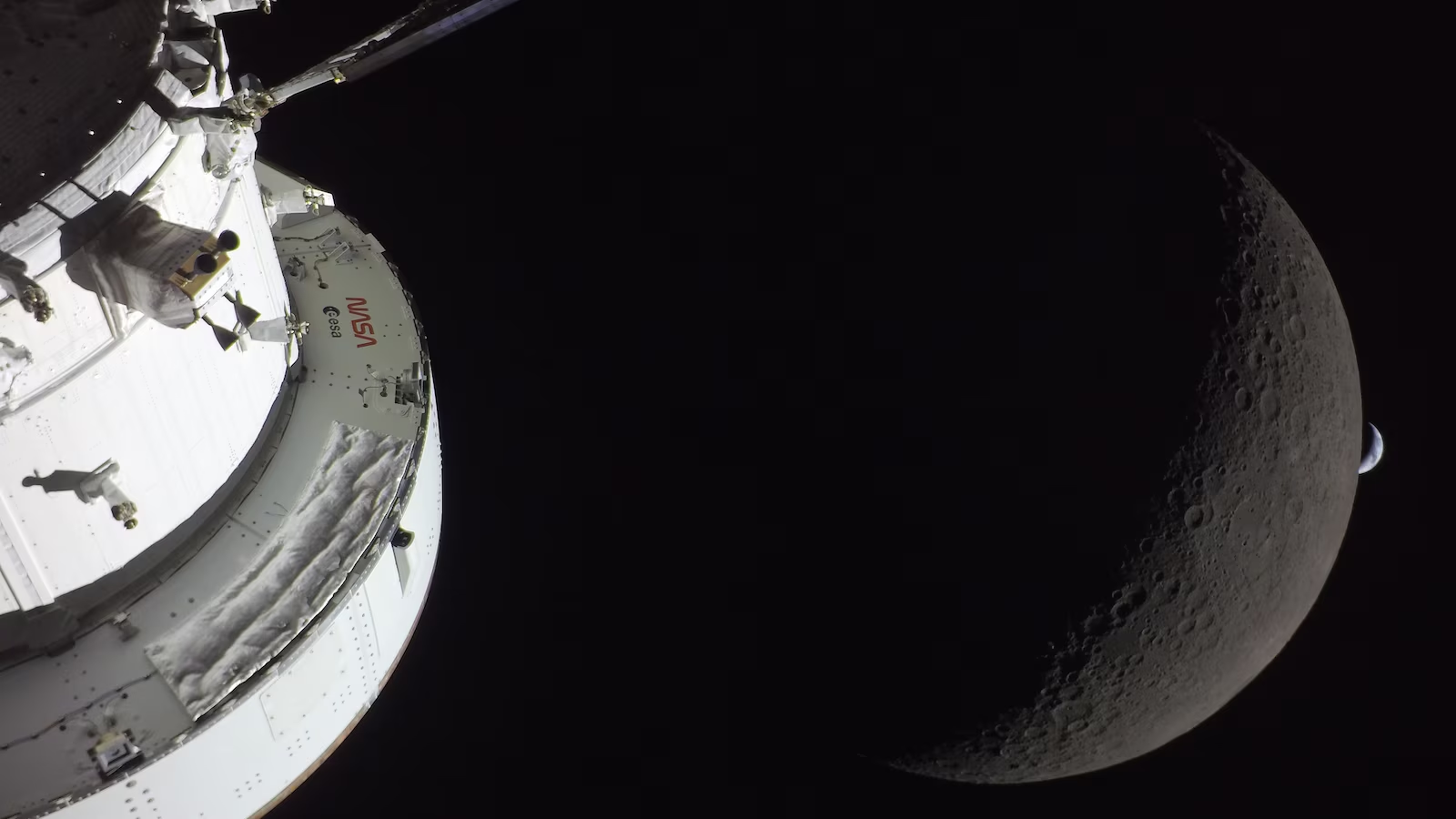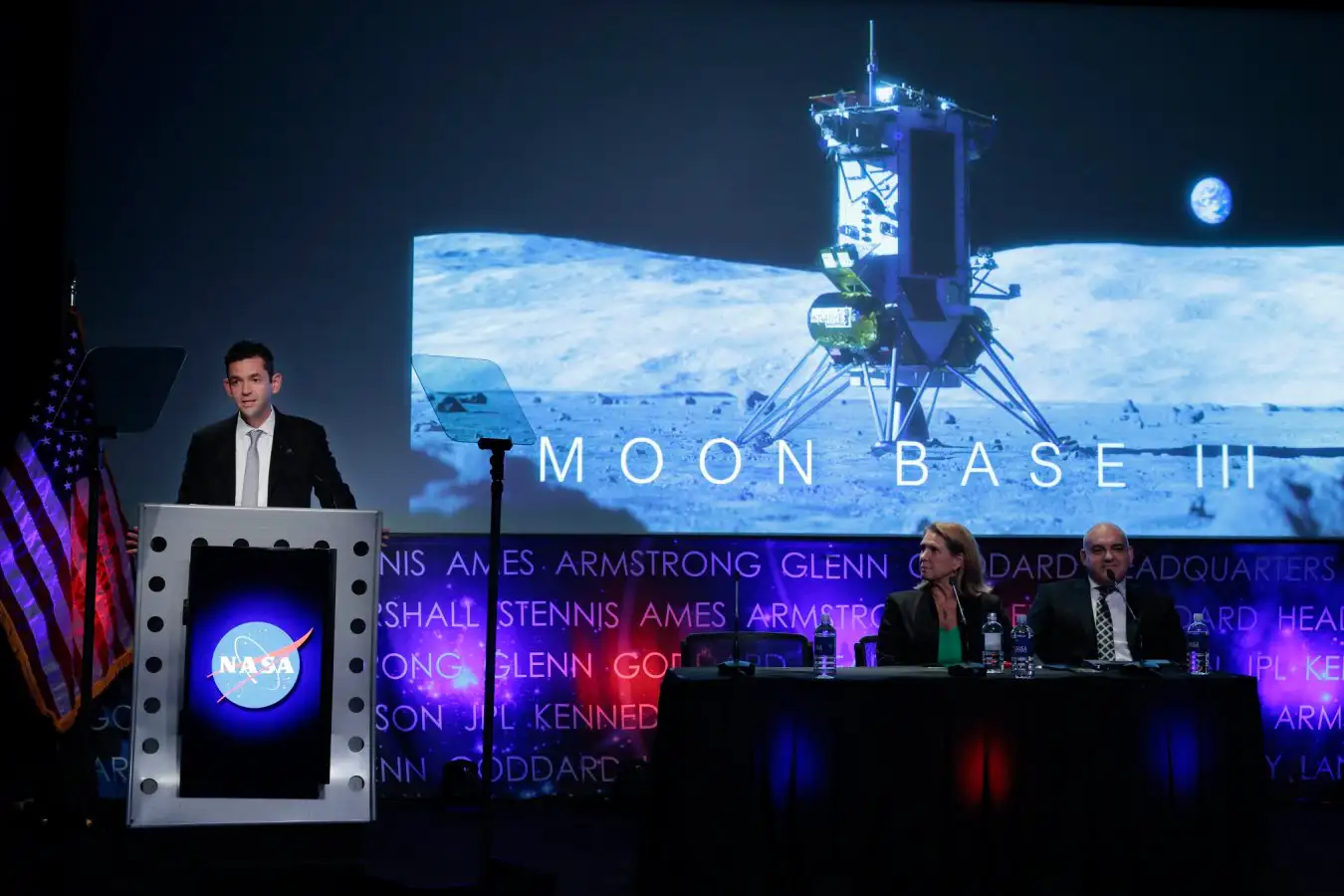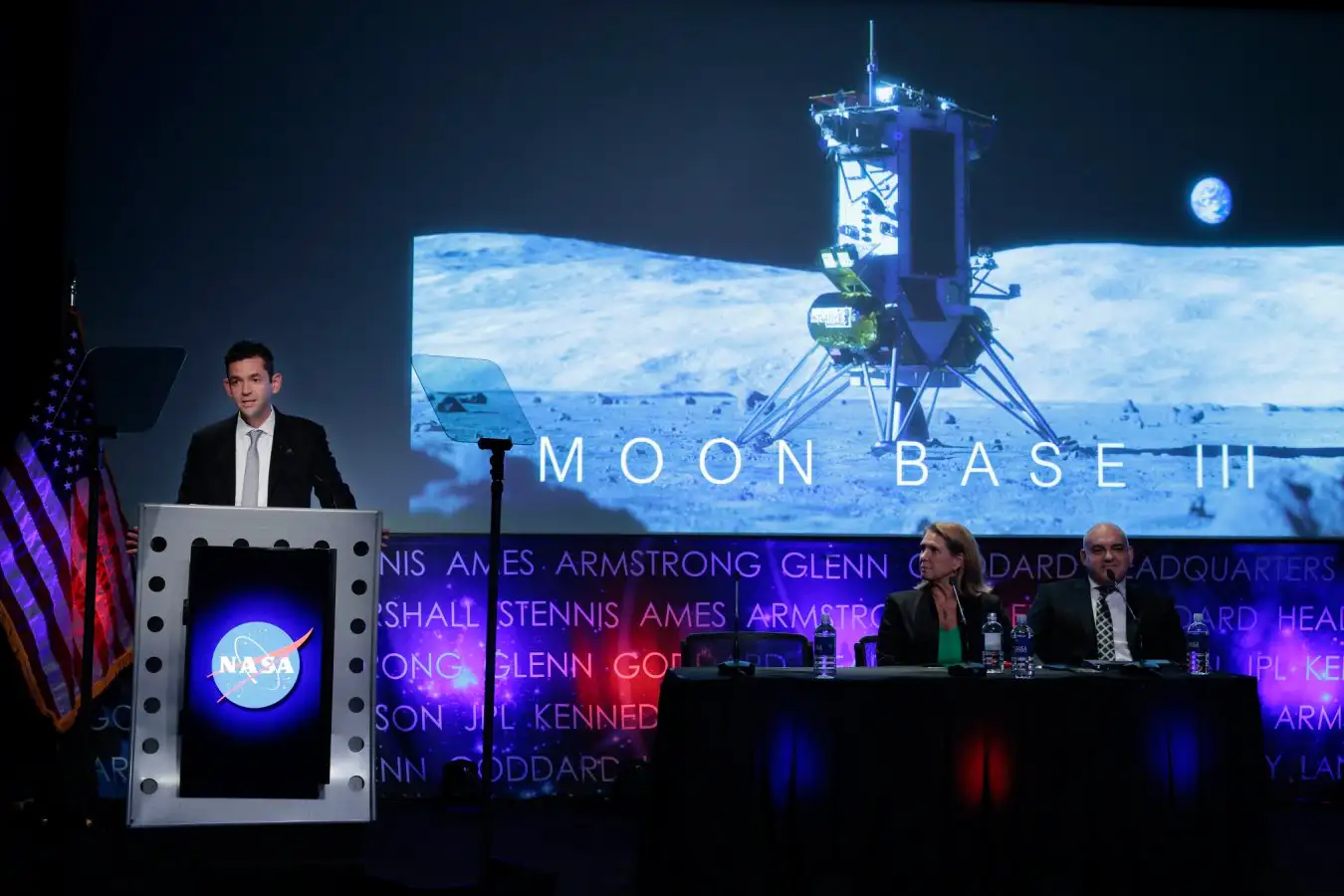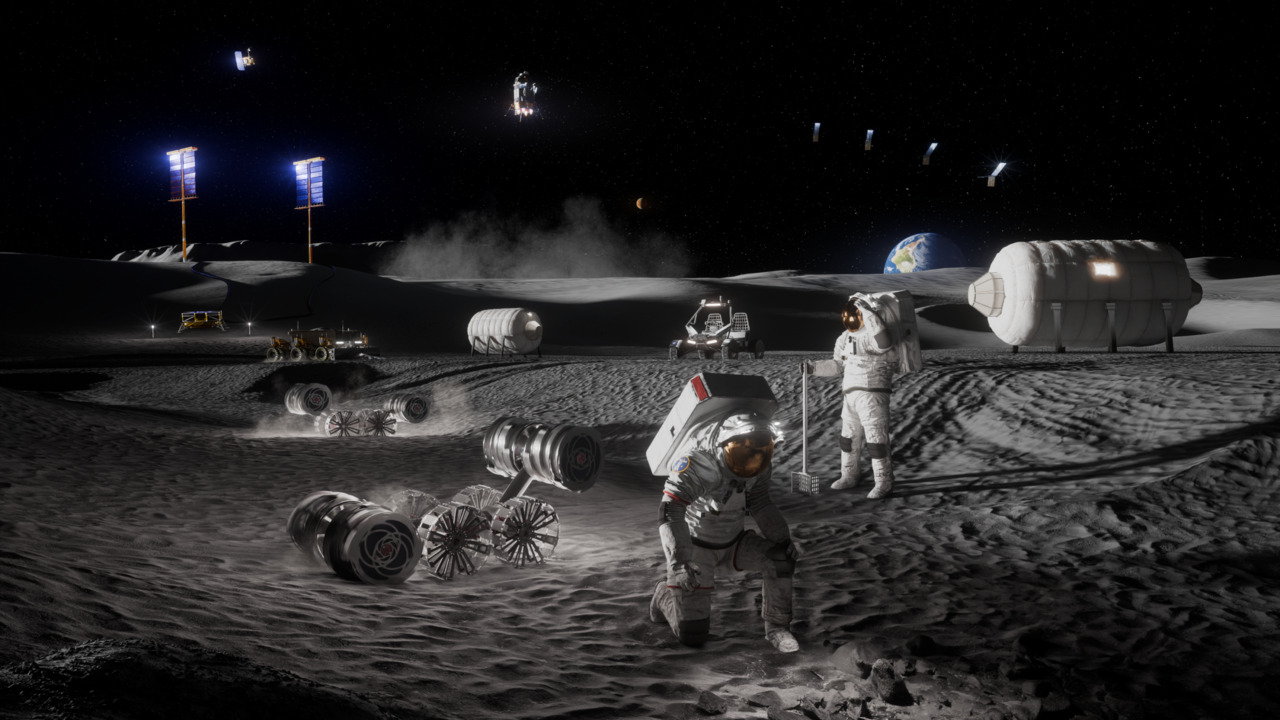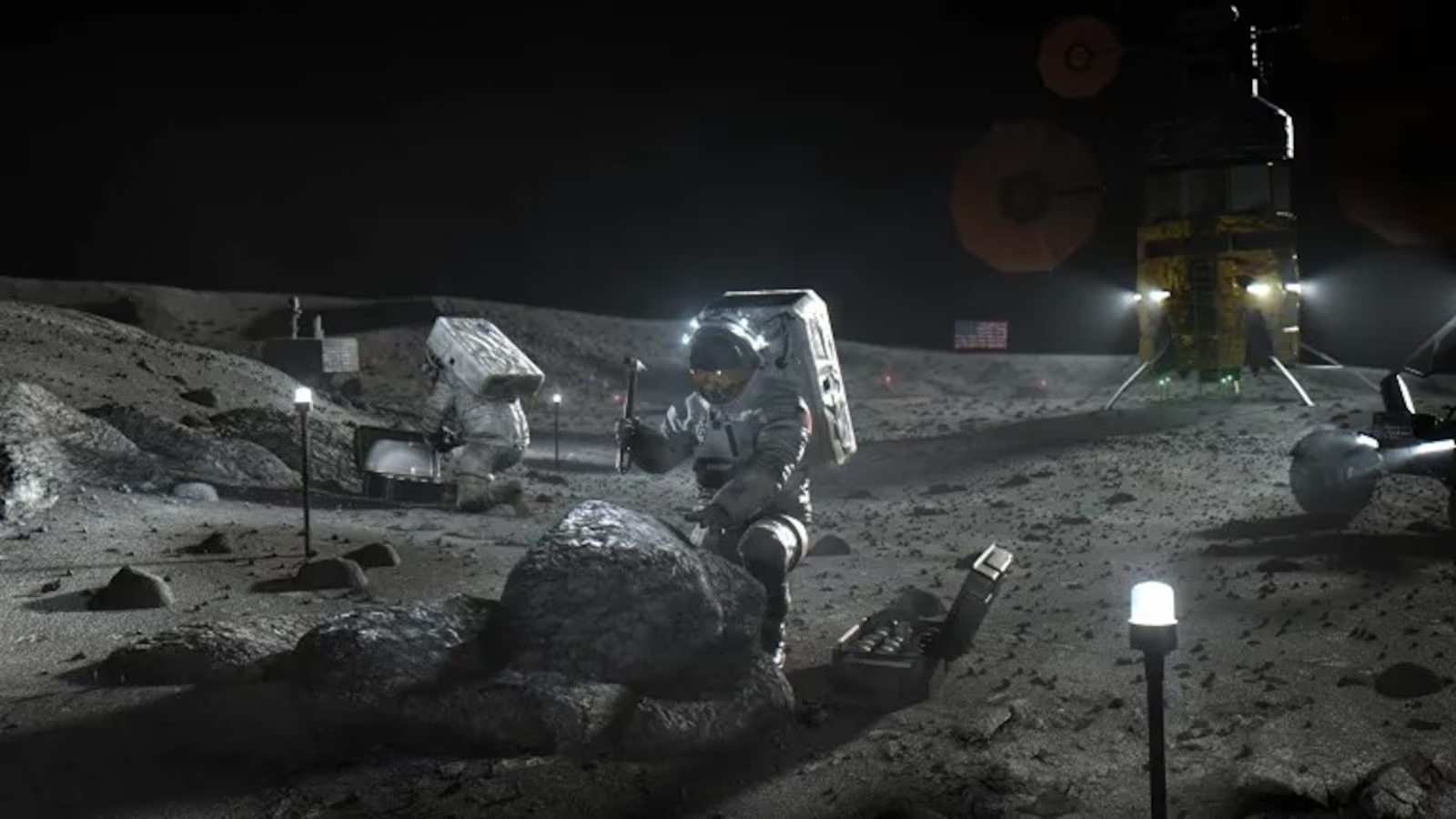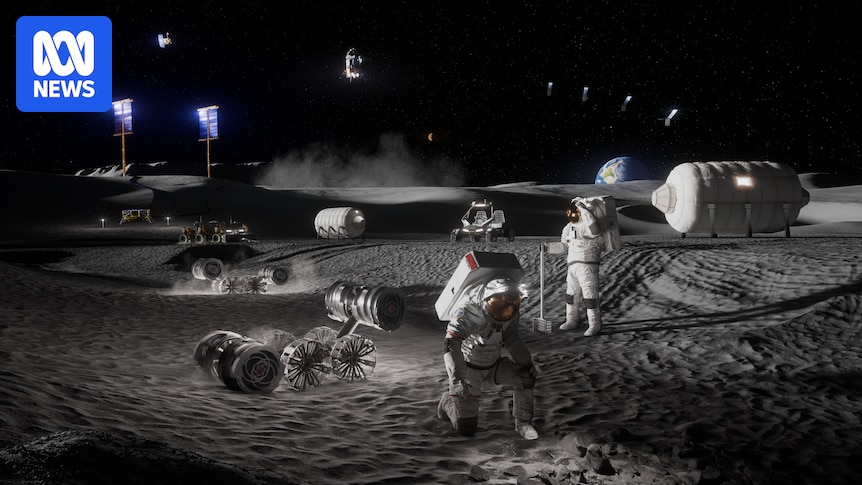
More than 50 years after humans last walked on the Moon, NASA is preparing to return, this time with plans to stay.On Tuesday, local time, the US space agency unveiled its first blueprint for a permanent lunar outpost, involving robotic landers, moon buggies and hopping drones.Under the Artemis program, NASA has awarded contracts to four US companies, including Amazon founder Jeff Bezos's Blue Origin, to begin building the infrastructure needed for long-term human missions on the lunar surface."The Moon base will be America's and humanity's first outpost on another celestial world," NASA administrator Jared Isaacman said at a press conference.NASA says the project will unfold over decades, eventually evolving into a continuously occupied base at the Moon's south pole from 2032.What is the Artemis program?Read more The plans come amid growing global competition in space, with China also pursuing its own lunar base project in partnership with Russia.Here's what we've learnt about NASA's long-term goal of building a permanent presence on the Moon.What would a permanent Moon base look like?NASA's Moon base program is expected to unfold in three broad phases. (Supplied: NASA)NASA is not planning a giant sci-fi-style Moon city, at least not yet.The current vision involves a series of habitats, power systems, vehicles and laboratories that could support astronauts for weeks or months at a time.The agency's proposed lunar infrastructure includes:Surface habitatsRead more Lunar roversRead more Hopping dronesRead more Power systemsRead more Resource extraction technologyRead more NASA officials say future lunar infrastructure could eventually span several kilometres around the south polar region.Program executive Carlos Garcia-Galan said the perimeter would be monitored by drones stationed at various points around the base.These territory markers would be designed to avoid interference with spacecraft and equipment belonging to other countries operating nearby, Mr Isaacman added.How soon will it be set up?NASA's Moon base program is expected to unfold in three broad phases over the next decade and beyond.The first phase will focus on landing astronauts and deploying the first robotic systems near the Moon's south pole.NASA is targeting Artemis IV for 2027, with astronauts potentially returning to the lunar surface as early as 2028.NASA sees the Moon as a training ground for human missions to Mars. (Supplied: NASA)"For those waiting patiently, the grand return is close at hand, and we will not slow down," Mr Isaacman said."We are really just getting started."The second phase, running from the late 2020s into the early 2030s, would focus on building up infrastructure, including power systems, transport networks and resource extraction technologies.The third phase, expected sometime after 2032, would aim to establish longer-duration habitation using more advanced permanent structures."Then we'll be able to say, 'Hey, we're permanently here, and we're not giving it up,'" Mr Garcia-Galan said.Why the Moon's south pole?Most Artemis missions are focused on the Moon's south pole because scientists believe it contains significant deposits of frozen water.Unlike earlier Apollo missions, which landed near the lunar equator, the south pole offers resources that could make long-term habitation possible.An artist's rendering of the lunar south pole region, highlighting shadowed areas that may preserve water ice deposits. (Supplied: NASA)Some crater floors there have not seen sunlight for billions of years, allowing ice to survive in extremely cold conditions.NASA views the region as strategically critical because water is key for sustainable space exploration.Why does NASA want a permanent presence on the Moon?The goal of the Moon base is to create a sustainable lunar economy while conducting scientific research and preparing for future Mars expeditions, Mr Isaacman said.Preparing for MarsNASA sees the Moon as a training ground for human missions to Mars.Living on the Moon would allow astronauts and engineers to test habitats, life-support systems and survival technologies before attempting far longer journeys into deep space.Scientific researchThe Moon could provide opportunities for astronomy, geology and climate research impossible on Earth.Its far side is particularly attractive for radio telescopes because it is shielded from Earth's electromagnetic interference.Commercial opportunitiesNASA also hopes private companies could eventually profit from lunar transport, mining, communications and infrastructure.The agency increasingly relies on commercial partnerships, particularly with companies such as SpaceX and Blue Origin.Strategic competitionThe return to the Moon is increasingly viewed through a geopolitical lens.China has rapidly expanded its space capabilities and plans to establish its own International Lunar Research Station in the 2030s with Russia.US officials have framed Artemis partly as an effort to ensure Washington, rather than Beijing, shapes the rules and infrastructure of future space exploration.Whether a true permanent settlement eventually emerges may depend as much on politics and economics as technology.But after half a century away, the Moon is once again becoming a central focus of global space ambitions.
NASA has revealed its plan to live on the Moon. Here's how it would work
The US space agency has outlined plans for a sprawling lunar outpost involving rovers, hopping drones and resource-extraction technology as part of a renewed race to the Moon.
768 words~3 min read