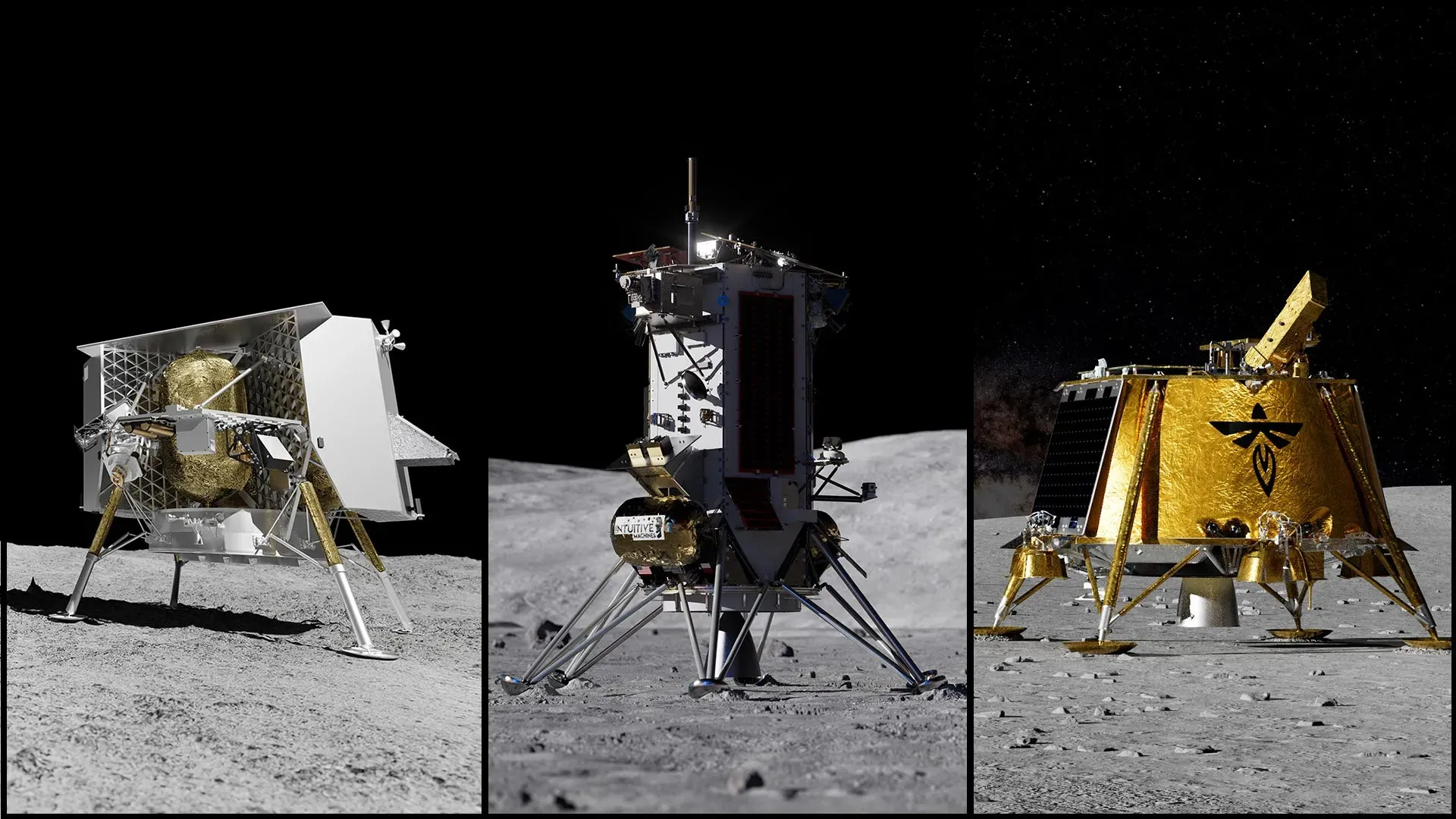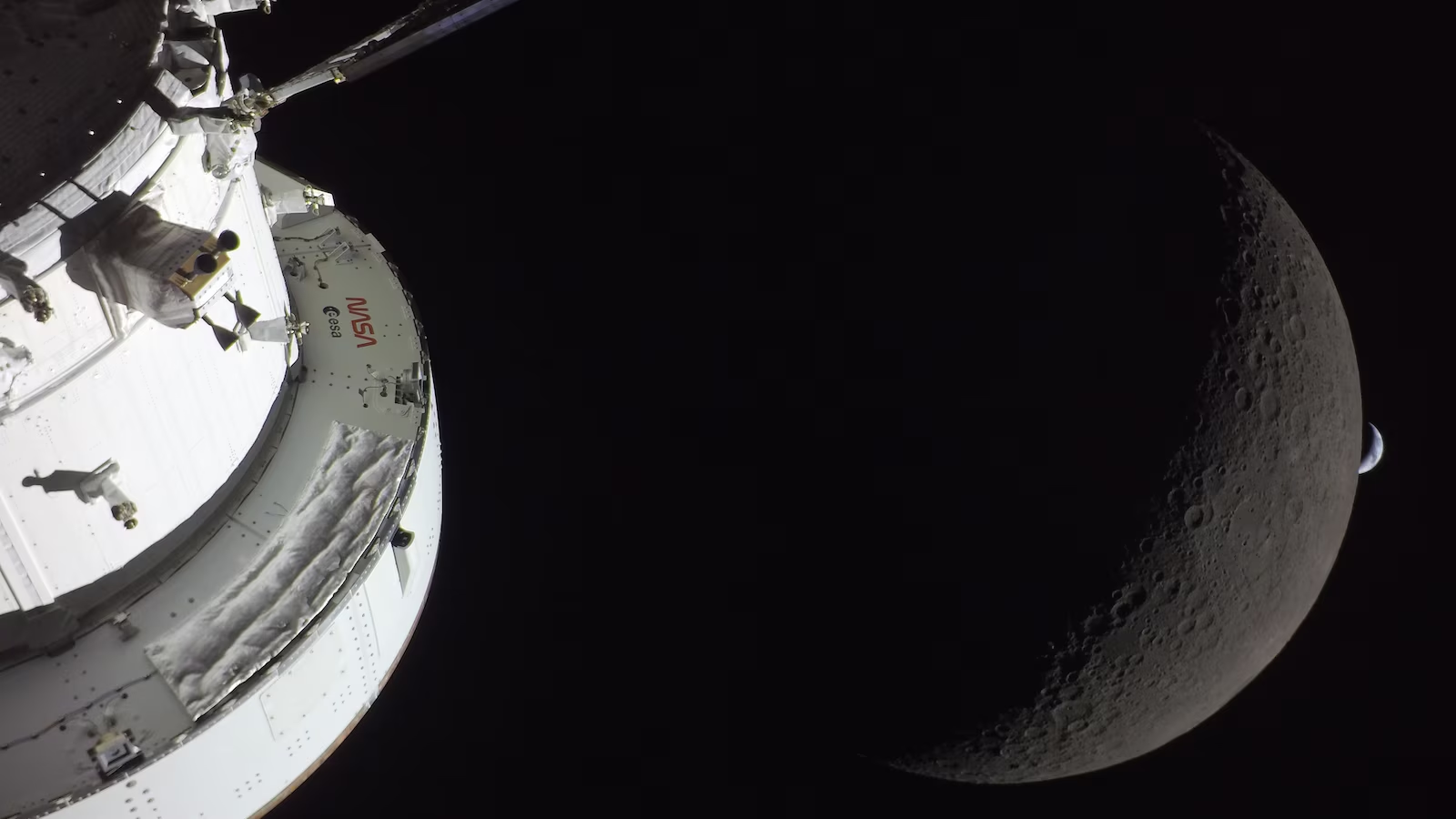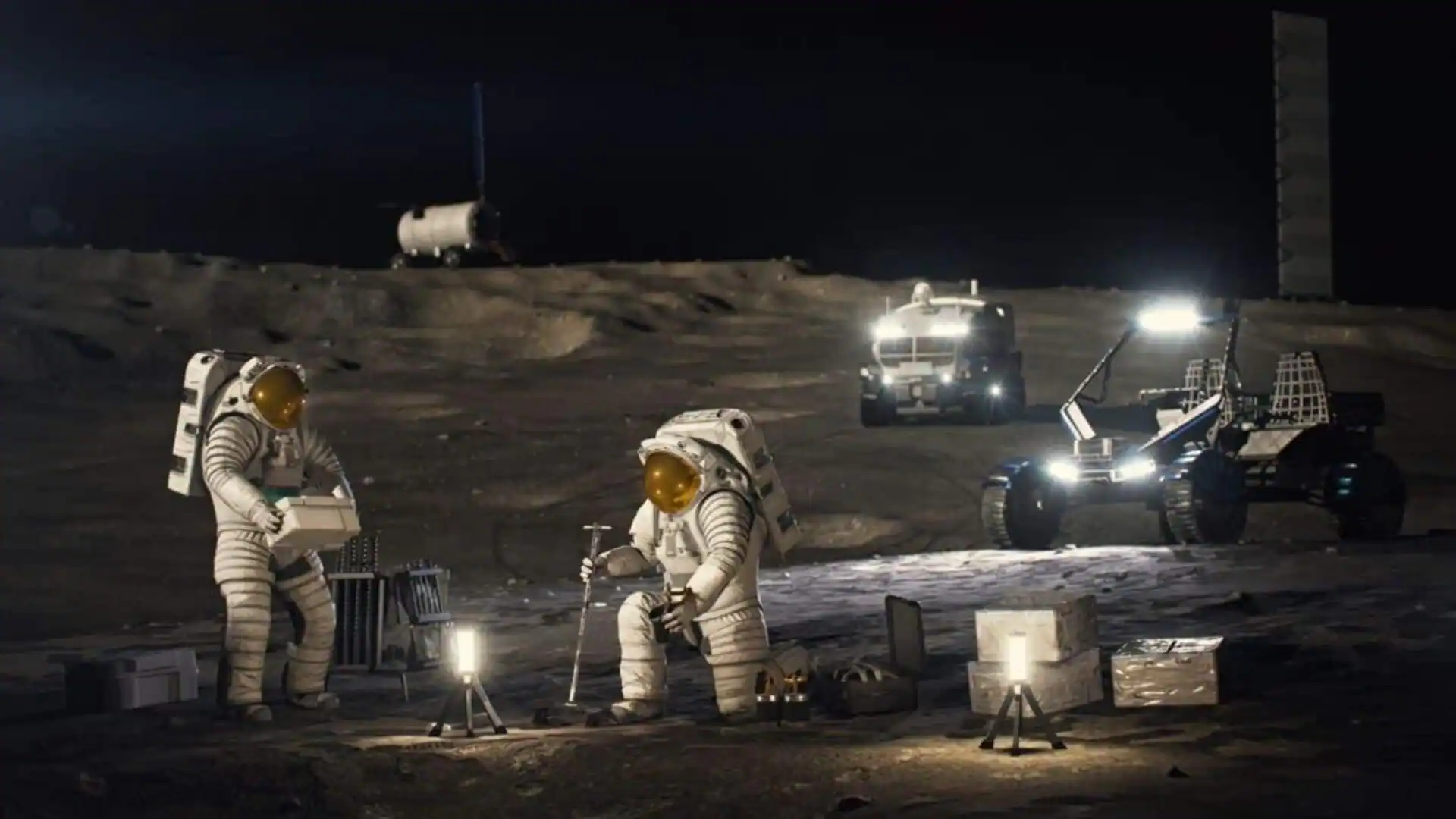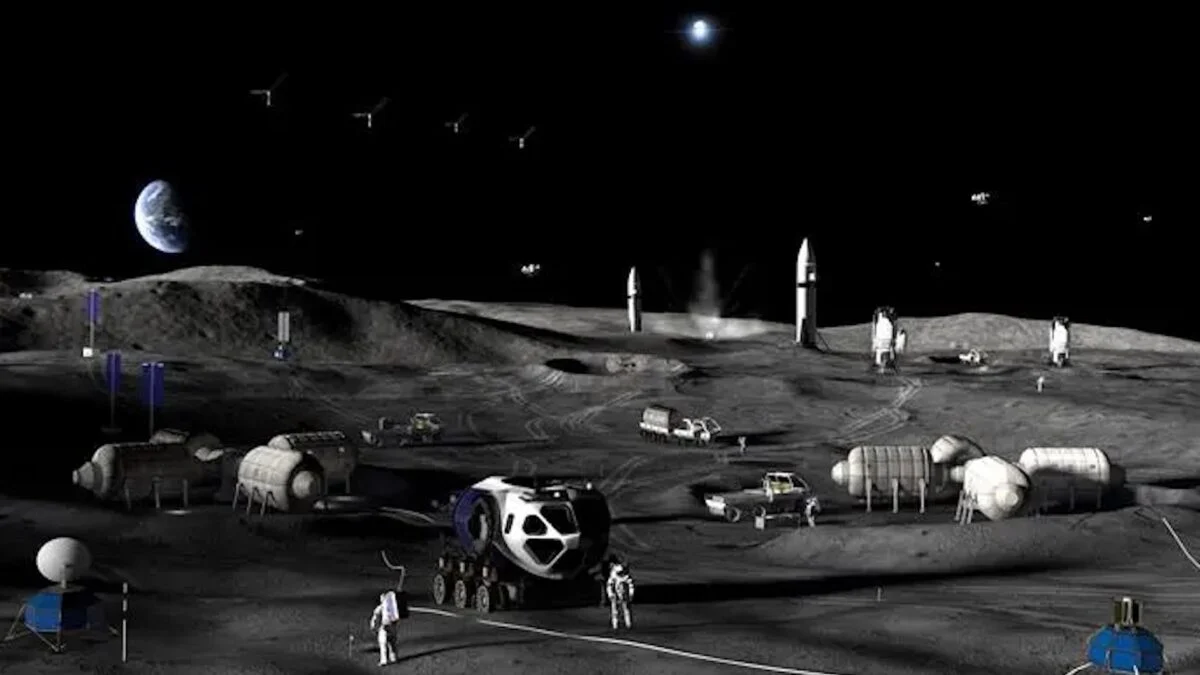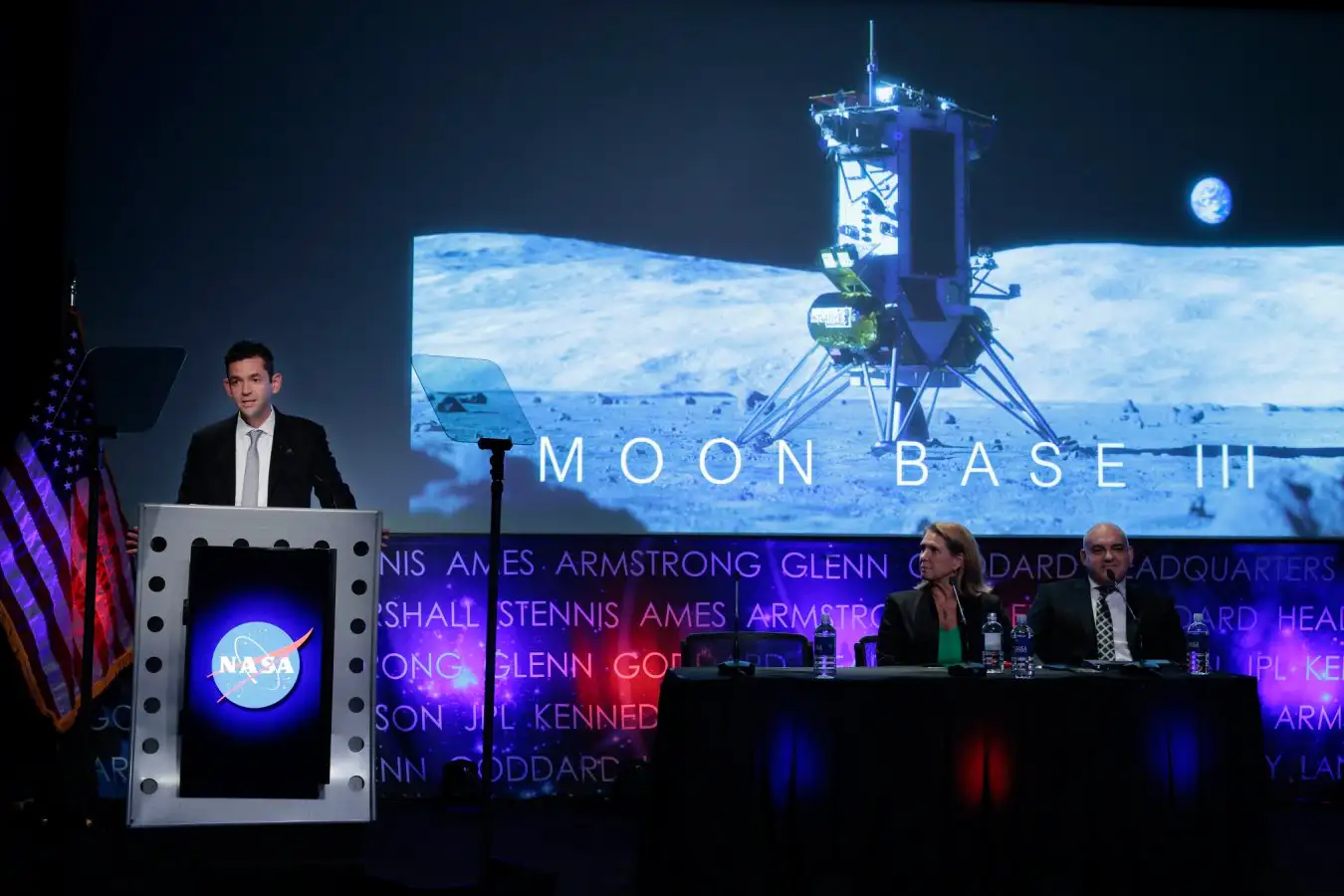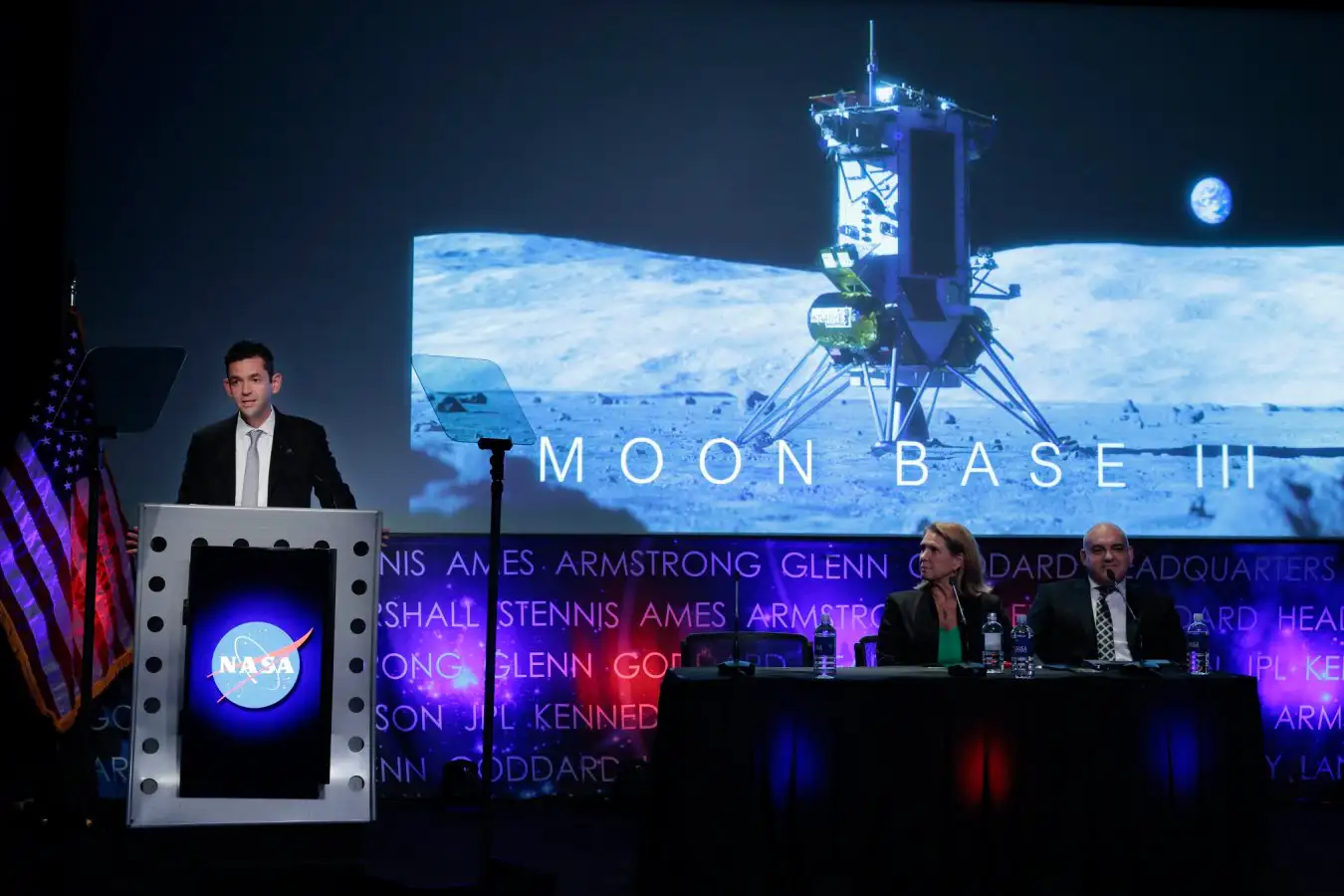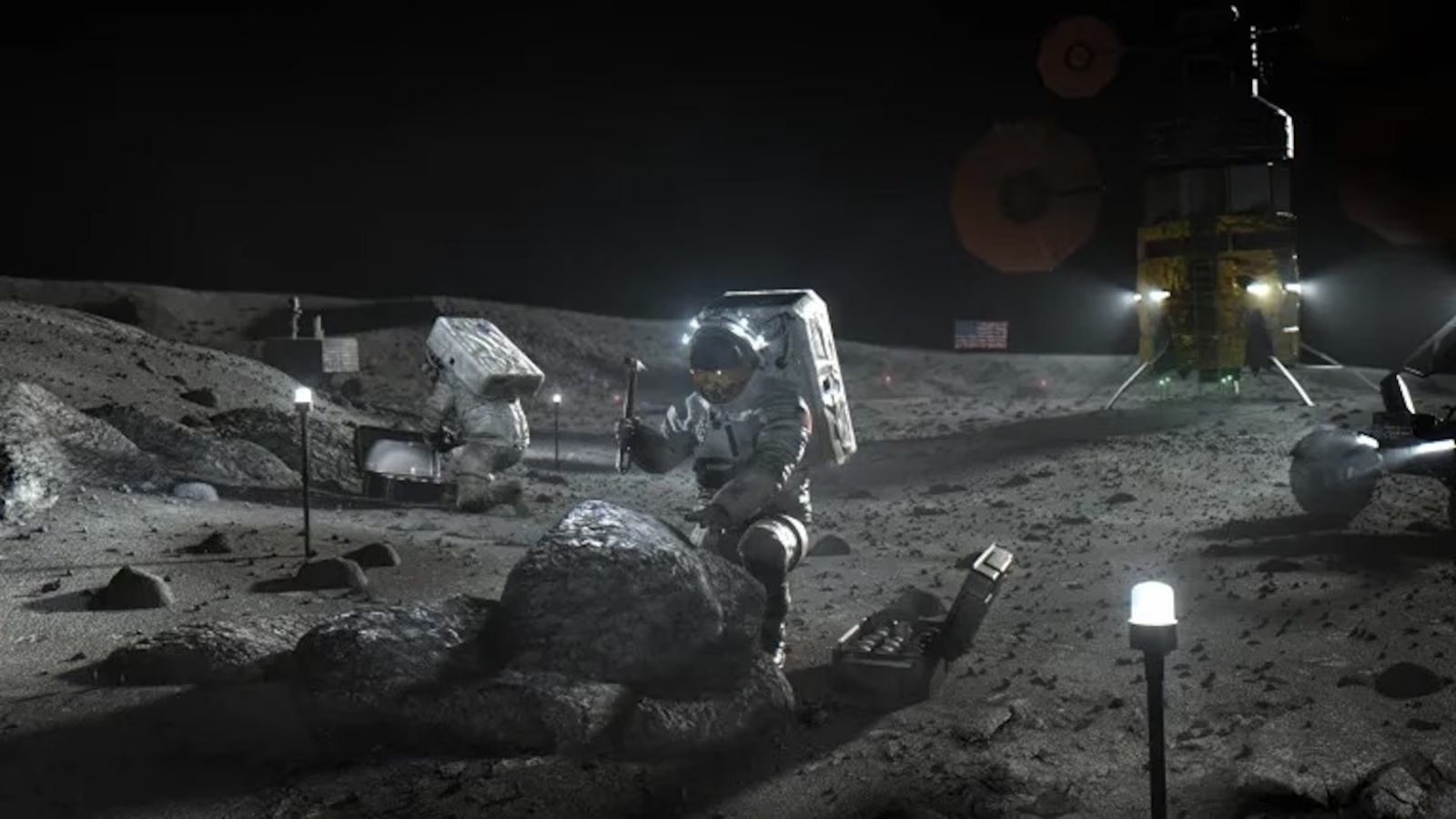
July 20 marks the 57th anniversary of the Apollo 11 moon landing, the first time humans walked on the lunar surface. On Tuesday, during an update on the space agency's moon base plans, NASA Administrator Jared Isaacman and Carlos García-Galán, NASA's moon base program manager, said the U.S. is "making a lot of progress" toward returning astronauts to the lunar surface and building a permanent base near the moon's south pole."This is drawing on the playbook that worked very well for NASA during the 1960s. We didn't just jump right to Apollo 11," said Isaacman. "We want to get back into a rhythm of this. We want lots of reps. It's incredibly challenging just going to the moon, let alone going to the south pole of the moon.""Extreme temperatures, long periods of darkness, abrasive lunar dust, and rugged terrain all present major challenges for sustained surface operations" at the lunar south pole, according to NASA, challenges that will require the development of new technologies."Let's do a lot of littles, and let's learn from every one of them," Isaacman added.Artist’s concept of Phase 3 of NASA’s moon base.NASA"Phase 1 is really three main objectives. One, getting to the moon reliably," said García-Galán. "The second objective is: get ground truth. We know a lot about the moon, some of the south pole, but nothing like what we need to learn before we send humans there and we actually build a moon base."García-Galán said NASA plans to use robots, autonomous vehicles and drones to explore the lunar south pole and better understand its conditions and hazards before sending humans there."And the third objective is we know to build a moon base we're going to need permanent infrastructure, and we're going to need to support long duration, eventually permanent presence there. So we're going to try out some of these technologies in early in phase one that will enable us to do that," explained García-Galán.NASA has identified 13 regions near the moon's south pole as candidate landing regions for Artemis III, the first crewed mission to the moon's surface since 1972. This image shows the locations of all 13 regions.NASA's Scientific Visualization StudioOne category of the technology is the lunar landers. These vehicles will first transport cargo to the lunar surface and then, ultimately, astronauts from the Orion spacecraft to the moon. García-Galán says one of the cargo landers being developed by Blue Origin is "almost done," having just undergone environmental testing. But to send the lander to the moon, Blue Origin needs its heavy-lift rocket, New Glenn, and its launch site in Florida, which was heavily damaged when a New Glenn rocket exploded during a static engine test in May.García-Galán says NASA is working with Blue Origin to evaluate the company's progress in rebuilding the launch site but the agency is also considering other options if those repairs mean Blue Origin cannot meet NASA's mission timeline.A rover on the moon?In a surprise announcement Tuesday, NASA said it's considering sending a fully functional engineering version of the Perseverance and Curiosity rovers currently on Mars. While not scheduled for its own Mars mission, the rover known as PROMISE – an acronym for Polar Rover for Observation, Mapping and In-Situ Exploration – is at NASA's Jet Propulsion Laboratory, where it helps engineers on Earth understand how Martian rovers operate and troubleshoot technical issues. NASA says PROMISE is capable of performing all of the same science and exploration functions as its siblings. This artist's concept shows the Perseverance Mars rover on the red planet.NASA/JPL-Caltech"[W]e are thinking very hard right now about sending PROMISE to the moon. That would be an awesome capability," said Isaacman, though he acknowledged that NASA is still studying the feasibility of sending the robotic explorer to the moon. Even so, Isaacman said the agency is excited about the possibility. Popular Reads"We are in the business of the near impossible, so why not? I'm optimistic," Isaacman said. Isaacman and García-Galán also announced several new contracts worth nearly $600 million with three private space companies to provide equipment for the moon base. Astrobotic, Firefly Aerospace and Intuitive Machines will develop lunar landers capable of delivering science payloads to the moon.Moon base construction phasesNASA also provided additional details about the moon base construction schedule, which will occur in three phases.Phase 1, which is currently in progress and will continue until 2029, focuses on robotic missions to demonstrate that the technology and vehicles required for a lunar settlement will work. NASA says this experimental phase will help ensure that the private companies responsible for supplying much of the necessary hardware can effectively deliver the products in which NASA is investing billions of dollars. NASA plans to conduct 25 rocket launches and 21 moon landings during this first phase.Phase 2, which NASA says will begin in 2029, moves from experimenting with the technologies to "assembling semi-permanent infrastructure and initiating early habitation and logistics operations." This phase will include adding additional power generation, solar and nuclear, deploying upgraded lunar rovers and potentially drones, expanding communication networks, and delivering up to 60 tons of cargo to the lunar surface. The second phase will include 27 rocket launches and 24 lunar landings, according to NASA.Three artist renderings depict commercial lunar landers from Astrobotic, Intuitive Machines and Firefly on the moon. NASA announced June 30 the landers will deliver more NASA science investigations and technology demonstrations to the lunar surface for NASA’s Moon Base Program.Astrobotic/Intuitive Machines/FireflyBy Phase 3, slated to begin in 2032, NASA aims to establish a permanent human presence on the moon, with astronauts living and working on the lunar surface and rotating in and out, similar to how they currently staff the International Space Station.NASA says Phase 3 will include "semi-permanent habitation modules," a nuclear reactor to power the base, rovers with life support systems capable of traveling longer distances, and the regular delivery of crew and cargo. The agency is anticipating 29 rocket launches and 28 moon landings during the third phase.NASA has initially budgeted $20 billion for the base, though some experts say that amount is likely to increase.The Artemis III mission will be NASA's next significant milestone for its moon ambitions. During that flight, scheduled for next year, the four-person crew will test one or both lunar landers being built by SpaceX and Blue Origin while in low Earth orbit. While they will not land on or visit the moon, the Artemis III astronauts will spend more time in space than the Artemis II crew did, further validating Orion's life support, power, propulsion and other critical systems. "This is the next logical step on the journey where we should be very grateful we have a moon in such proximity to work with," said Isaacman.
NASA says it's 'making a lot of progress' on moon base plans, may send a spare Mars rover to the lunar surface
NASA aims to establish a permanent human presence on the moon by 2032.
1,118 words~5 min read