Vietnam is expected to enter a more intense period of heatwaves, heavy rain and tropical storms from next month as meteorological authorities warn of hazardous weather across much of the country during the peak rainy and typhoon season.
Nguyen Duc Hoa, Deputy head of the Weather Forecasting Division at the National Centre for Hydrometeorological Forecasting, said mean temperatures nationwide between June and August are forecast to be 0.5-1 degrees Celsius above the multi-year average for the same period.Spiking temperaturesHeatwaves are expected to continue and intensify across the northern region, Thanh Hoa-Hue and the south-central coastal region.The number of hot days is likely to exceed both the multi-year average and figures recorded during the same period last year.
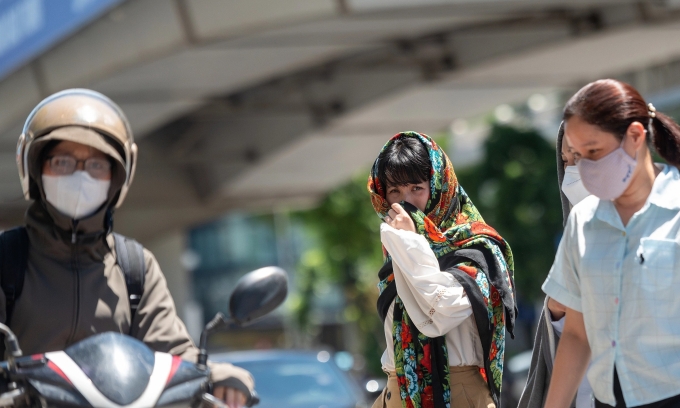
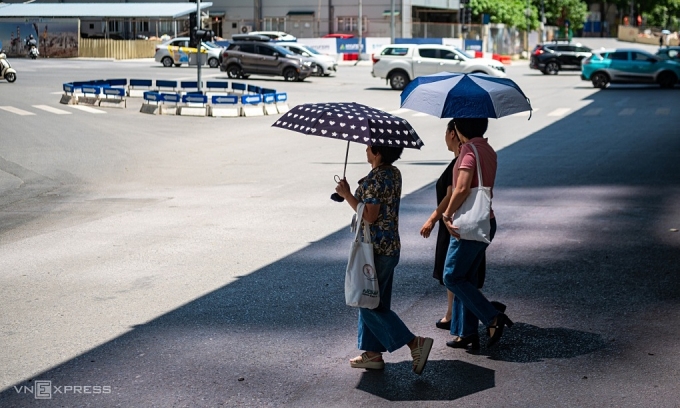
Women carry umbrellas as they walk under strong heat in Hanoi on May 25, 2026. Photo by VnExpress/The Bang
The number and activity of tropical cyclones and depressions over the East Sea, internationally known as the South China Sea, and their direct impacts on mainland Vietnam are expected to be comparable to the multi-year average. The long-term average over the East Sea is 5.2 typhoons, with 1.9 making landfall.Regional rainfall projectionsRegarding rainfall, Hoa said moderate to heavy rain would be concentrated in the northern region, the Central Highlands and the southern region.Next month, total rainfall in the northwest, northeast, the Red River Delta and localities from Thanh Hoa to Hue is expected to be generally 5-10% above the multi-year average for the same period.Other areas are forecast to receive rainfall close to the multi-year average, while the south-central coastal region is expected to record rainfall 20-40% below average.In July, nationwide rainfall is forecast to be generally 5-15% above the multi-year average, while northern mountainous areas are expected to remain close to average levels.In August, rainfall is generally expected to remain close to the multi-year average, except in Thanh Hoa-Da Nang, eastern parts of Quang Ngai-Gia Lai and the Central Highlands, where totals are forecast to be 10-25% above average.Specifically, total rainfall next month in the northern region is forecast at 150-300 mm, with higher amounts in some mountainous areas. In July, totals are expected to reach 280-38 mm, with some places exceeding 400mm. In August, totals are forecast at 250-350 mm.Localities from Thanh Hoa to Hue are expected to record 70-150mm next month, while the south-central coastal region is forecast to receive 30-70 mm and the Central Highlands 150-300 mm.In July, Thanh Hoa-Hue are forecast to receive 150-250 mm, the south-central coastal region 60-120 mm and the Central Highlands 250-350 mm.In August, Thanh Hoa-Hue are expected to record 250-350 mm, the south-central coastal region 100-200 mm and the Central Highlands 350-450 mm.In the southern region, rainfall totals are forecast at 150-300 mm next month, 200-400 mm in July and 200-350 mm in August.The upper and middle reaches of the Mekong River basin next month are expected to record rainfall 5-15% above the multi-year average. The northern part of the lower reaches is forecast to be 5-10% above average, while the southern part is expected to be 10-20% below average.In July, most areas are forecast to receive rainfall 5-15% above the multi-year average. In August, most areas are expected to record rainfall 5-20% below the multi-year average for the same period.Hazard alerts"There is a nationwide likelihood of hazardous weather phenomena such as thunderstorms, tornadoes, lightning, hail and strong gusts," Hoa warned.Given these weather patterns, meteorological experts said typhoons, tropical depressions and the southwest monsoon could produce strong winds and high waves that may affect maritime activities.Heatwaves, heavy rain, thunderstorms, tornadoes, lightning and hail could also adversely affect production activities, public health, crops and livestock.The hydrometeorological agency therefore recommended regularly updating and integrating forecast and warning information into short-term bulletins covering one to three days to help authorities and businesses adjust production plans and response measures on time, especially reservoir operation plans, to ensure the safety of infrastructure and downstream areas while safeguarding production activities and livelihoods.