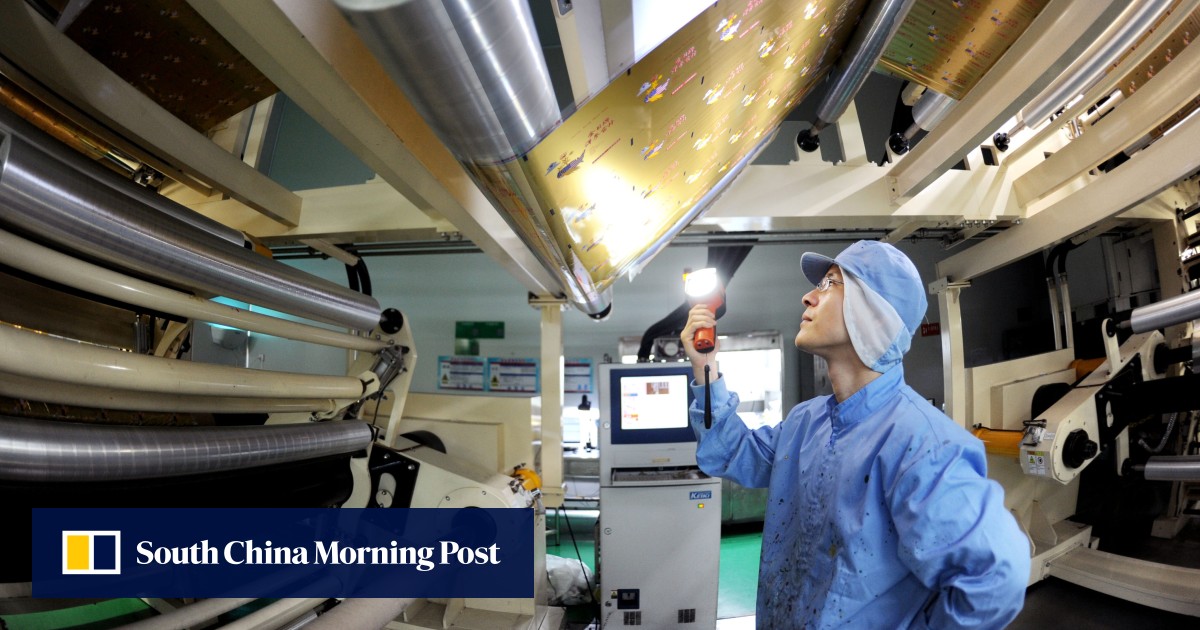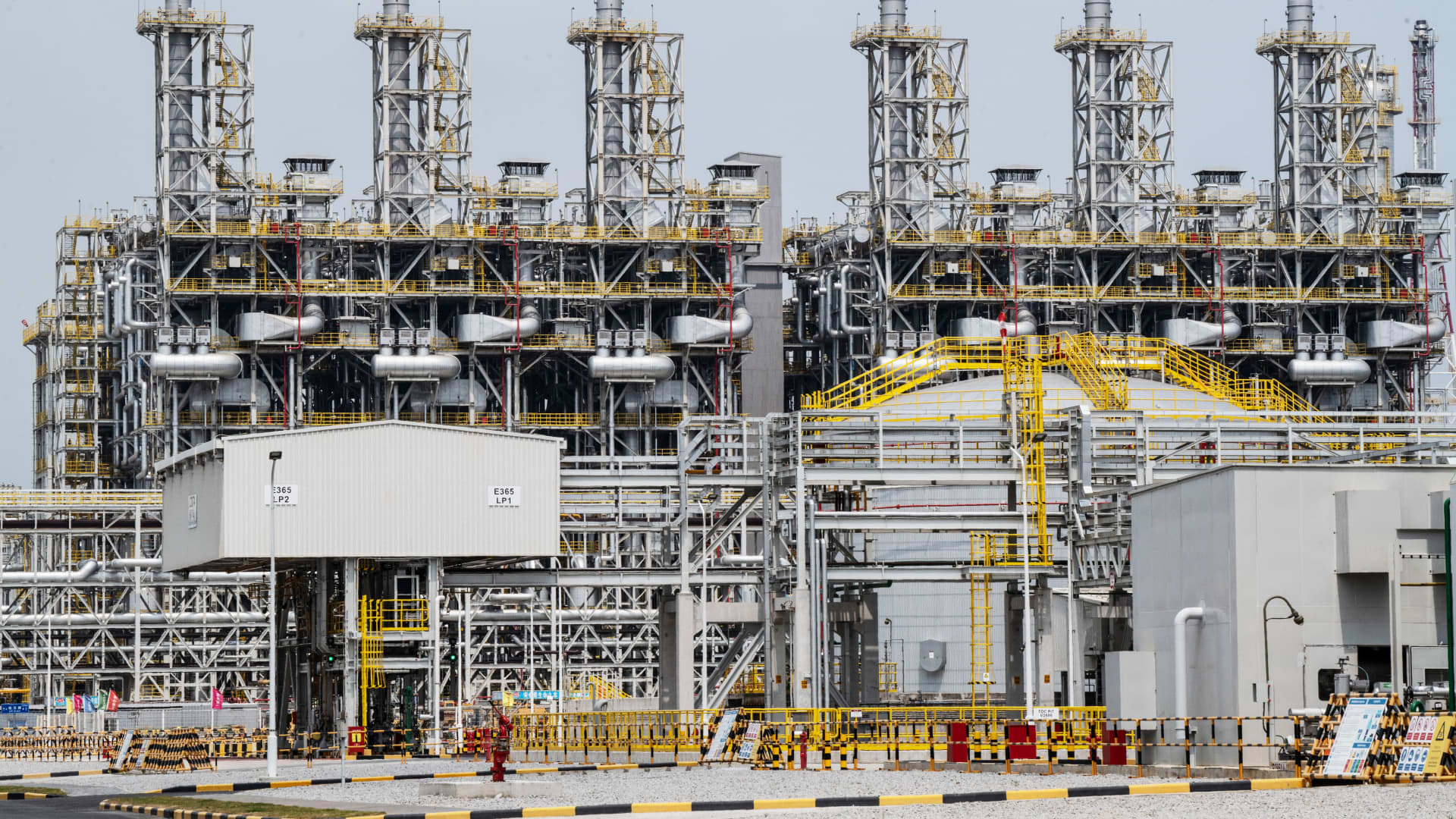
Steam cracker units at the BASF Zhanjiang Verbund site in Zhanjiang, Guangdong province, China, on Thursday, March 26, 2026.Bloomberg | Bloomberg | Getty ImagesBEIJING — More European companies are maintaining or expanding their supply chains in mainland China to remain competitive globally, according to a survey released Wednesday by the European Union Chamber of Commerce in China.Nearly one-third of respondents said they were onshoring further in China, while 37% said they had not changed their supply chain strategy over the last two years, the report said.The survey was based on responses from nearly 300 members collected from January to February who were familiar with their companies' mainland China supply chain strategies.In total, 68% of respondents said they were either staying or expanding operations in China. By comparison, only 7% said they were moving factory sourcing outside the country or setting up alternative manufacturing bases elsewhere, the report said."We don't see sort of de-risking becoming a theme," said Jens Eskelund, President of the EU Chamber of Commerce in China."If anything it would indicate that European companies continue to be more dependent on China as a sourcing and manufacturing location for their products," he said. watch nowAutomation lowers costsCost is one of the main reasons European companies are increasing production in China, the EU Chamber survey found.Relatively low labor costs in China have helped power its role as a global manufacturing hub. But as factories face labor shortages, many have embraced automation — quickly. "The cost of labor, which might be lower anyway, is becoming irrelevant itself, because [of] automation," said Denis Depoux, senior partner, global managing director at Roland Berger, a consulting firm that helped the EU Chamber assemble the survey."The difference in the level of automation [versus] two years ago is mind-boggling. You don't see anybody anymore," he said, referring to his visit this week to a privately-owned Chinese copper manufacturing company.Depoux added that while automation can initially cost more than human labor, factories can ultimately produce products more quickly. For example, Chinese electric vehicle maker Nio, which has expanded into Europe, said one of its factories in China operates with 941 robots that can work fully autonomously across multiple vehicle models simultaneously — without workers on the production floor. That setup allows the factory to operate around the clock.It's all part of a local manufacturing ecosystem with access to lower industrial energy prices and raw material costs, Roland Berger pointed out in a March report titled "China's cost and speed advantage: A wake-up call for Western companies."The report added that quarterly negotiations with suppliers on price and selective state subsidies often help Chinese products reach global markets earlier and at far lower costs.About three-fourths of EU companies in China said their production facilities in the country were more efficient than operations elsewhere, the chamber's survey found."In most industries today, you have at least one Chinese competitor, or an international competitor, that are leveraging Chinese supply chains," Eskelund said. "So I think in many industries, if you are able to compete on price and quality, you simply need to become a part of Chinese supply chains," he said. "It's not necessarily because you want to onshore on [to] China." Read more China newsHuawei plans new smartphone chips this fall as rivalry with Nvidia and Apple heats upThree signs from APEC that the U.S. and China remain far apart on tradeTariffs eased. Trust didn't.China calls for APEC cooperation as commerce minister skips opening over 'urgent official business'Three key takeaways from Putin's Beijing trip — and what they reveal about China-Russia tiesChina confirms order for 200 Boeing planes, calls aviation key area for U.S. cooperationJob training for robots: How China is getting machines ready to join the workforceAirlines are struggling but China's 'Big Three' face a tougher year than mostU.S. indicts four Chinese container manufacturers alleging pandemic-era price-fixing cartelAlibaba reveals more powerful Zhenwu AI chip, new LLMThree major shifts from the Trump-Xi meetingTrump puts Taiwan arms sales, Hong Kong jailed activist Lai on agenda ahead of meeting with XiTrump and Xi face a test over AI controlIran focus at Trump-Xi summit may delay progress on tariffs, rare earthsChina is rewiring the Silicon Valley model — starting in Hong KongChina's self-driving truck leaders say AI breakthroughs won't accelerate rollout — here's why'Draconian development' in Meta-Manus deal draws the line in China's AI race with the U.S.Behind China's 'active efforts' for an Iran ceasefire: Business trumps politicsAlibaba launches data center with 10,000 of its own chips as China ramps up AI push'The thaw is real': Indian delegation visits China to talk EVs and moreWhy AI isn't replacing jobs in China (yet)Meta faces China probe over acquisition of AI agent startup ManusBeijing's surprise intervention on Meta's Manus rattles tech founders, VCs eyeing 'China shedding'Three niche commodity prices are surging. What they show about China's grip on supply chains
European companies double down on China manufacturing despite EU de-risking push
Low manufacturing costs in China are keeping many European businesses' supply chains in the country despite pressure in the EU to reduce overseas reliance.
803 words~4 min read