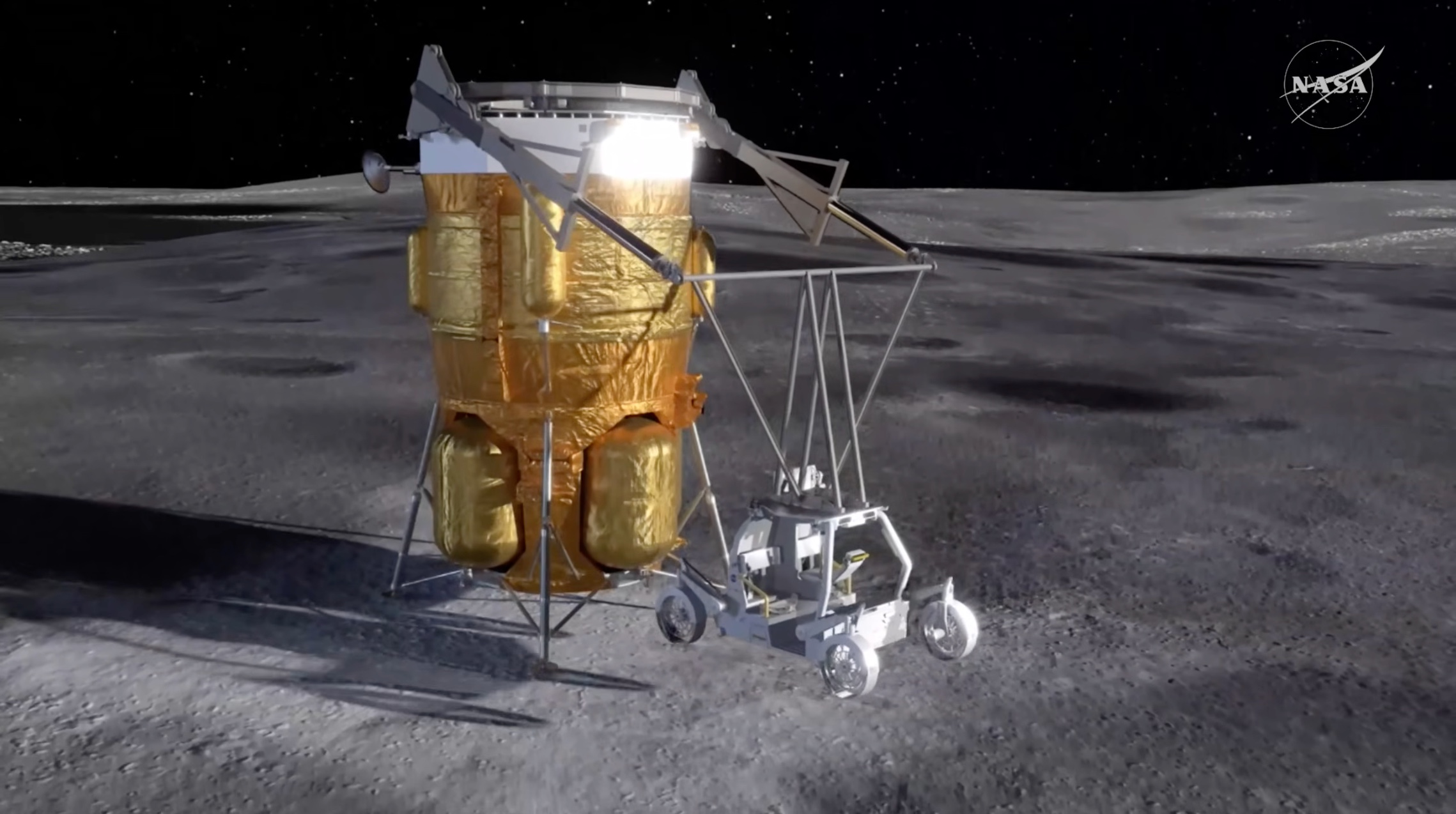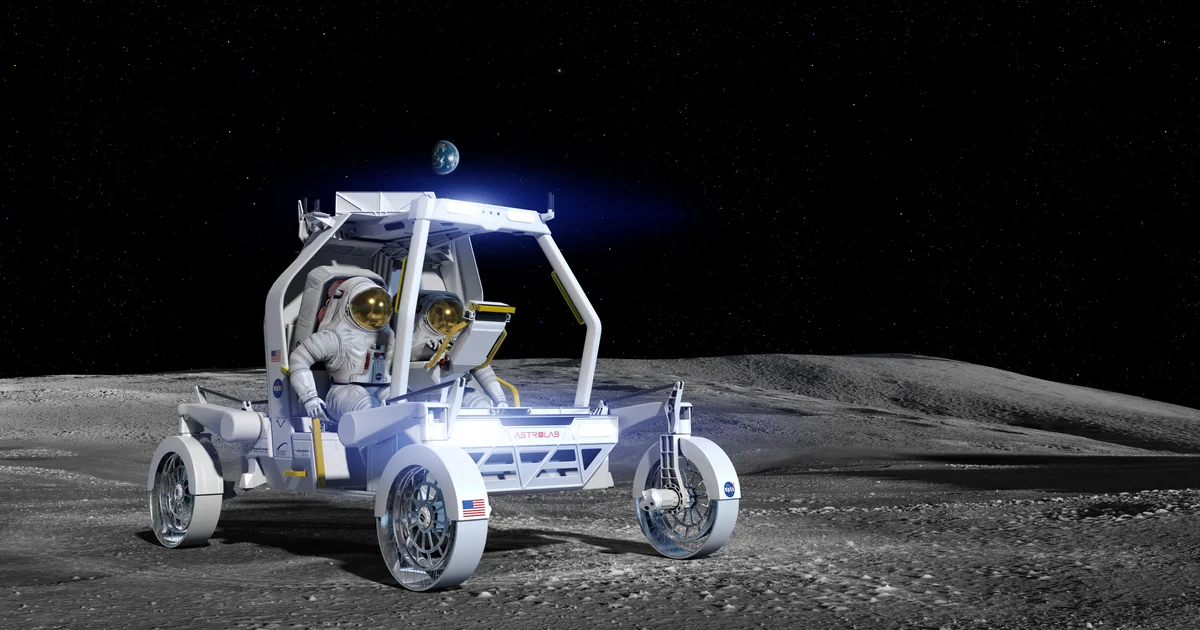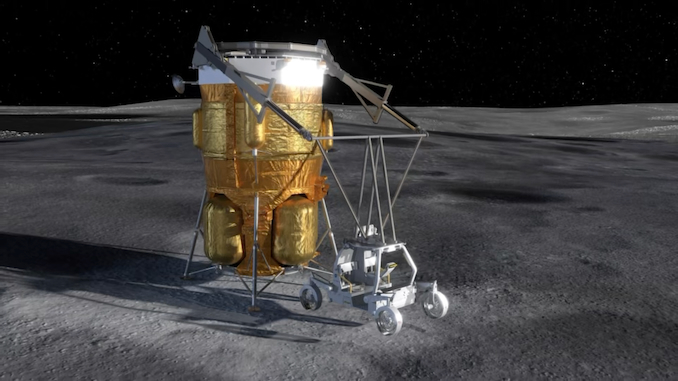
An artist’s rendering of a Blue Origin Blue Moon Mark 1 lunar lander deploying Astrolab’s Crewed Lunar Vehicle (CLV-1) on the surface of the Moon. Graphic: Astrolab
NASA’s vision for a future, long-term sustained presence on the Moon gained more clarity on Tuesday as the agency announced a series of contract awards for future robotic missions.
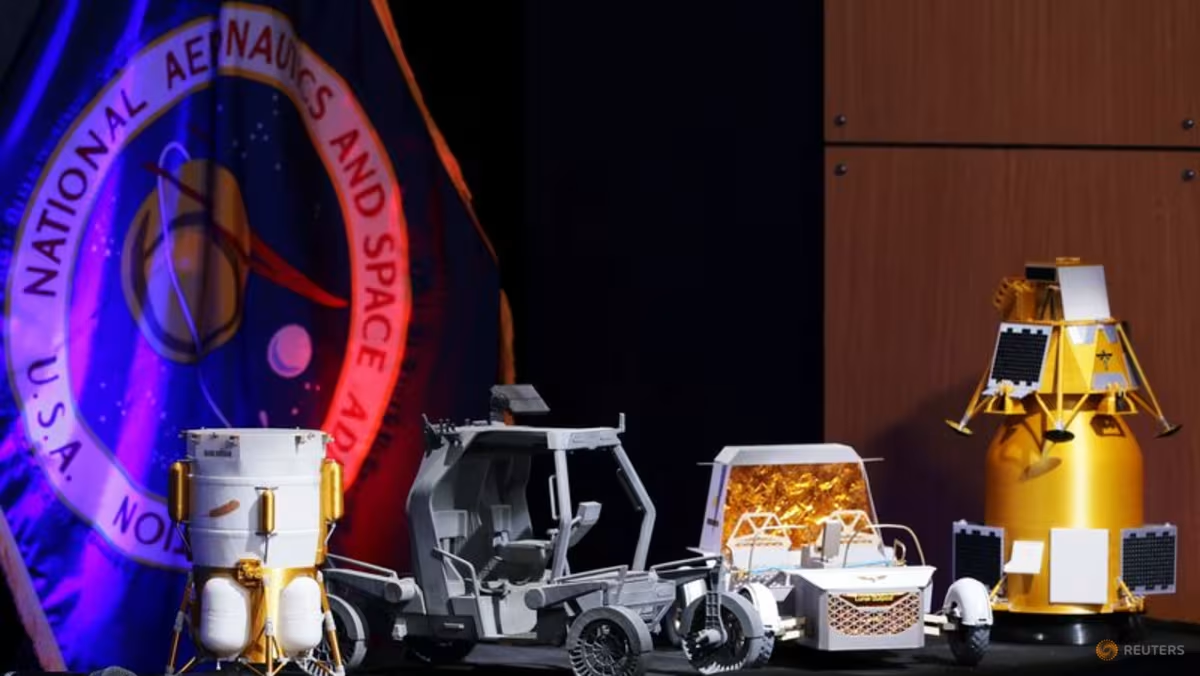
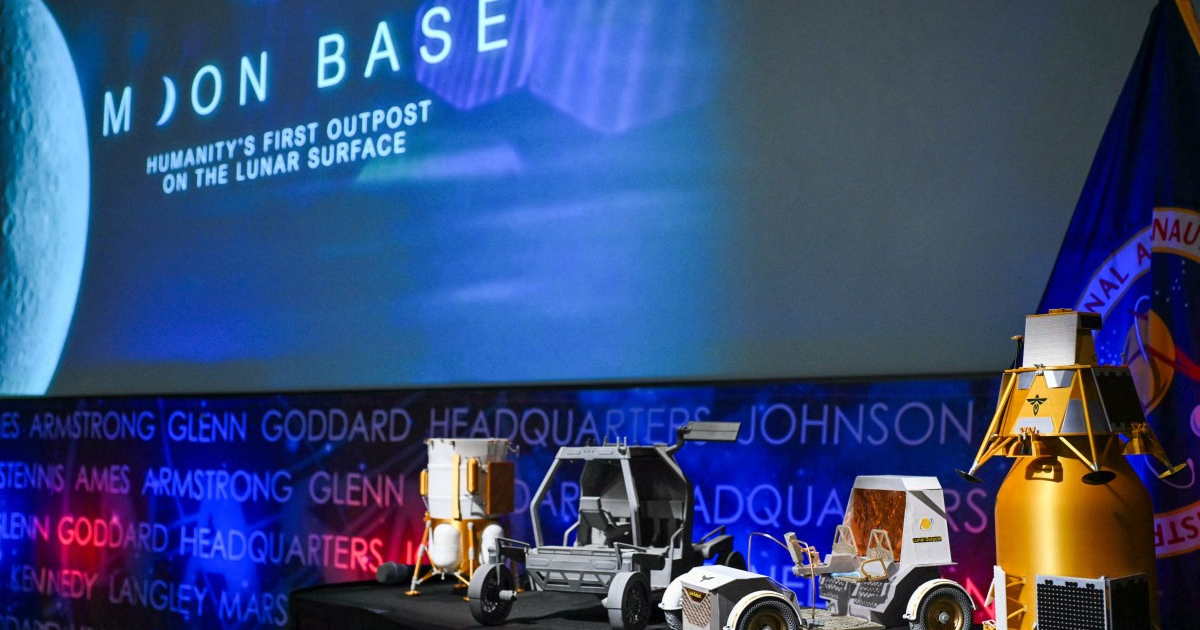
The agency announced that two companies developing lunar terrain vehicles (LTVs), Astrolab and Lunar Outpost, would each be receiving contracts valued at about $220 million each to finish their designs and get them to the Moon’s surface.
Astrolab’s Crewed Lunar Vehicle (CLV-1) takes after its original design, called FLEX, and Lunar Outpost’s Pegasus vehicle takes heritage from its earlier Eagle design. NASA previously put out a call for LTVs that would be capable of surviving on the Moon for up to 10 years, but revised its requirements to have more readily available options to augment earlier astronaut missions.
Connected to that, NASA also awarded the LTV delivery contract to Blue Origin, using it’s Blue Moon Mark 1 lander in a contract that’s worth $234 million for each LTV delivered.