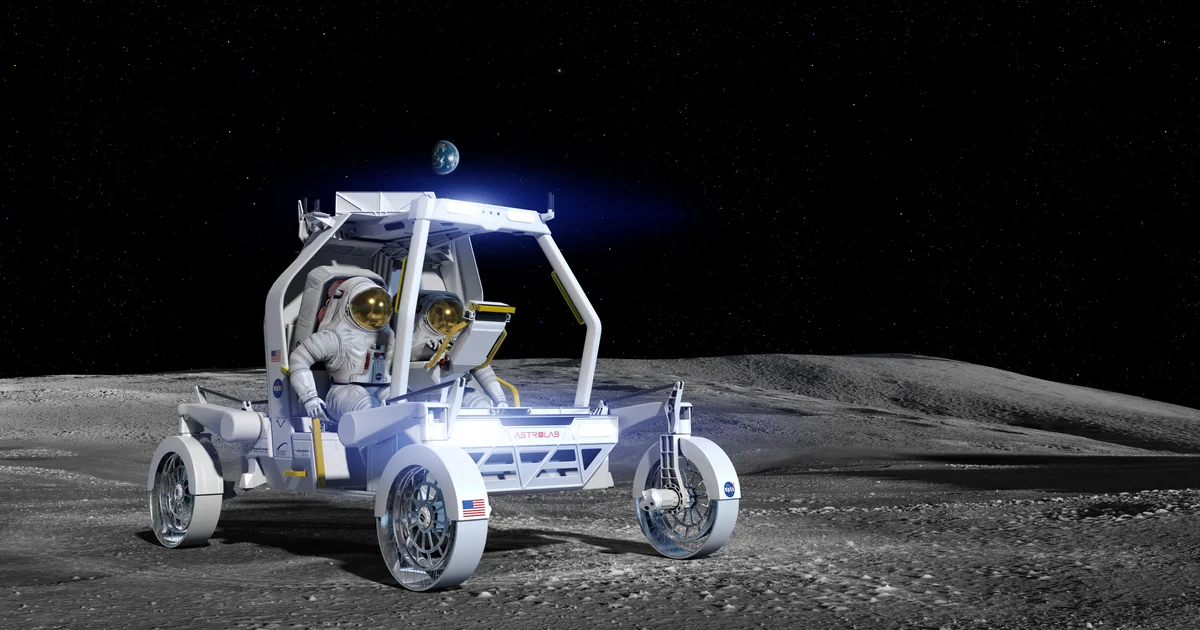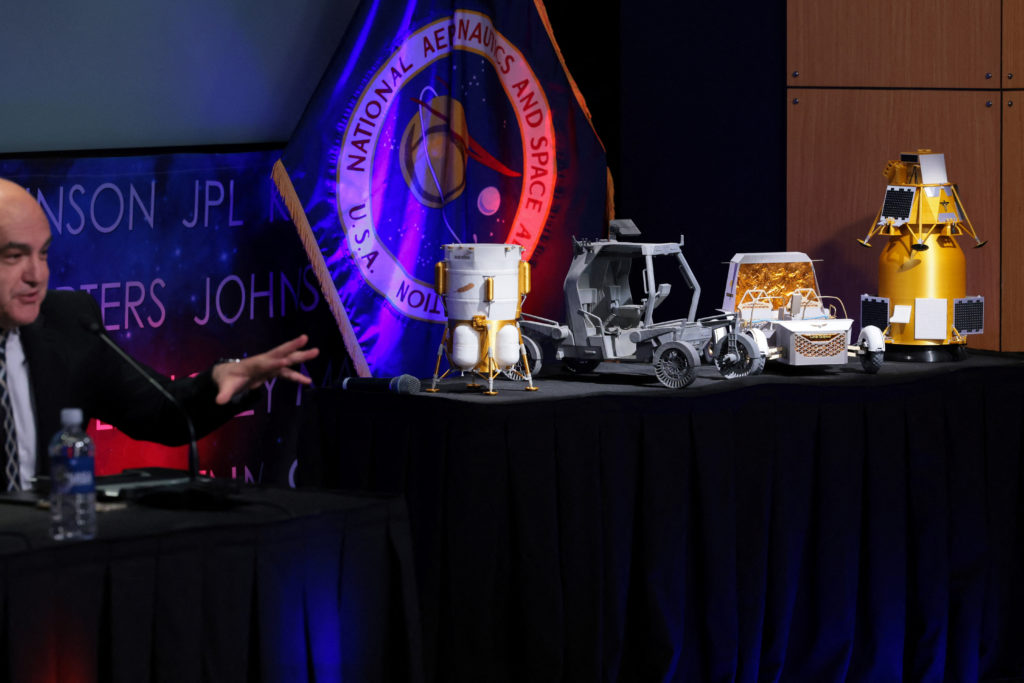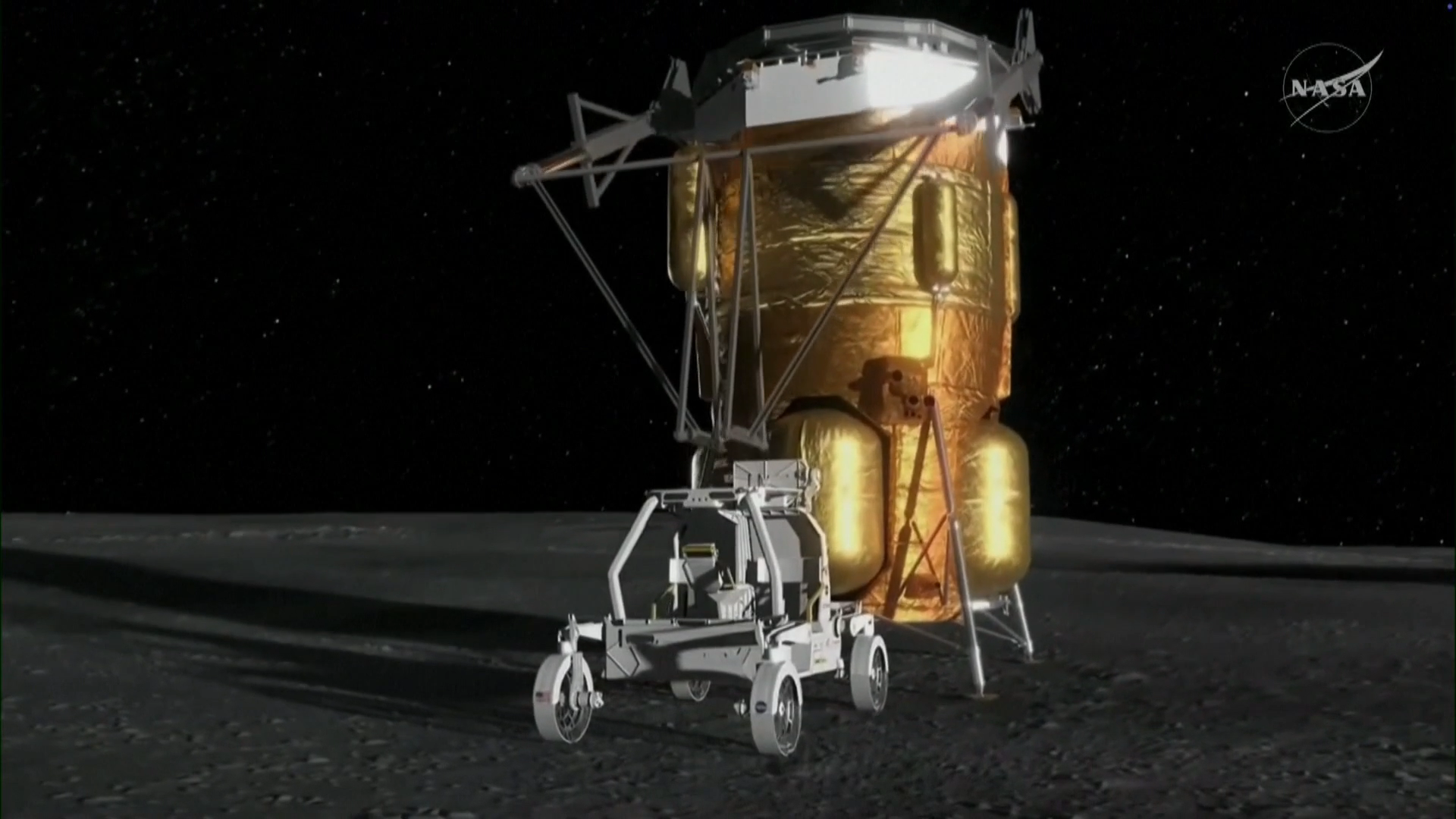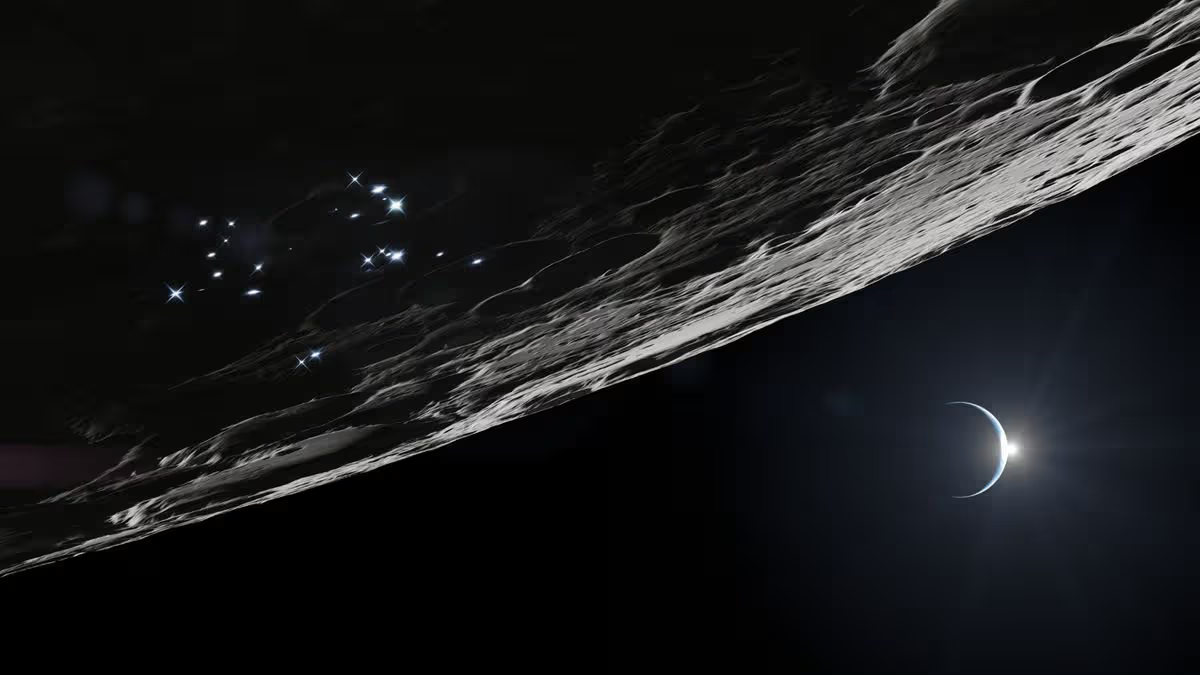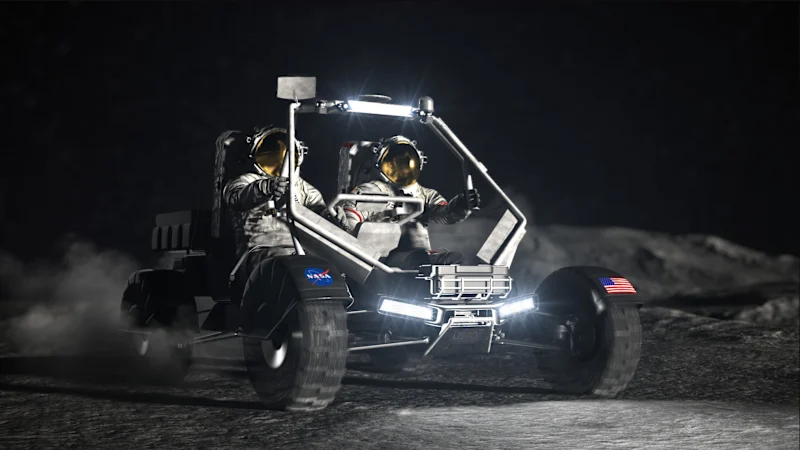
Marcia DunnMay 27, 2026 — 10:57amCape Canaveral, Florida: NASA is already ordering landers, rovers and drones for a sprawling moon base, less than two months after the Artemis II’s record-breaking lunar fly-around.The space agency outlined the first phase of its moon base plans on Tuesday (US time), awarding hundreds of millions of dollars in contracts to four US companies, part of the Trump administration’s efforts to jump-start a lunar base before the end of the decade.“With Moon Base, Artemis astronauts will stay longer, explore farther, and conduct the kinds of science that advances exploration itself,” Lori Glaze, acting associate administrator for NASA’s Exploration Systems Development Mission Directorate, said at a news conference on Tuesday.“We are building humanity’s first outpost beyond Earth,” she said. “Through Artemis, we are going. And with Moon Base, we’re going to stay.”Jeff Bezos’ Blue Origin will provide a pair of landers to deliver moon buggies to the lunar surface, at a spot near the moon’s south pole.These so-called lunar terrain vehicles will be built by Astrolab and Lunar Outpost. Firefly Aerospace, which landed successfully on the moon last year, will deliver the first drones to the moon.An artist’s concept design of NASA’s lunar terrain vehicle, which can be both crewed and uncrewed, designed to establish the foundation for sustained surface mobility.NASAEnvironmental testing of Blue Origin’s Blue Moon Mark 1 lunar lander at NASA’s Johnson Space Centre in Houston.NASAAll this hardware is ideally supposed to arrive before the first Artemis astronauts land on the moon, planned for as early as 2028.The contracts mark the first concrete steps of NASA administrator Jared Isaacman’s push to kick-start the agency into creating a moon base on the lunar surface. The Trump administration is heavily invested in getting Americans to the moon before the US President Donald Trump leaves office.In December, Trump issued an executive order calling for a crewed mission to the moon by 2028 and the beginnings of a “permanent lunar outpost” by 2030.A concept image of Japan Aerospace Exploration Agency’s pressurised rover on the surface of the moon. These are expected to be deployed during phase two of the Moon Base’s development, after 2029.NASAIn phase three – after 2032 – NASA plans to expand its lunar surface accommodation capabilities to include larger habitation modules, with improved environmental control, power and life support.NASAHe also signed off on the deployment of nuclear reactors on the moon and in orbit, including the launch of a lunar surface reactor by 2030.The US president reiterated his confidence in NASA’s stated mission last month, as he welcomed the crew from the Artemis II mission to the White House.Trump said NASA had a “good shot” at returning astronauts to the moon before he leaves the White House at the start of 2029.A NASA illustration shows what they envisage a US base on the moon could look like.NASA“We’re ahead of schedule. So, we have a good shot,” he said.During April’s Artemis II mission, four astronauts flew around the moon, travelling deeper into space than the Apollo moon crews did during the late 1960s and early 1970s.For next year’s Artemis III, another team of astronauts will practise docking NASA’s Orion capsule in orbit around Earth with the lunar landers being developed for crews by Blue Origin and Elon Musk’s SpaceX.NASA is targeting Artemis III for mid-2027, with a landing by two astronauts following as soon as 2028. The Moon Base’s second phase, from 2029 into the early 2030s, will start building up the permanent infrastructure, including a power grid.An image captured by the Artemis II crew from lunar orbit, showing the moon eclipsing the sun on April 6 this year.NASA via APAs for when the base will be ready to support astronauts for extended periods in specialised permanent habitats, that’s expected sometime in the 2030s, during the third phase.“Then we’ll be able to say, ‘Hey, we’re permanently here and we’re not giving it up,’” said NASA’s program executive for the Moon Base, Carlos Garcia-Galan.Garcia-Galan envisions the lunar base sprawling over hundreds of square miles, with a perimeter marked by drones, dubbed MoonFall, stationed at the corners.Isaacman said these territory markers were meant to be respectful of other countries’ spacecraft and equipment that might be nearby. He expects reciprocity in the matter.An artist’s rendering of a MoonFall drone operating near the lunar south pole.NASAChina has been accelerating its space plans as it works towards its ambition of a crewed moon landing by 2030.It sent three astronauts to its space station on Sunday, one of whom will stay for a year, a record length for the country, enabling the study of long-duration human physiology in space.A successful crewed landing by 2030 would boost China’s plans to establish a permanent base on the moon by 2035 with Russia. The Chinese lunar program’s chief scientist, Wu Weiren, has said Beijing’s public timeline was intentionally conservative.The goal of the Moon Base is to encourage a lunar economy while conducting scientific research and laying the foundation for a Mars expedition, Isaacman said.“For those waiting patiently, the grand return is close at hand and we will not slow down,” Isaacman said. “We are really just getting started.”AP, Bloomberg, ReutersGet a note directly from our foreign correspondents on what’s making headlines around the world. Sign up for our weekly What in the World newsletter.From our partners
NASA lays out moon base plans in race to get humans back on lunar surface
The space agency has turned to Jeff Bezos as it seeks to jump-start progress on US President Donald Trump’s demand for a lunar base by the end of the decade.
881 words~4 min read