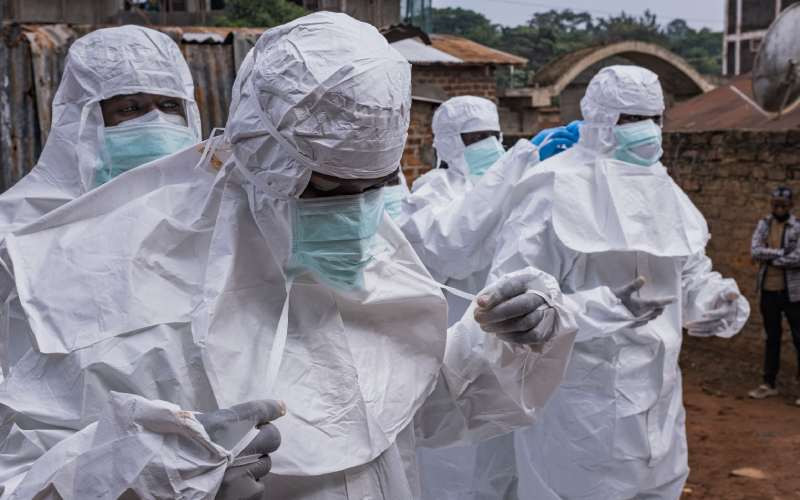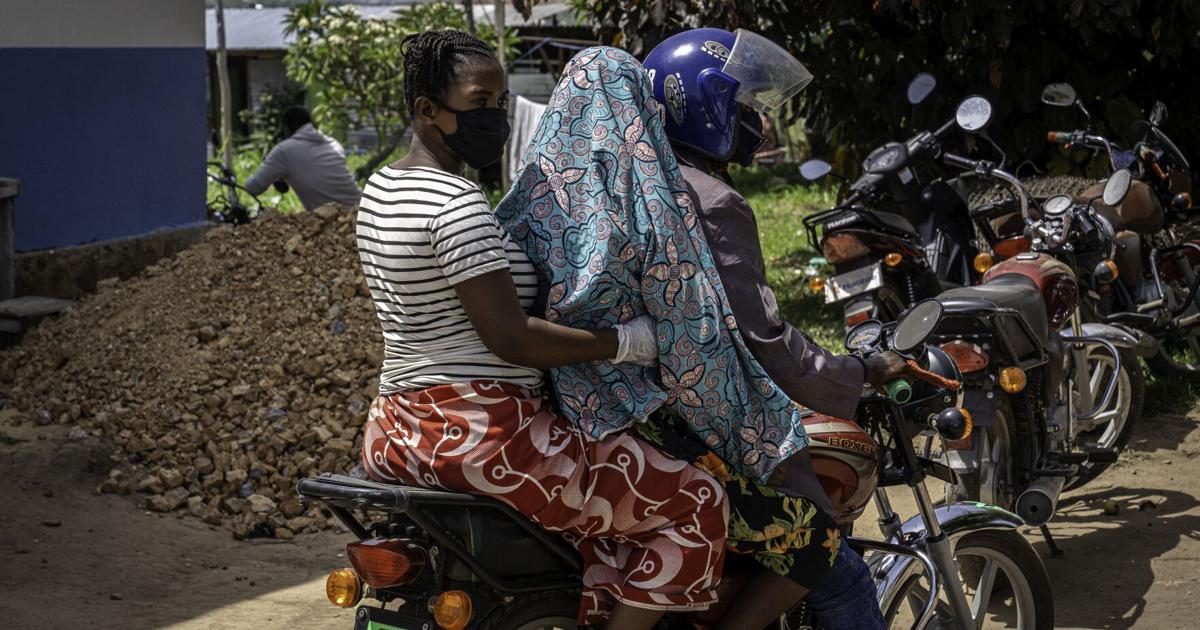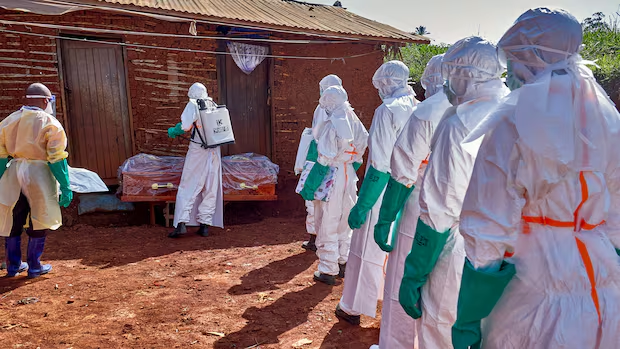
CanadaCanadian officials are clamping down on travel and immigration from multiple countries in central Africa as the region continues to face a fast-spreading outbreak of Ebola, citing the upcoming FIFA World Cup as a key reason to tighten the borders.Federal officials say they are pausing some immigration documents for at least 90 daysListen to this articleEstimated 6 minutesThe audio version of this article is generated by AI-based technology. Mispronunciations can occur. We are working with our partners to continually review and improve the results.Federal public health and immigration officials said that as of Wednesday at 11:59 p.m., immigration documents from citizens of the Democratic Republic of Congo, where Red Cross workers are pictured, Uganda and South Sudan will be suspended. (Gradel Muyisa Mumbere / REUTERS)Canadian officials are clamping down on travel and immigration from multiple countries in central Africa as the region continues to face a fast-spreading outbreak of Ebola, citing the upcoming FIFA World Cup as a key reason to tighten the borders.In a Tuesday briefing, federal public health and immigration officials said that as of Wednesday at 11:59 p.m., immigration documents from citizens of the Democratic Republic of Congo (DRC), Uganda and South Sudan will be suspended. Those documents include permanent residence visas, temporary residence visas, electronic travel authorizations, study permits and work permits. These applications will not be processed for at least 90 days, as officials framed it is a "pause" rather than an outright ban on immigration. Applications for people who are already in Canada will still be processed, and anyone who is mid-travel will be exempt from the suspension, officials said. This marks the first time the federal government is using its new powers under Bill C-12, the law passed in March which overhauls immigration powers and now allows Ottawa to mass pause — or even cancel — visas."This step is necessary because of the seriousness of this situation and the severity of the Ebola outbreak and elevated risk of transmission in these countries," Lena Metlege Diab, federal minister of immigration, refugees and citizenship, said during a separate news conference Tuesday. As of May 30, additional border measures are also being implemented under the Quarantine Act. Canadian citizens, permanent residents and foreign nationals who have been in impacted countries in the previous 21 days will be allowed to enter Canada but must undergo a health assessment, officials said in the briefing.Blanket travel bans remain a controversial option and are discouraged under the International Health Regulations — a World Health Organization (WHO) treaty involving all member states that is meant to prevent and control the spread of disease. When asked about WHO warnings about making rules based on fear, rather than science, Health Minister Marjorie Michel said, "it's not a question of science" because people remain "traumatized" by prior outbreaks."It will take one [Ebola] case — one, not two, one case — and everybody will say we didn't protect [the public]," Michel said.Michel also said Canada needed to be "aligned" with the U.S. and Mexico as the FIFA World Cup approaches. Starting in June, the largest tournament in FIFA history is bringing together dozens of countries, with Canada set to host 13 matches in Toronto and Vancouver. WATCH | WHO warns about deadly outbreak:Ebola outbreak spreading fast in Congo, WHO warnsMay 22|Duration 2:12The deadly outbreak of an Ebola strain with no vaccine is spreading rapidly and poses a 'very high risk' to people in the Democratic Republic of Congo, with a growing risk of it spilling across borders, the World Health Organization warns.Officials said any travellers with Ebola symptoms will be transferred to hospital, while others will need to self-isolate for 21 days.For Canadians or Canadian permanent residents who need to self-isolate, but do not have a space to do so, the government said it will provide spaces. They said these should be ready by Saturday, but didn't say where these places are because of safety and security reasons. While these plans are still under development, border officials say, screening measures for travellers will be in place until Aug. 29. The risk to Canadians remains low, and this is being done out of an "abundance of caution," officials said.'Worse before it gets better'The Ebola outbreak in central Africa has reached more than 1,000 suspected cases and hundreds of deaths, largely in Congo, with seven known cases to date in neighbouring Uganda.Dr. Tedros Adhanom Ghebreyesus, director-general of the World Health Organization, said on Monday that delays detecting the fast-moving epidemic mean teams are now playing catch-up with an outbreak that will "get worse before it gets better." Congo's Ebola outbreak complicated by aid cuts, armed rebels and anger'Race against time' to contain Ebola outbreak in central AfricaThere is no approved treatment or vaccine for the relatively rare Bundibugyo form of the Ebola virus that’s behind the current outbreak. Congo’s remote northeastern provinces are also experiencing intensifying violence, high levels of community distrust and protests at Ebola treatment sites — all complicating health-care workers' efforts to contain the outbreak.WATCH | Health minister says FIFA part of reason for restrictions:Health minister cites FIFA World Cup and lingering COVID-19 trauma for strict Ebola measures54 minutes ago|Duration 2:25Canadian Minister of Health Marjorie Michel suggested that new travel restrictions in response to the Ebola outbreak are to align with Mexico and the U.S. because the countries are co-hosting the FIFA World Cup. Asked about a WHO warning about making rules based on fear rather than science, Michel said 'it's not a question of science' because people are still traumatized by COVID-19.On average, 350 people from DRC, Uganda and South Sudan come to Canada each week, officials said. They mostly pass through Montreal, Toronto and Vancouver airports. About 60 per cent of flights are Canadians or permanent residents, whereas 40 per cent are foreign nationals. That means officials expect 40 per cent fewer passengers. U.S. already enacted banCanada’s move follows U.S. officials temporarily banning the entry of lawful permanent residents who have been in Congo, Uganda or South Sudan in the previous 21 days, as of last week. The U.S. Centers for Disease Control and Prevention later said that extending the ban to green card holders was also necessary.LISTEN | Congolese health-care workers face an uphill battle:As It Happens6:02Congolese health-care workers face public distrust and armed attacks The people working full-time to respond to the ebola crisis in the Democratic Republic of Congo are facing hostility. Three times in the past week, health-care facilities have been attacked by armed men. Ahmed Mahat, manager with International Medical Corps, spoke to As It Happens host Nil Kӧksal about his work building isolation wards for ebola patients, while trying to build trust and within the wider community. Toronto-based infectious disease specialist Dr. Isaac Bogoch noted the biggest issue in terms of the ongoing spread of Ebola is within Africa itself, given "porous borders" between countries."Regardless of what Canada's response is to reduce the risk of Ebola virus importation, it's imperative that we work with the countries impacted and the global community to quell this outbreak as quickly as possible, because the longer this outbreak persists, the higher the probability it is that it will see exported cases to more distant locales," he said."Also, it's the moral and ethical thing to do. That’s the most important aspect."The federal government also noted it will be deploying at least one Canadian epidemiologist with previous Ebola experience into DRC to support efforts on the ground, with that individual scheduled to depart within the next week.ABOUT THE AUTHORLauren Pelley is a senior health and medical reporter for CBC News. She's a two-time RNAO Media Award winner for in-depth health reporting in 2020 and 2022, a silver medallist for best editorial newsletter at the 2024 Digital Publishing Awards, and a 2024 Covering Climate Now award winner in the health category. Contact her at: lauren.pelley@cbc.ca.@LaurenPelleyWith files from Raffy Boudjikanian
Canada clamping down on travel, immigration from central Africa amid Ebola outbreak | CBC News
Canadian officials are clamping down on travel and immigration from multiple countries in central Africa as the region continues to face a fast-spreading outbreak of Ebola, citing the upcoming FIFA World Cup as a key reason to tighten the borders.
1,306 words~6 min read