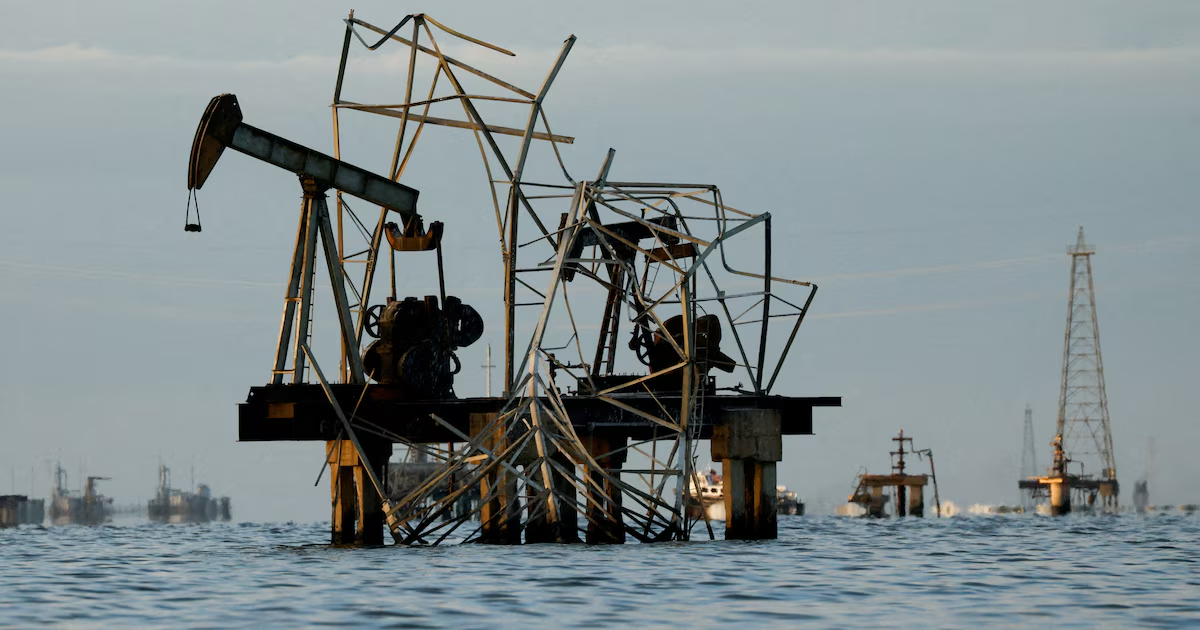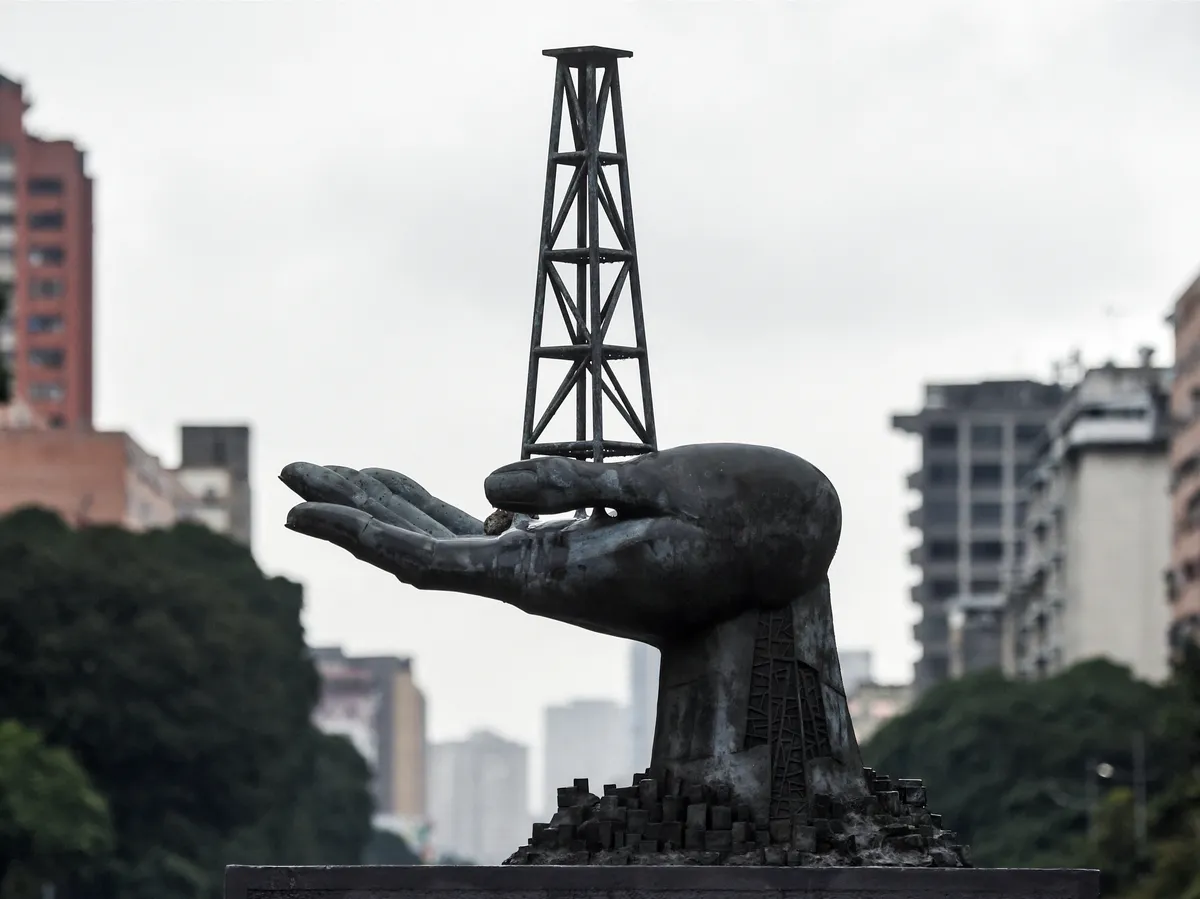
Skip to Content News Archives Economy Energy Oil & Gas Renewables Electric Vehicles Mining Commodities Agriculture Real Estate Mortgages Mortgage Rates Finance Banking Insurance Fintech Cryptocurrency Work Wealth Smart Money Wealth Management Investor Personal Finance Family Finance Retirement Taxes High Net Worth FP Comment Executive Women Puzzmo Newsletters Financial Times Business Essentials More Innovation Information Technology FP500 Podcasts Small Business Lives Told Tails Told Shopping Financial Post Store Obituaries Place a Notice Advertising Advertising With Us Advertising Solutions Postmedia Ad Manager Sponsorship Requests Classifieds Place a Classifieds ad Working Profile Settings My Subscriptions Saved Articles My Offers Newsletters Customer Service FAQ News Economy Energy Mining Real Estate Finance Work Wealth Investor FP Comment Executive Women Puzzmo Newsletters Financial Times Business Essentials HomeOil & GasNewsExxon, ConocoPhillips seek safeguards to return to VenezuelaFor Venezuela, getting Exxon and ConocoPhillips back in the country would signal a clear move toward stabilityAuthor of the article:Last updated 30 minutes ago You can save this article by registering for free here. Or sign-in if you have an account.Recent changes to Venezuela’s oil law were designed to attract much-needed foreign investment in the country’s crumbling oil infrastructure. Photo by Miguel ZAMBRANO/AFP via Getty ImagesExxon Mobil Corp. and ConocoPhillips are pushing for durable contract terms and a way to resolve billions of dollars owed to them as they consider re-entering Venezuela after exiting the country two decades ago.Subscribe now to read the latest news in your city and across Canada.Exclusive articles from Barbara Shecter, Joe O'Connor, Gabriel Friedman, and others.Daily content from Financial Times, the world's leading global business publication.Unlimited online access to read articles from Financial Post, National Post and 15 news sites across Canada with one account.National Post ePaper, an electronic replica of the print edition to view on any device, share and comment on.Daily puzzles, including the New York Times Crossword.Subscribe now to read the latest news in your city and across Canada.Exclusive articles from Barbara Shecter, Joe O'Connor, Gabriel Friedman and others.Daily content from Financial Times, the world's leading global business publication.Unlimited online access to read articles from Financial Post, National Post and 15 news sites across Canada with one account.National Post ePaper, an electronic replica of the print edition to view on any device, share and comment on.Daily puzzles, including the New York Times Crossword.Create an account or sign in to continue with your reading experience.Access articles from across Canada with one account.Share your thoughts and join the conversation in the comments.Enjoy additional articles per month.Get email updates from your favourite authors.Create an account or sign in to continue with your reading experience.Access articles from across Canada with one accountShare your thoughts and join the conversation in the commentsEnjoy additional articles per monthGet email updates from your favourite authorsSign In or Create an AccountorBoth companies are in active negotiations with President Delcy Rodríguez’s government about tapping Venezuela’s vast oil reserves. While they’ve recently said Venezuela has more work to do on production-sharing agreements and other matters, the companies are privately encouraged by the willingness of Rodríguez and her advisers to negotiate different aspects of the contracts, according to people familiar with the matter.An Exxon team met with United States embassy officials in Caracas recently and had discussions with Venezuelan officials in Houston, some of the people said. Earlier this month, chief executive Darren Woods said Exxon is studying how to apply its expertise in Canadian heavy oil to Venezuela’s crude, which has a similar high viscosity.Breaking business news, incisive views, must-reads and market signals. Weekdays by 9 a.m.By signing up you consent to receive the above newsletter from Postmedia Network Inc.A welcome email is on its way. If you don't see it, please check your junk folder.The next issue of Posthaste will soon be in your inbox.We encountered an issue signing you up. Please try againThe political push from both Rodríguez and U.S. President Donald Trump to restart production represents a once-in-a-generation opportunity for the oil majors to tap into one of the world’s largest sources of crude unaffected by the conflict in the Middle East. Chevron Corp., unlike its U.S. rivals, stayed in Venezuela through the late President Hugo Chávez’s nationalizations and years of U.S. sanctions. It is now in prime position to quickly grow production as crude is trading for about US$100 a barrel.Exxon and ConocoPhillips don’t want to miss out. Their interest has gathered pace since January, when Woods called the country “uninvestable” under then-current conditions during a White House meeting. Still, both companies are wary of what may happen if the political situation changes, either in the U.S. or Venezuela, some of the people said.For Venezuela, getting Exxon and ConocoPhillips back in the country would signal a clear move toward economic stability, opening a path to more investors.“Bringing back Exxon Mobil and ConocoPhillips is a top priority for the government, and they’re putting a lot of resources and effort behind it,” said Carlos Bellorin, an executive vice president at Welligence Energy Analytics. “But for either company to seriously consider returning, the deal would likely need to be very attractive.”ConocoPhillips said in a statement that it’s evaluating opportunities in Venezuela, including gathering data and engaging in discussions with “relevant stakeholders.”“As with any potential investment, decisions will be guided by a range of factors, including economic and policy stability, safety, adherence to the rule of law and market competitiveness,” the company said. “Any decision to proceed would need to take into account mechanisms to recover the debt that is owed.”Exxon declined to comment.One of the most critical issues is whether the companies can structure their investments in such a way that they can avoid losing billions of dollars if they were nationalized in the future. Global oil producers typically insist on stability clauses that mean contracts can’t be unilaterally changed by successive governments when negotiating major deals to enter new countries. They also routinely insist on settling any disputes through international arbitration proceedings rather than local courts.In the years following its nationalization, ConocoPhillips was awarded about US$12 billion compensation in arbitration proceedings, the majority of which has not yet been paid.“They are trying to think about different ways to satisfy the debt that’s owed to our company,” chief executive Ryan Lance said in a recent interview. “Until we get some relief there, going and investing a lot more money into Venezuela, given the current situation, would be difficult for us.”Recent changes to Venezuela’s oil law were designed to attract much-needed foreign investment in the country’s crumbling oil infrastructure. But the law still gives the government wide latitude to charge royalties of up to 30 per cent and as much as 15 per cent in taxes and other levies.“They have a long ways to go,” Lance said. “The current hydrocarbon law is not sufficient to attract a whole lot of investment.”Some of Exxon’s operations ended up being part-owned by Russia’s Rosneft Oil Co. after the Texas oil major was forced out by Chavez. The Trump administration has made it clear it wants to lessen Russian, Chinese and Iranian influence as the U.S. helps rebuild Venezuela’s oil industry, raising the possibility of Exxon reclaiming the assets it formerly owned.“We need to get our adversaries, particularly their nefarious activities, out of our hemisphere,” Energy Secretary Chris Wright said in February.U.S. Interior Secretary Doug Burgum, who also heads Trump’s National Energy Dominance Council, has spoken with Rodríguez about the need to offer companies attractive returns if she wants them to help revive production.“I remain very optimistic about where this is going,” he said in a recent interview. “These companies, if they don’t like the terms, they’ll say ‘no,’ and that’ll put pressure on Venezuela to get to a spot where they become competitive for capital.”—With assistance from Peter Millard, Andreina Itriago and Nicolle Yapur. Join the Conversation This website uses cookies to personalize your content (including ads), and allows us to analyze our traffic. Read more about cookies here. By continuing to use our site, you agree to our Terms of Use and Privacy Policy.
Exxon, ConocoPhillips seek safeguards to return to Venezuela
Exxon Mobil Corp. and ConocoPhillips are pushing for durable contract terms as they consider re-entering Venezuela. Read more here now
1,329 words~6 min read