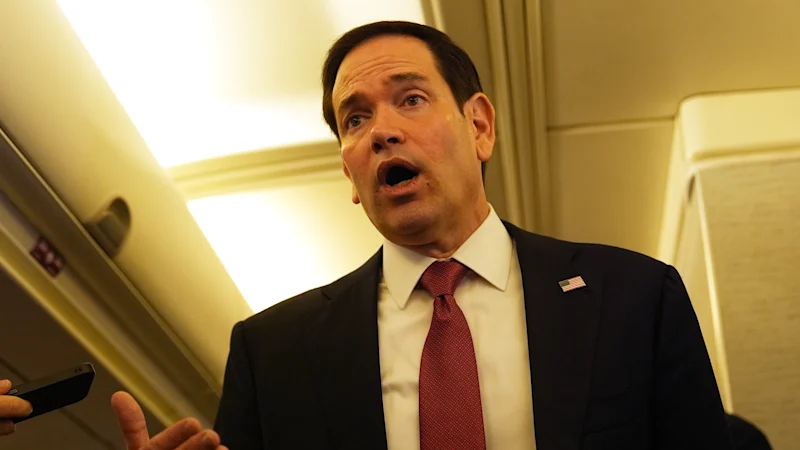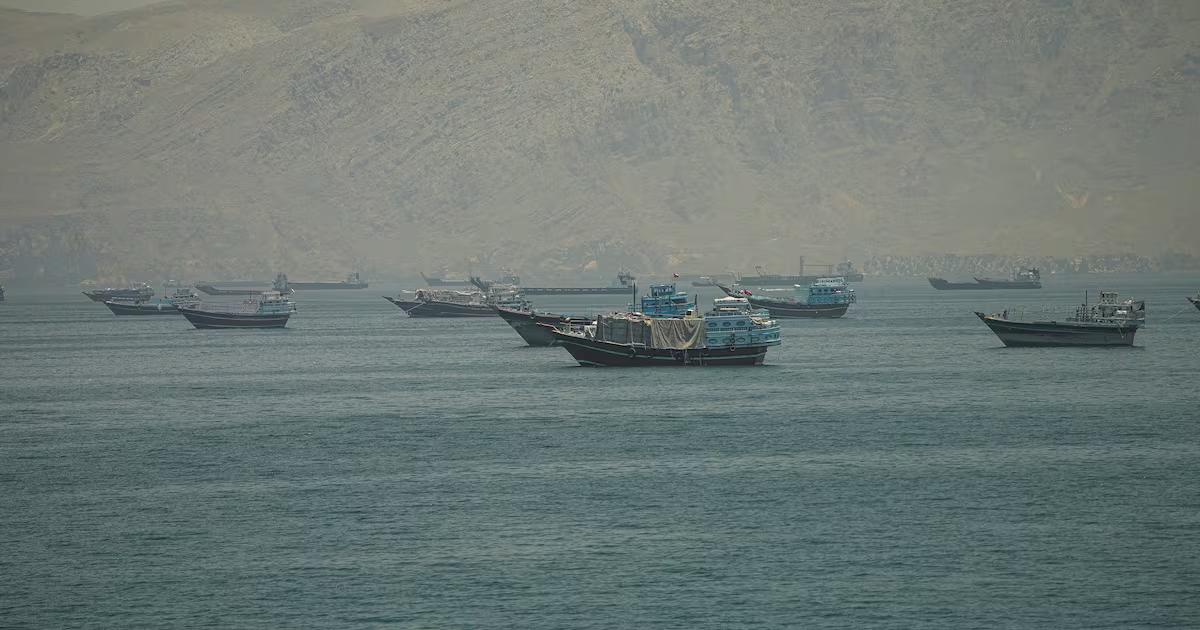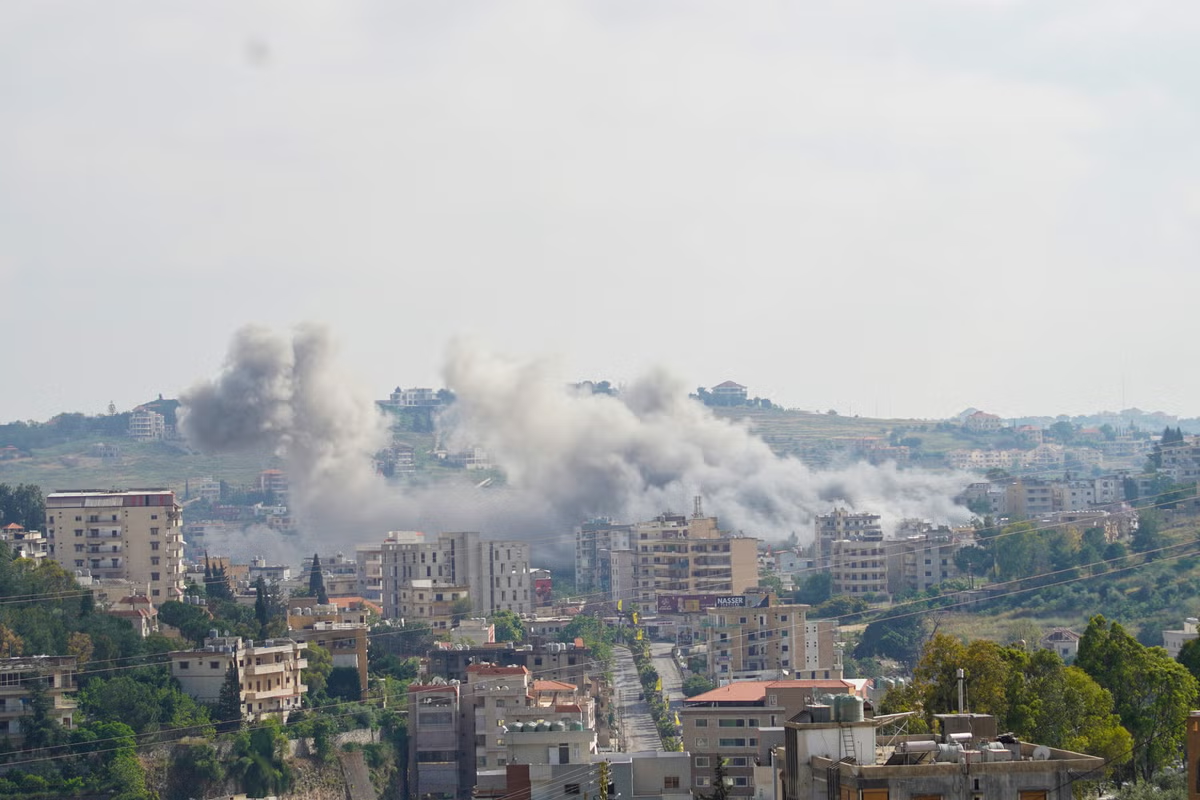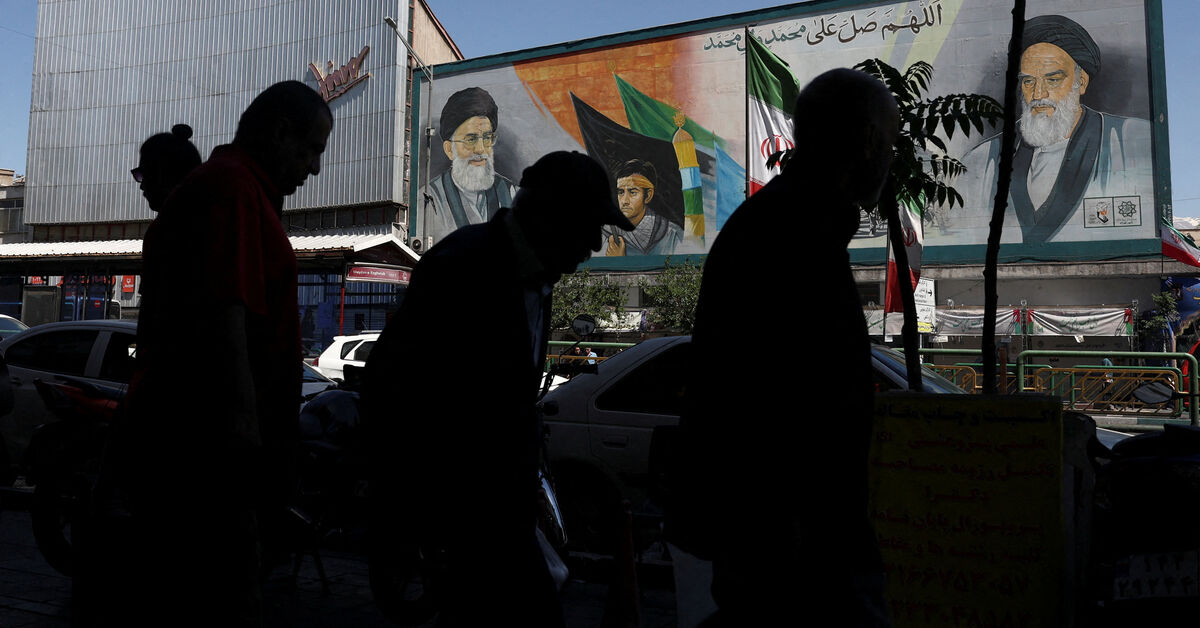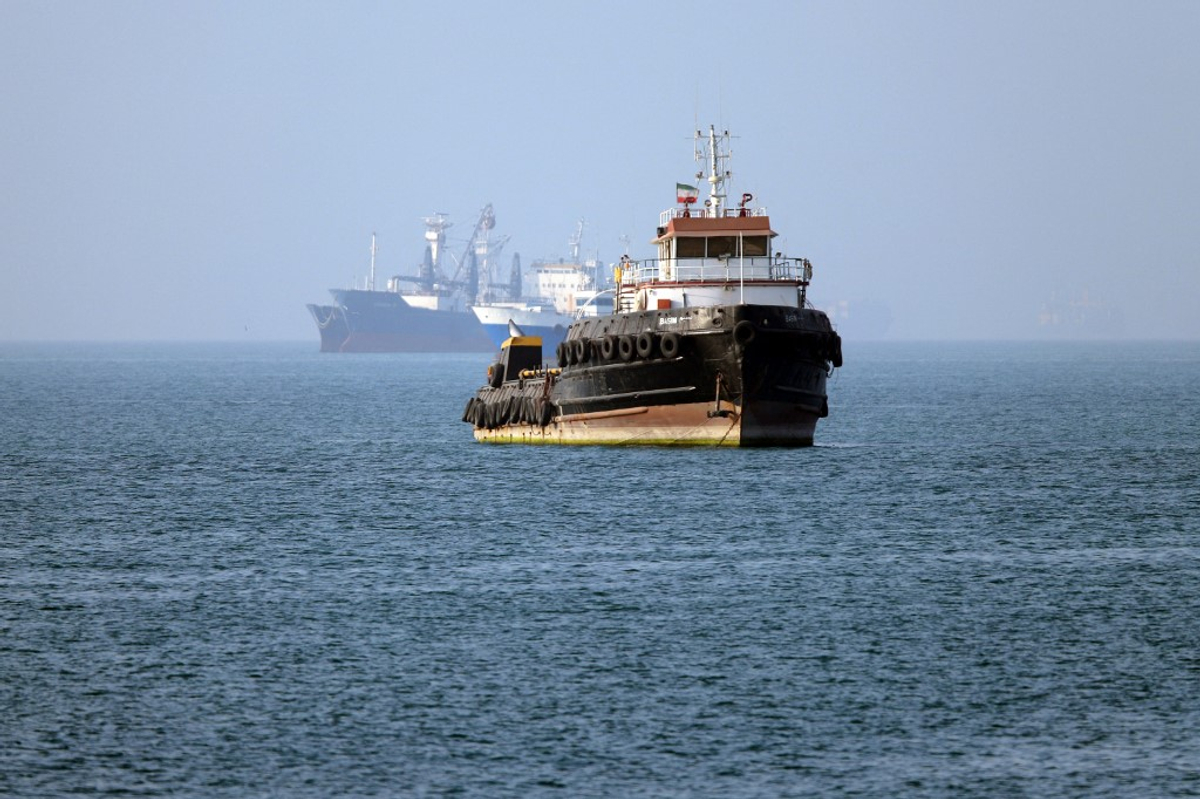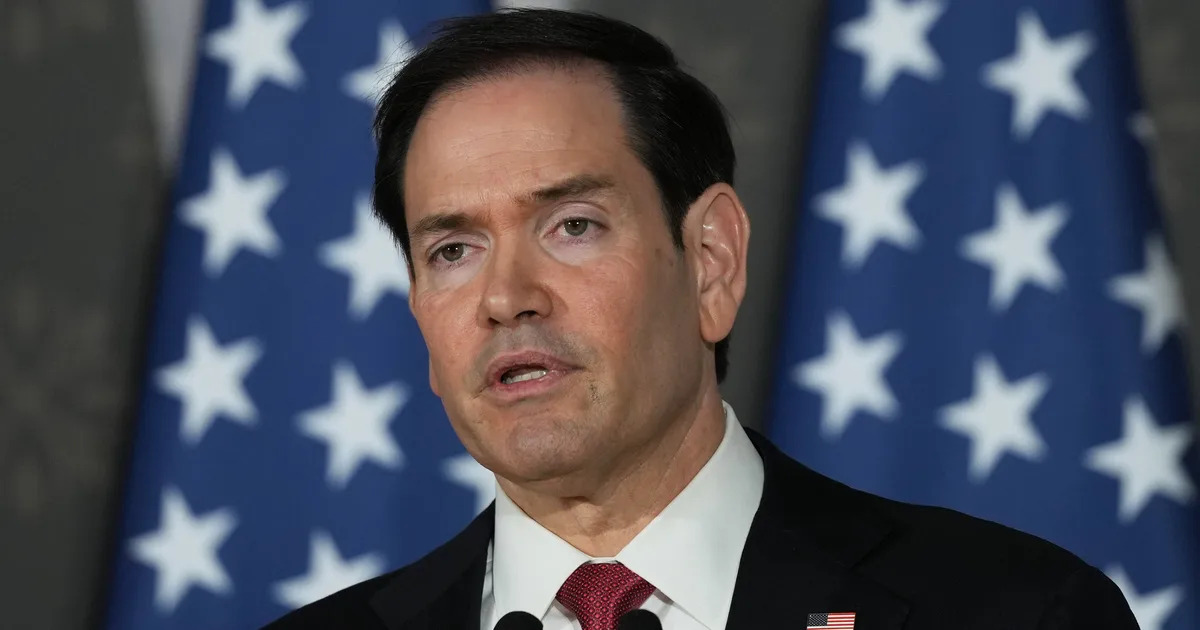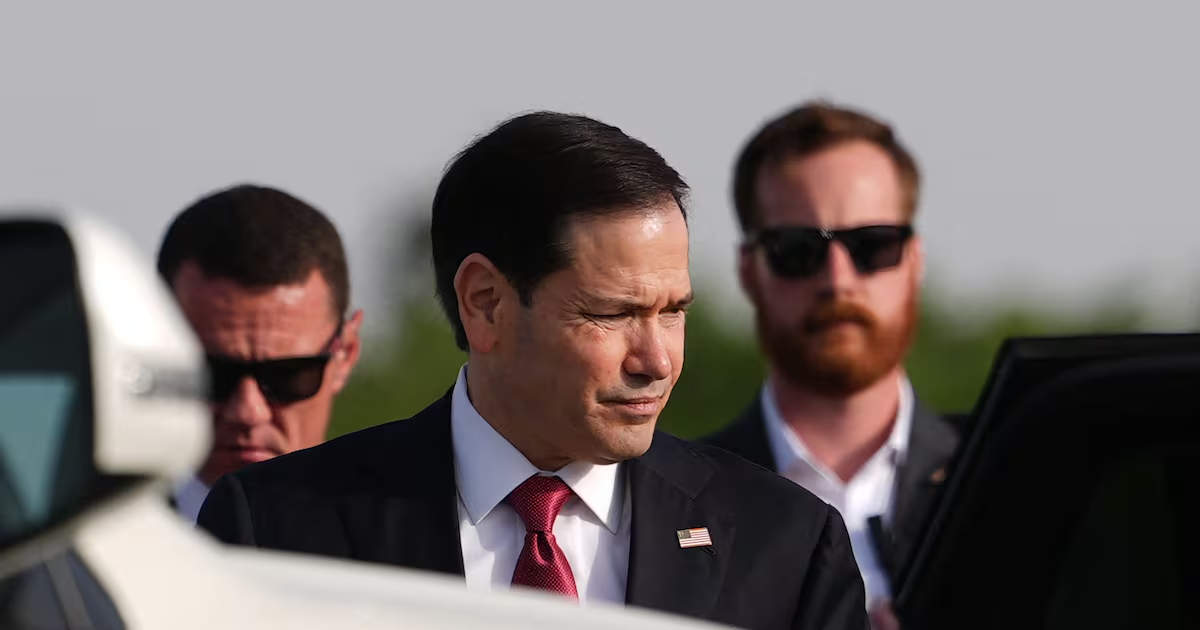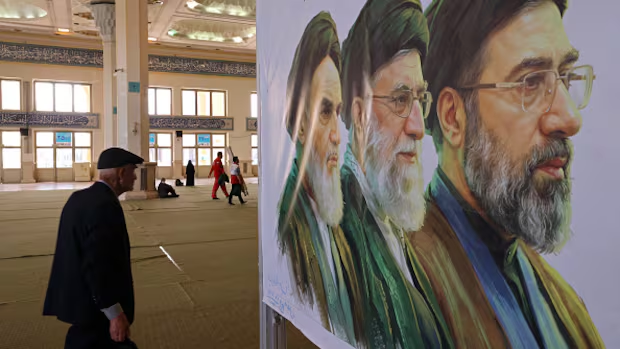
World·UpdatedIran said the United States violated a ceasefire after the U.S. conducted what it called defensive strikes in southern Iran, while U.S. Secretary of State Marco Rubio said negotiating a deal to halt the conflict could "take a few days."U.S. Secretary of State Marco Rubio said negotiating a deal to halt the conflict could 'take a few days'Thomson Reuters · Posted: May 26, 2026 7:19 AM EDT | Last Updated: 25 minutes agoListen to this articleEstimated 5 minutesThe audio version of this article is generated by AI-based technology. Mispronunciations can occur. We are working with our partners to continually review and improve the results.U.S. forces strike boats, missile sites in Iran7 hours ago|Duration 3:52U.S. Secretary of State Marco Rubio said negotiating a deal with Iran could 'take a few days' after the U.S. military conducted strikes in southern Iran against targets, including boats attempting to lay mines and missile launch sites.Iran said the United States violated a ceasefire after the U.S. conducted what it called defensive strikes in southern Iran, while U.S. Secretary of State Marco Rubio said negotiating a deal to halt the conflict could "take a few days." Iran's Foreign Ministry said U.S. strikes in Iran's southern Hormozgan province, where Iranian media reported sounds of explosions early on Tuesday, represented a "gross violation" of the already tenuous ceasefire in place for nearly seven weeks. Both sides had previously indicated there had been progress on a memorandum of understanding that could halt the war and restart shipping through the blockaded Strait of Hormuz, while giving negotiators 60 days to tackle more complex issues including Iran's nuclear program. Following strikes against targets that the U.S. said included boats attempting to lay mines and missile launch sites, Rubio told reporters on his plane in India's Jaipur that the Strait of Hormuz had to be open "one way or the other." Only a few dozen vessels have been passing through the strait compared with 125 to 140 daily before the war began on Feb. 28. A drone view of vessels anchored at the Strait of Hormuz, as seen from Musandam, Oman, Monday. (Reuters)The standoff has caused a spike in oil prices and driven up the costs of fuel, fertilizer and food. Global benchmark Brent crude futures rose by about 3.5 per cent on Tuesday to around $100 US a barrel. Iran's Revolutionary Guard Corps said on Tuesday it reserved the "legitimate and definite" right to retaliate against any ceasefire violations by the U.S., adding that its air defence units had shot down a U.S. MQ-9 drone and fired at a fighter jet that had entered Iranian airspace, state media reported. Meanwhile, a statement attributed to Iran's Supreme Leader Mojtaba Khamenei said that countries in the region could no longer be a shield for U.S. bases. An Iranian man walks on Sunday in Tehran past an image of former and the current Iranian supreme leaders, from left to right: Ayatollah Ruhollah Khomeini, Ali Khamenei and Mojtaba Khamenei, the son of Ali Khameni who was elevated in March. (Atta Kenare/AFP/Getty Images)Iran says nuclear issues to be negotiated laterFollowing a ceasefire in early April, the two sides have remained at odds on difficult issues including Iran's nuclear ambitions, Israel's war in Lebanon with the Iranian-backed Hezbollah militia and Tehran's demands for the lifting of sanctions and the release of frozen assets.Iranian sources said a framework deal is only about ending the war on all fronts, establishing a 30-day framework for movement through the Strait of Hormuz and possibly providing some financial relief.Iranian Foreign Ministry spokesperson Esmaeil Baghaei said earlier that nuclear issues would only be negotiated after the framework accord was agreed.Iran's national soccer team to commute to U.S.-hosted World Cup games from MexicoAnalysisNetanyahu's future uncertain as Israel starts to prepare for national electionU.S. President Donald Trump has said his key aim in the war is to prevent Iran from developing a nuclear weapon with its highly enriched uranium. Tehran has consistently denied it has plans to do that.The last deal over the nuclear program — struck in 2015 and torn up by Trump in 2018 — took years of negotiations between large teams of technical experts. In terms of the framework to end the war, Iran would not charge tolls for ships to pass through the strait, but there would be a cost for services offered such as navigation and steps to protect the environment, he said, under a protocol to be agreed with Oman, which lies on the opposite shore of the waterway.In a lengthy post on Truth Social on Monday, Trump said any agreement to end the Iran war should include a requirement for several additional countries, including Saudi Arabia and Pakistan, to join the Abraham Accords, the U.S.-brokered agreements from Trump's first term aimed at normalizing relations with Israel. The president said he brought up the Abraham Accords plan with regional leaders on the weekend, but the proposal could add new diplomatic complications to the negotiations. Saudi Arabia's longstanding position has been that it would not sign the accords unless there is an agreement on a roadmap to Palestinian statehood.WATCH | U.S. struggles to end war after initial shock and awe:Why the U.S. 'silver bullet' strategy isn't working against Iran | About ThatMay 12|Duration 11:58More than 10 weeks into the war and without a clear end in sight, U.S. President Donald Trump says the ceasefire between the U.S. and Iran is on 'massive life support.' Andrew Chang explains why the U.S. strategy to end the conflict — which Trump initially said wouldn't last more than a month — is falling short.
Tehran says U.S. violated ceasefire agreement when it launched strikes in southern Iran | CBC News
Iran said the United States violated a ceasefire after the U.S. conducted what it called defensive strikes in southern Iran, while U.S. Secretary of State Marco Rubio said negotiating a deal to halt the conflict could "take a few days."
1,061 words~5 min read