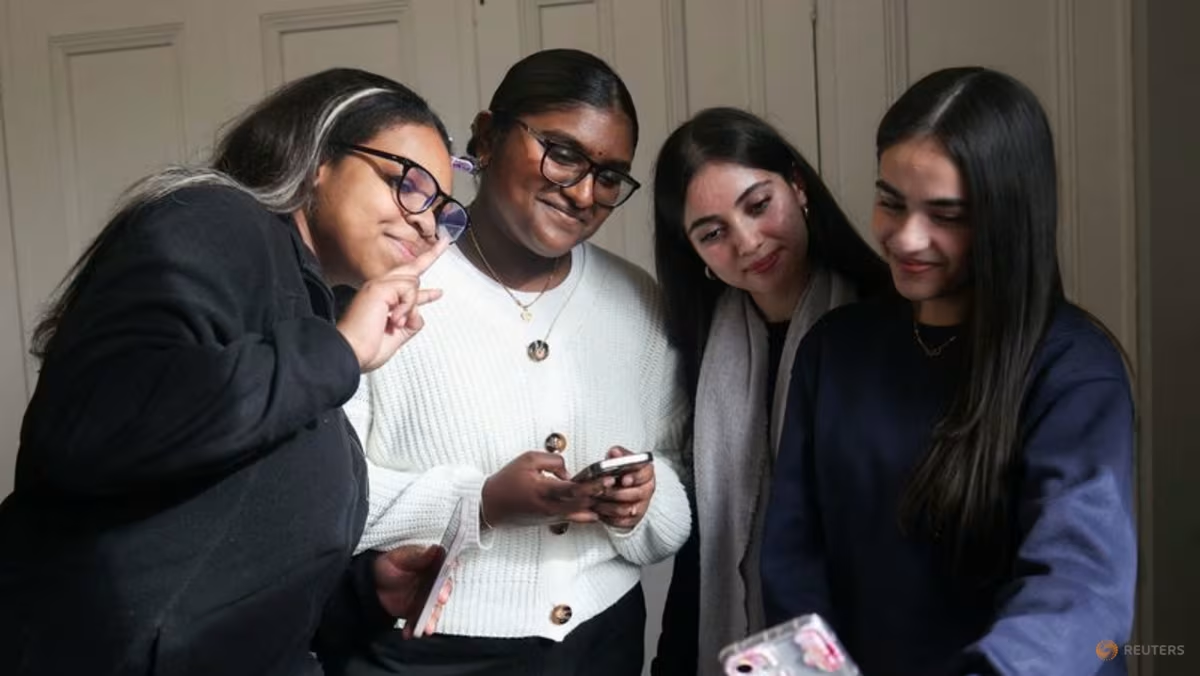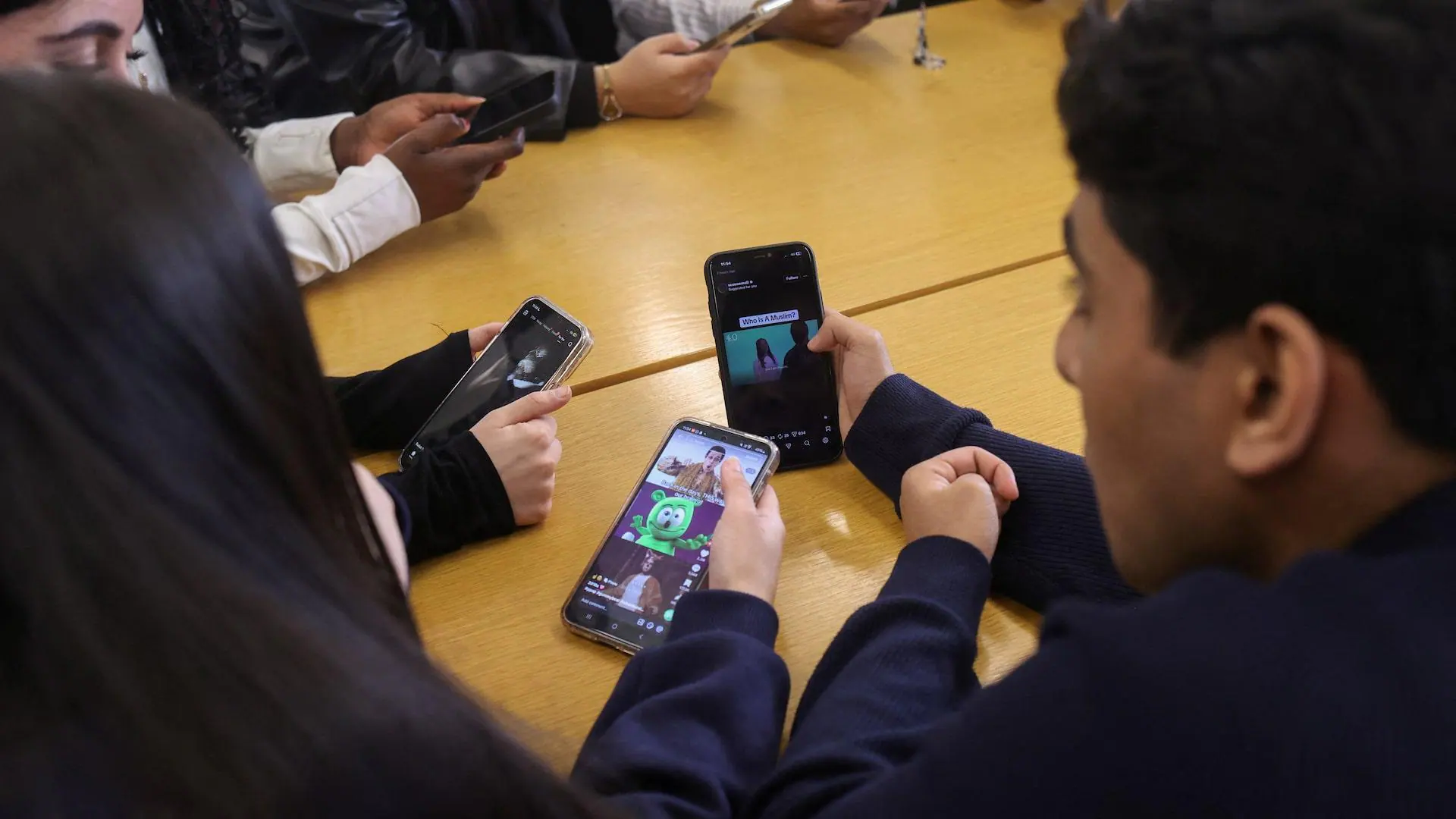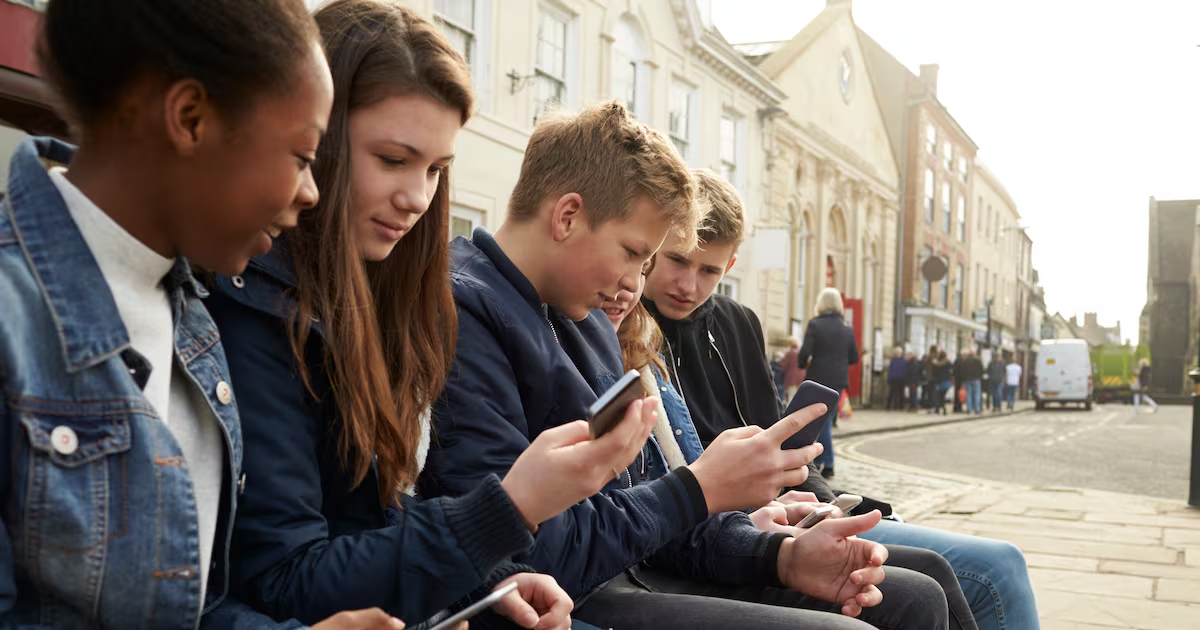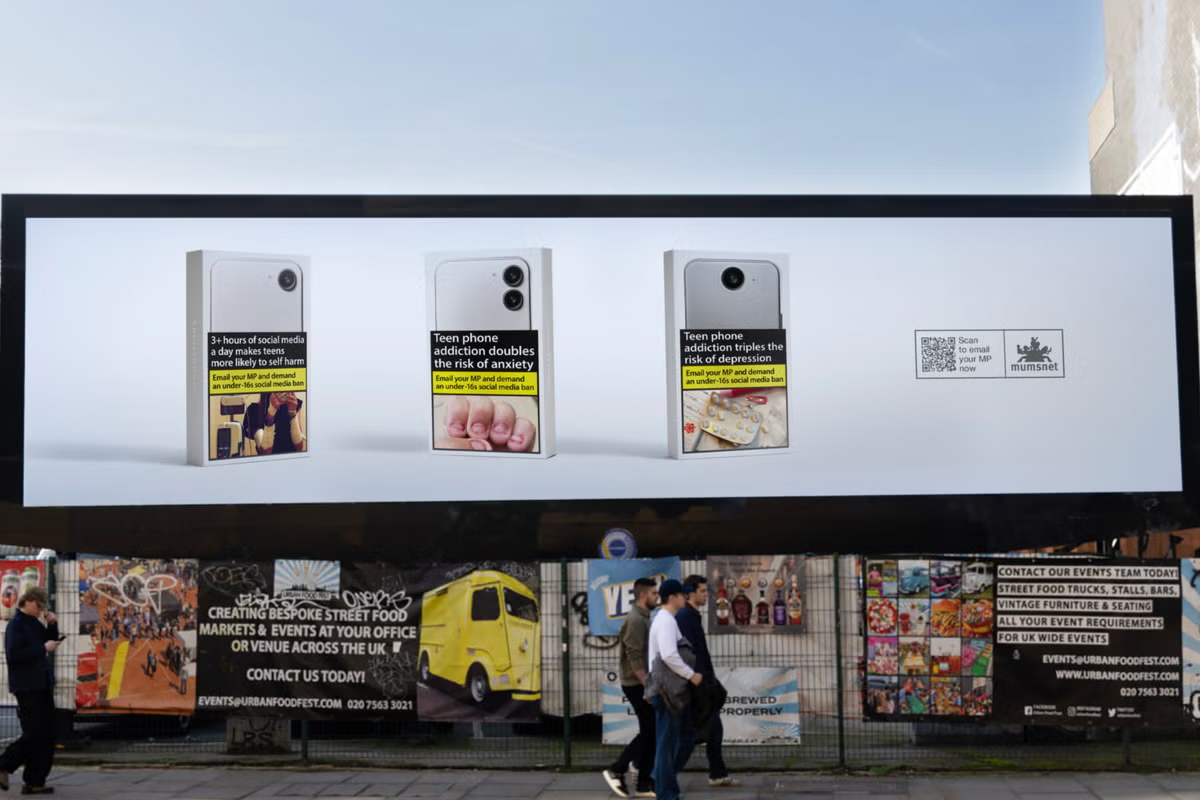
As part of Mumsnet’s Rage Against the Screen campaign, launched a couple of years ago, we used billboard and online adverts styled like cigarette packet health warnings. Some people thought that was provocative. It was meant to be.Today, it feels like the experts are catching up with our thinking. A report released by the Academy of Medical Royal Colleges says social media “ranks alongside smoking” as a threat to young people’s health. The report was submitted to the government’s consultation to explore an Australia-style social media ban for minors, and contained a survey of 454 doctors that revealed that half had treated at least one child per week whose mental distress or physical injury was directly linked to online content.In his first public statement on the issue since stepping down from cabinet earlier this month, former health secretary Wes Streeting agreed that social media should be treated like tobacco.Mumsnet’s Rage Against the Screen campaign draws attention to how scrolling is as bad as a cigarette when it comes to children (Mumsnet)When we launched our campaign, we weren’t trying to shock for the sake of it. We were simply reflecting what parents had been telling us, again and again, on Mumsnet: that social media feels addictive, that it is changing their children’s behaviour, and that family life is being bent out of shape by platforms designed to keep kids scrolling.Parents do not need another report to tell them something is wrong. They see kids who cannot put phones down, who rage or panic when denied access, who sneak around at night looking for confiscated devices. One Mumsnet user described feeling as if she were letting “a child crack addict take crack in their room”.Eighty-three per cent of parents say they have tried to limit or reduce social media use, but nearly three-quarters say those efforts did not work. Parents are worn down by the negotiations, workarounds, complaints and rows.The problem is not simply that children like social media. Of course they do. The problem is that platforms are deliberately designed to exploit attention. Infinite scroll, autoplay, algorithmic feeds, streaks, likes, notifications and personalised recommendations are mechanisms built to increase engagement. The business model depends on keeping users online for longer and children’s developing brains are a lucrative market.This is where the tobacco analogy comes in. Cigarette companies once engineered products to make dependency more likely. Today, social media platforms engineer experiences to make disengagement harder. The substance is different, but the commercial logic is familiar: maximise use and deny responsibility for as long as possible.Tech companies should have to prove their products are safe for children before children are allowed anywhere near them. No other industry gets to experiment on children at scale and call it innovationAnd it is parents who are expected to pick up the pieces. Families have been told this is a parenting problem: set boundaries, use parental controls, and have better conversations. All of that sounds reasonable until you are trying to enforce it with a 13-year-old whose social life and status are bound up in platforms designed by the best behavioural engineers in the world.Family life has become a daily battle. Bedtime is negotiation, tears and repeated confiscation of phones. Homework, sport, hobbies, sleep and self-esteem are crowded out. Girls in particular face intense pressure around body image, comparison and sexualised attention.Mumsnet polling shows overwhelming concern. Ninety-five per cent of our users are concerned about the effect of social media on children’s mental health and wellbeing. Sixty-one per cent say their child is addicted to their phone or social media, and 49 per cent say social media negatively affects their child’s self-esteem, rising to 57 per cent among girls.Research has linked addictive social media use with suicidal behaviour, heavy use with self-harm risks, and phone addiction with anxiety and depression in teenagers. Causation is complex, but calls for more perfect evidence increasingly look less like caution and more like delay.Bereaved parents outside 10 Downing Street following a meeting with the prime minister over the safety of children on social media (PA)Why has the government been so slow? Tech companies are powerful, as Jess Phillips pointed out so bluntly in her resignation letter. Politicians fear being accused of nanny-statism. And children and technology raise enforcement questions and loud lobbying.But the prime minister has a clear responsibility to act. I was in No 10 last week with campaigners and child safety organisations to discuss this issue with him and Liz Kendall. There were differences of emphasis, but one thing was clear: everyone agreed that platforms need to make their products safe for children. That shouldn’t be controversial.The early picture from Australia is instructive. Contrary to the dire warnings, there is no evidence of kids moving en masse to the dark web, no surge in loneliness or isolation, and feedback from young people and educators has been largely positive.Accounts of children aged eight to 15 appear to have fallen significantly, going from roughly 50 per cent of parents reporting their child had an account, down to 30 per cent – though that is not as much as hoped. One lesson from Australia is that vague wording is not enough. The law told platforms to take “reasonable steps” to keep underage users off, but did not define those steps tightly enough. Without mandatory age verification, simple reporting routes and meaningful sanctions, platforms will do the minimum. If Ofcom is to police this in the UK, it needs clear rules and real teeth.Mumsnet is calling for children’s access to social media to be delayed until 16, backed by proper age assurance and sanctions for platforms that fail to comply. We also need action on addictive design: algorithmic feeds, infinite scroll, autoplay, streaks and stranger contact. Children should not be exposed while we wait for tech companies to clean up their act.Tech companies should have to prove their products are safe for children before children are allowed anywhere near them. No other industry gets to experiment on children at scale and call it innovation.Childhood is short. Every year of delay means more young people exposed to systems we already know are causing harm. Parents are not asking for perfection. They are asking for help. If the government fails to give it to them, I genuinely think we will look back on this period and wonder how we let it go on for so long.To add your name to the Rage against the screen petition https://raisetheage.eaction.org.uk/consultation
Big Tech experimented on kids at scale – they’re worse than cigarette companies
Families have been told to set boundaries, use parental controls, and have better conversations. But try doing that with a 13-year-old whose life is bound to platforms designed by the best behavioural engineers in the world. This isn’t a parenting issue, says Justine Roberts, founder of Mumsnet
1,073 words~5 min read