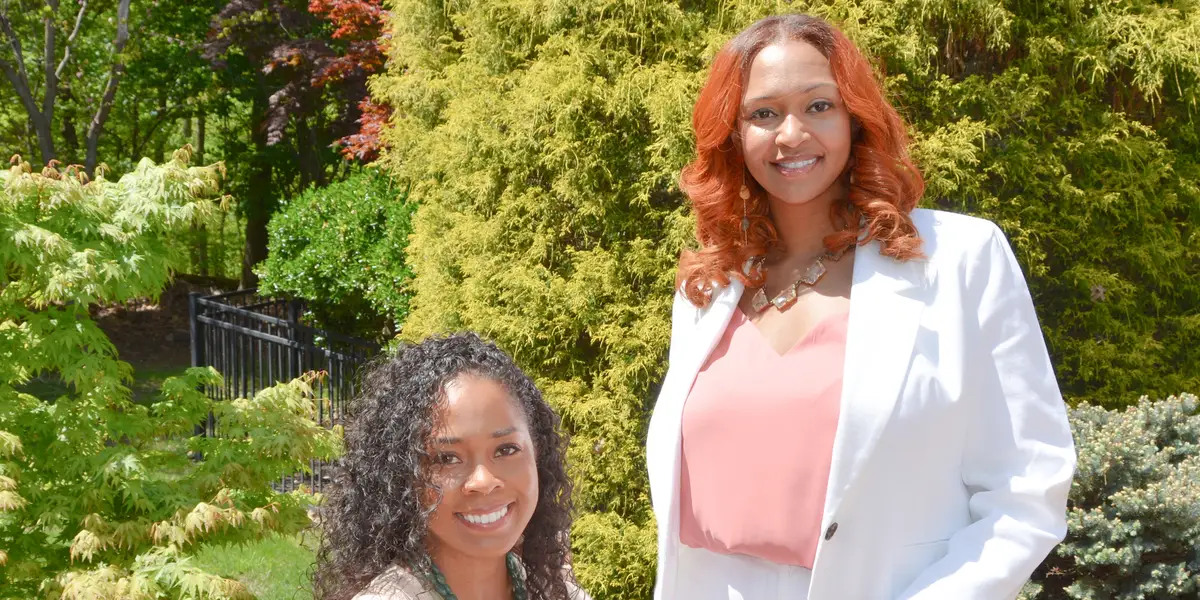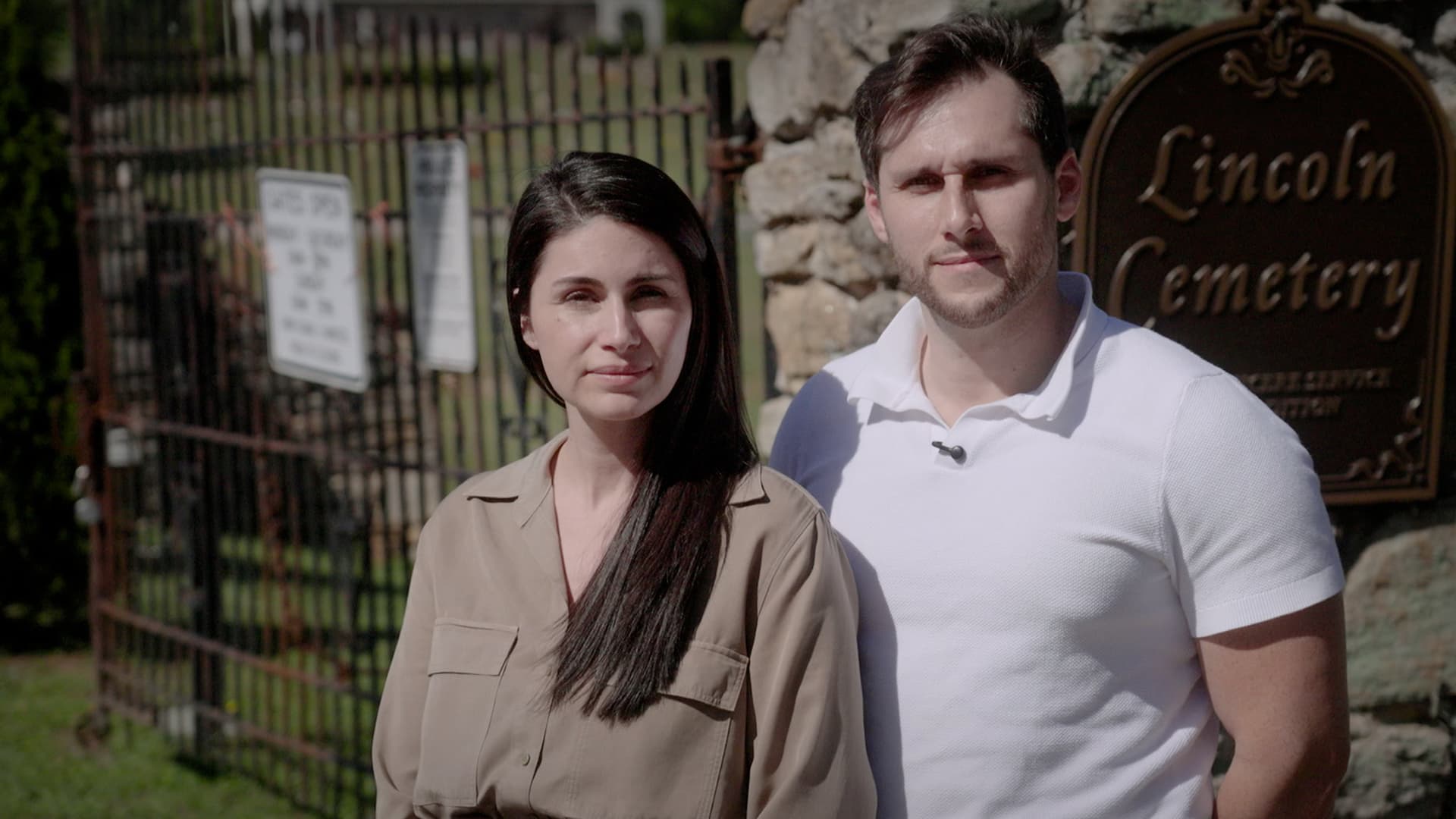
Shayda Frost and Timothy Amoui sometimes joke that they work in "innovative real estate." After all, as Frost puts it, a burial plot is essentially "a very, very small bit of land that you own forever." Frost, 39, and Amoui, 36, are the owners of Lincoln Memorial Group, a cemetery company that operates four working cemeteries in Atlanta. In 2025, the company brought in about $6.3 million in revenue and made about $1.7 million in net income, according to documents reviewed by CNBC Make It. The business has brought in an average of nearly $6 million a year between 2021 and 2025. Running a cemetery group may seem like an unusual occupation for a millennial couple, but Frost's family has "a very, very deep connection to the cemetery and death care space," she says. Her grandmother founded Lincoln Memorial Group in the 1970s, and passed the business down to her father."Growing up in the cemetery business, it's not as odd as you'd think it would be," she says. "I remember doing Easter egg hunts on the cemetery grounds. I remember spending Mother's Day here, [and] doing candlelit services around Christmas time."Frost never expected to take over the cemetery group, but when her father died unexpectedly in July 2023, the business "dropped in our laps overnight," she says.The couple left Los Angeles, where Frost was a film producer and Amoui worked in financial public relations, and moved to Atlanta to take charge of the business.Inheriting a 'turnaround job'Managing the cemetery group was a daunting task for Frost and Amoui. "Everyone we knew — every industry professional, every contact we had — everyone said, 'Sell it,'" Frost recalls. "'It's too big. You guys don't know anything about the space.'"Still, she and Amoui "came to the conclusion that with guidance, with stewardship, it could do more and it could be bigger and better," she says, and they decided to take on the challenge, which they say turned out to be bigger than they'd expected."When we came in, we realized, 'My gosh, this is really a turnaround job,'" she says. "I didn't quite realize the state that things were in."One of their top priorities was modernizing the business. Walking into the office was like being "transported back into 1974," Frost says. Coming into the business, with its vast system of paper records, felt like "a blast from the past," Frost says.John Falchetto/CNBC Make ItEmployees were using an intercom and putting paper memos in mailboxes instead of emailing one another. And though the business already had record-keeping software, it didn't always have all the same details as the robust system of "hundreds of thousands" of paper records, according to Frost. Older records existed only in paper form. "We have rooms and rooms of file cabinets," she says. Two and a half years later, digitizing those records is still an ongoing effort. In the meantime, Frost and Amoui had to source and purchase several more Rolodexes to keep the analog file system going concurrently with the computer system until they can move to rely exclusively on the latter. "My north star is to get to a place where we are digital only and that we don't have any more paper, that the only time we print out a contract is because our client family would like a copy," Frost says. "We have to make sure that that the state will allow for that," she says, explaining that they work in a "highly regulated space." But directionally at least, she says, "that's the goal."Taking on a duty that lasts 'forever'Lincoln Memorial Group has four main offerings, according to Amoui: burial plots, burial vaults, professional services like opening and closing a gravesite or mausoleum, and headstones or markers.They provide both "pre-need" and "at-need" services, Amoui says: "pre-need" services are planned and paid for ahead of time, while "at-need" services are purchased following a death."Pre-need is the most important element of our business because it is locking in future market share," he says. "Otherwise, we would be dependent purely on the mortality rate in our local vicinity."Frost and Amoui say they invest most of their profit back into the business. As stewards of the cemetery, they consider it their duty to "keep the space functional so that families can visit their loved ones," Frost says — and that duty, Amoui adds, lasts "forever."As owners of a cemetery business, Shayda Frost and Tim Amoui are planning decades, not years, ahead.John Falchetto/CNBC Make ItIn accordance with state law, a portion of each property sale in a cemetery is placed within a "perpetual care" trust to pay for future maintenance. These trusts ensure that the cemetery's future owners "can keep the doors open, can keep the grass mowed, can keep the memorials cleaned up," even after the cemetery reaches capacity, Amoui says."In this space, we don't plan for the next two to three years," Frost says. "We plan for the next 20 to 30 years."Making space to grieve and rememberLooking ahead, Frost and Amoui plan to acquire more cemeteries. Another goal is to build funeral homes on their existing properties, according to Amoui, which would allow them to offer services they don't currently provide, such as helping families plan funeral and memorial ceremonies."It may sound very weird hearing that in a cemetery business, but growth is fundamental to our business," Amoui says. "It enables us to pay our staff more. It enables us to hire more. It enables us to make our perpetual care funds even stronger." "Our mandate is forever," says Tim Amoui.John Falchetto/CNBC Make ItFrost and Amoui say that they've been welcomed and supported by their industry peers, many of whom are approaching retirement age and worry about finding successors for their businesses. "That's a big problem in this space right now, is that the next generation do not want these cemetery companies," Amoui says. He says he hopes other millennials follow their lead. The industry may not be "as glamorous or attractive" as some others, he says, but cemeteries are effectively "future-proof" amidst technological advancements. From the outside, running a cemetery might seem like a bleak business, and Frost admits that it can be difficult. "Some days are harder than others," she says. "You do have to have some wall of separation. You do have to protect yourself."But there's more to it, says Frost, who's watched families gather to share their best memories of a loved one. "We've been invited to picnics where they're celebrating their uncle's birthday, and so in honor of him, they've brought a picnic with his favorite foods," she says. "It feels like communing more than grieving. I feel like that is really what the space is for."Want to get ahead at work? Then you need to learn how to make effective small talk. In CNBC's new online course, How To Talk To People At Work, expert instructors share practical strategies to help you use everyday conversations to gain visibility, build meaningful relationships and accelerate your career growth. Sign up today!
Couple quit their jobs to take over their family's cemetery business—it brought in $6.3 million last year
Shayda Frost, 39, and Timothy Amoui, 36, left their jobs in film and PR and moved from Los Angeles to Atlanta to take over Lincoln Memorial Group after Frost's father died.
1,166 words~5 min read