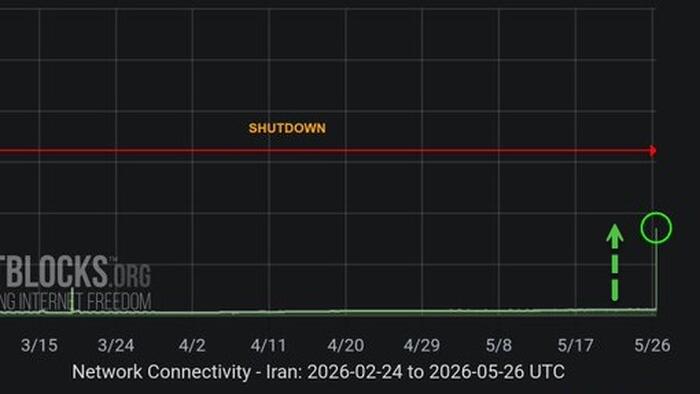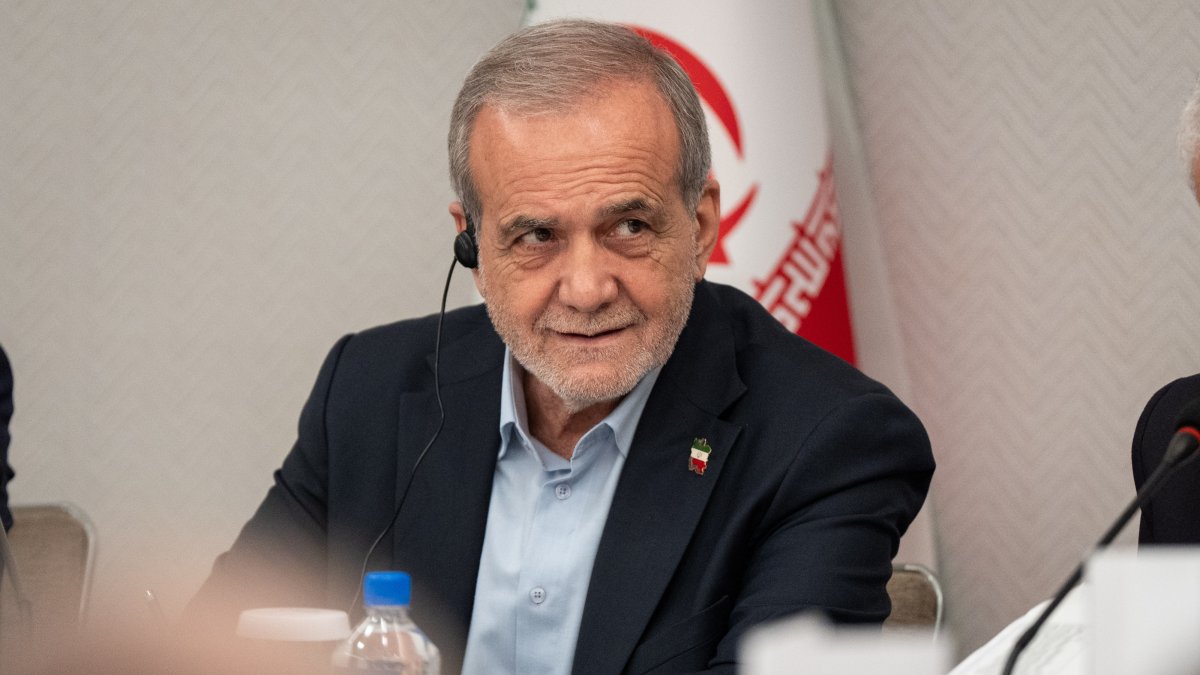
Iran’s internet connectivity was partially restored on Tuesday, one day after President Masoud Pezeshkian ordered the reopening of internet access following 88 days of a near-total digital blackout that had largely isolated the country from the rest of the world since war between Iran, the United States and Israel broke out.Global internet monitor NetBlocks said in a post on X that live data showed a partial restoration of internet connectivity in the country. The organization said it remains unclear whether the restoration will be sustained.What happened: On Monday, Pezeshkian ordered the Ministry of Communications to restore international internet access to its pre-January status. The directive was later approved by the Special Headquarters for Organizing and Governing the Country’s Cyberspace, a government cyberspace body established by the president earlier this month to oversee Iran’s internet policy. The body is headed by First Vice President Mohammad-Reza Aref.Aref confirmed on Tuesday that “the first step toward free and regulated access to cyberspace has been taken.”“With the reopening of the internet, smart services will be facilitated, public demands of those who have stood firmly by the system and Iran will be met, and barriers to knowledge-based development and scientific leadership will be removed,” he added in a post on his X account.However, the restoration may prove short-lived after an Iranian court moved to suspend the body overseeing the reopening process.Iran’s Administrative Court of Justice announced Tuesday that it had temporarily halted implementation of the presidential decree establishing the Special Headquarters for Organizing and Governing the Country’s Cyberspace, according to the judiciary-affiliated Mizan news agency. The suspension came after the court received complaints seeking the body’s annulment.The agency did not specify the parties that filed the complaints nor the nature of the allegations.Under the court’s ruling, all decisions and directives issued by the cyberspace body will remain suspended pending judicial review.The court challenge underscores growing friction inside Iran’s power structure over how tightly cyberspace should remain controlled after the war.Why it matters: Most Iranians have been largely cut off from the global web since the war erupted on Feb. 28, marking one of the world’s longest nationwide internet shutdowns.Many have been using VPNs to bypass the government's digital restrictions, while others relied on smuggled Starlink devices despite an official ban on their use.In mid-April, four people — including two foreigners — were arrested in northwest Iran for allegedly importing satellite internet equipment such as Starlink. Authorities accused them of being part of a US- and Israel-linked espionage network.Know more: The current blackout follows a similar outage during anti-regime protests earlier this year. On Jan. 8, authorities imposed a nationwide internet shutdown widely attributed to the government’s efforts to block communications and silence protesters.
Iran partially restores internet after 88-day blackout: What to know
The move comes after a nearly three-month internet blackout, marking it as one of the longest outages ever.
448 words~2 min read