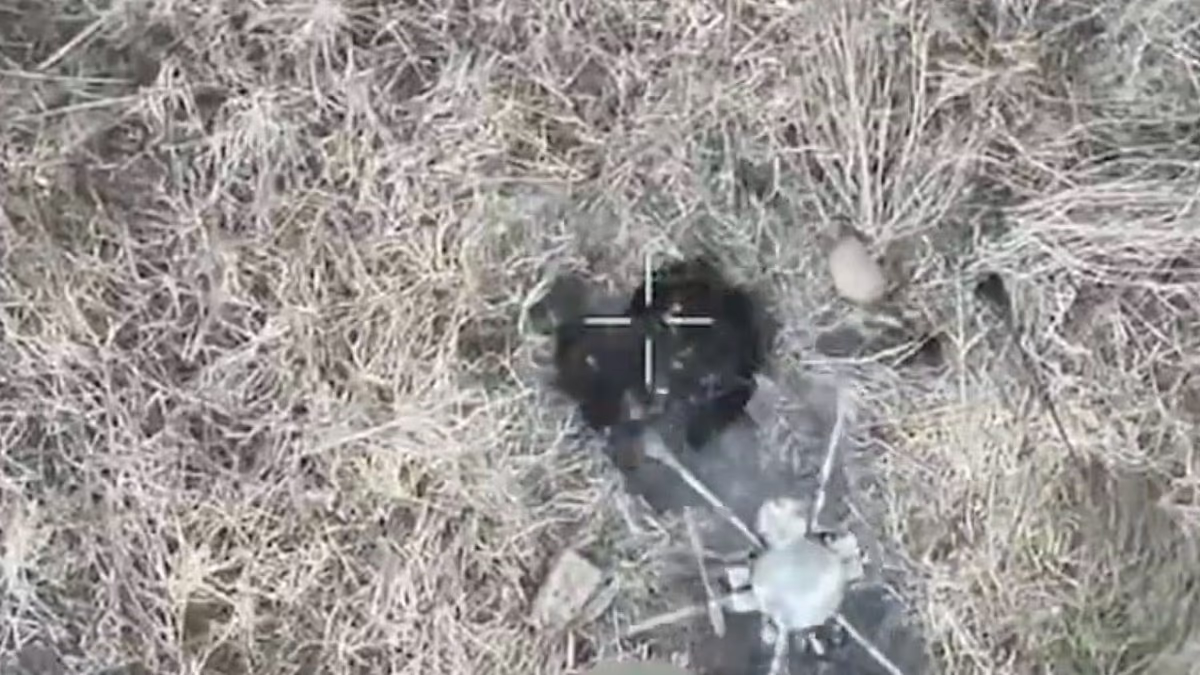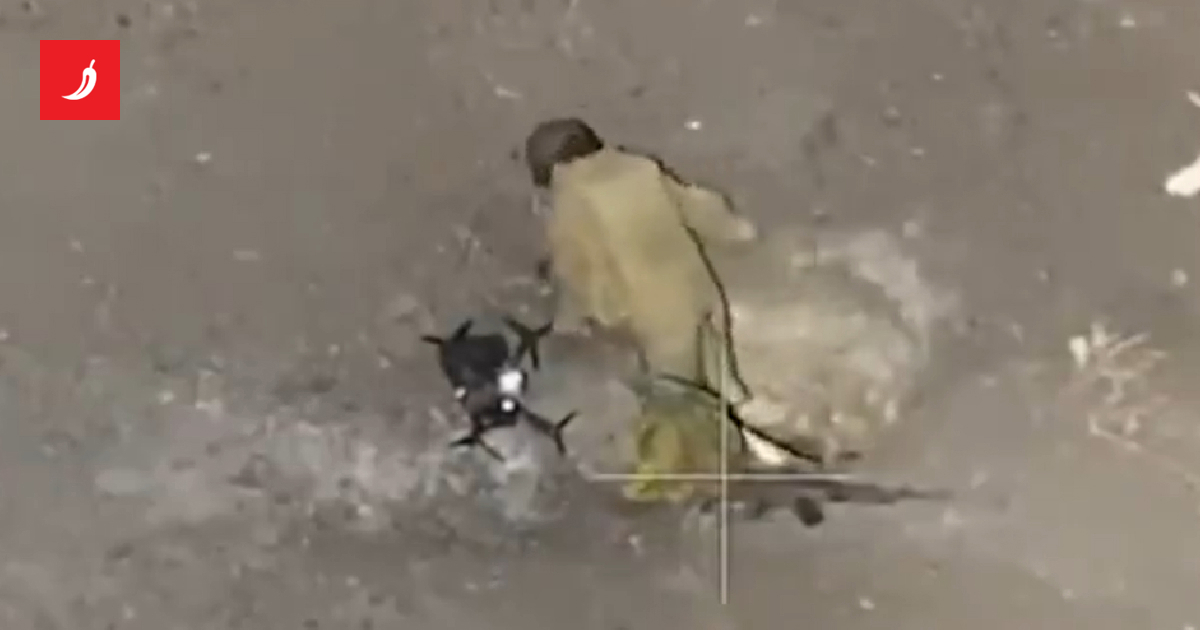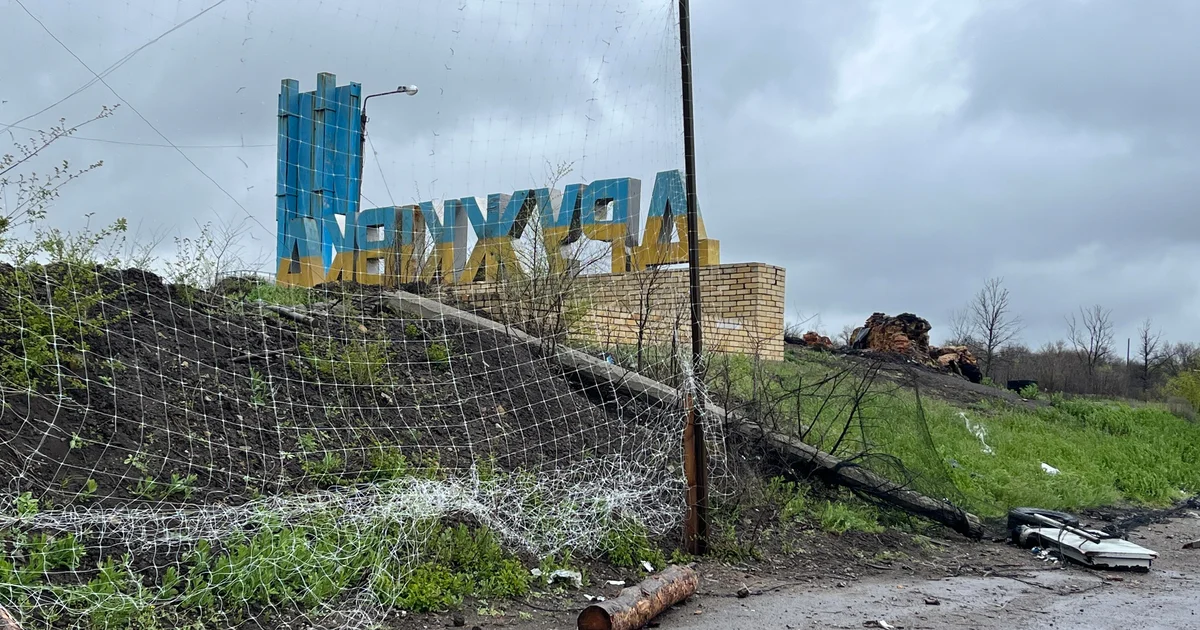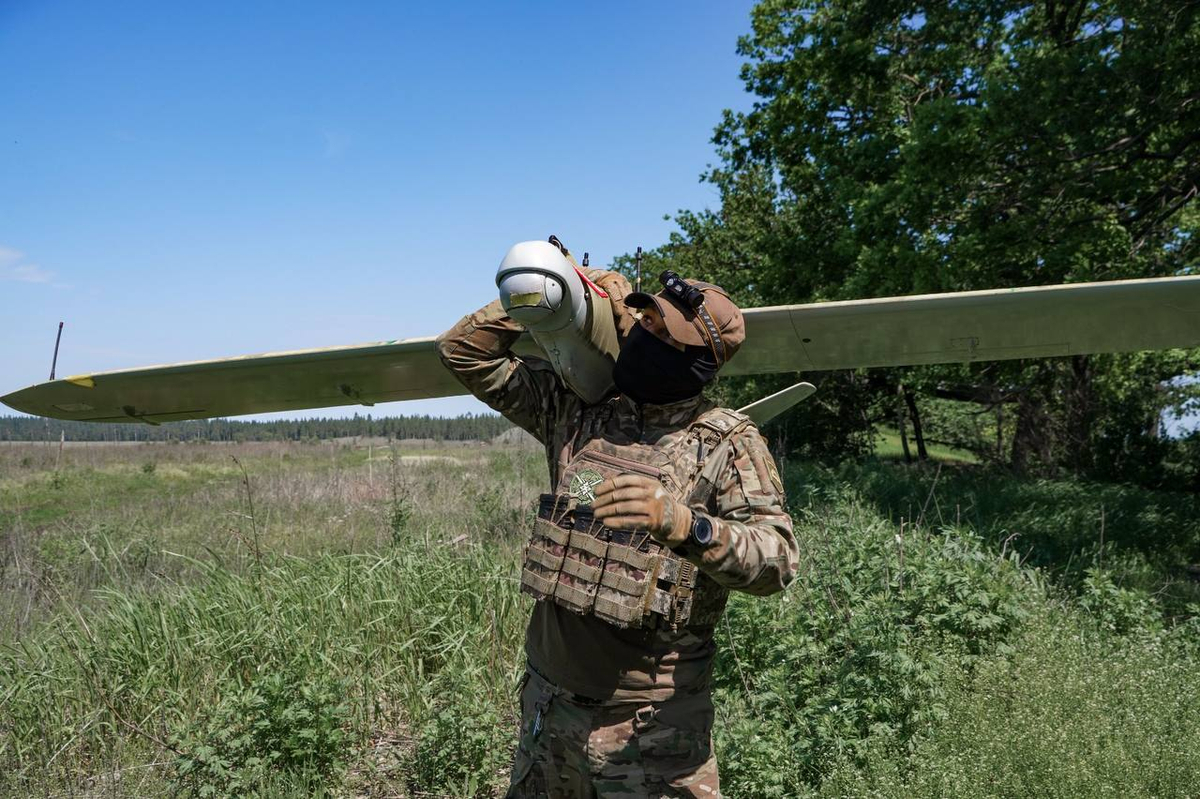
A Ukrainian serviceman of Khartiia Brigade in front of a screen showing Russian soldiers at the exit of a gas pipeline, at a command post near Kupiansk, Kharkiv Oblast, Ukraine, April 1, 2026. (Patryk Jaracz / The Kyiv Independent)KHARKIV OBLAST — The longest a Russian soldier can hope to survive for after emerging from the underground pipeline is, according to those hunting them, one single hour."But it's usually 10 minutes, and that's it," "Tovsty," chief sergeant of a company in Ukraine's Khartiia Brigade, says at a command post in northeastern Kharkiv Oblast. Tovsty is watching live drone footage showing a scene which has been repeating itself over and over again for months now — Russian soldiers emerging from disused pipelines in an effort to infiltrate Ukrainian lines.In the new era of a drone-dominated battlefield, the Russian army is taking advantage of an extensive system of underground Soviet-era infrastructure, using it as a drone-proof route to push troops forward."You can't really walk on the ground now in the war of drones, so everything is done underground," Tovsty tells the Kyiv Independent."Tovsty," chief sergeant of a company in Khartiia Brigade, at a command post near Kupiansk, Kharkiv Oblast, Ukraine, April 1, 2026. (Patryk Jaracz / The Kyiv Independent)But the safety of the pipelines can only take them so far.For months, Khartiia Brigade has been engaged in what commanders describe as an endless "whack-a-mole" style fight — monitoring the pipes for exit holes, taking out the Russians that emerge, filling in the holes, then searching for the next and newest exit point.Despite huge losses and horrific conditions in the pipes themselves, Russia continues to push men through them.'People die in there'The Russian soldiers Tovsty is watching are headed for Kupiansk, a strategically important town just 40 kilometers (25 miles) from the Russian border. Home to a highway and railway intersection, it was occupied by Russian forces during the opening days of the full-scale invasion in February 2022, before being liberated in September of the same year.Russia has been trying to take it back ever since.For the last year, Russian soldiers have been taking advantage of four abandoned gas pipelines that merge into two across the Oskil River. The Shebelinka-Ostrogozhsk gas pipeline, originally built under Soviet efforts to pump gas from Kharkiv Oblast to Russia, connects the Russian-occupied territory on the eastern bank to the Ukrainian rear in the Kupiansk area.Battle of Kupiansk as of May 2026. (Nizar al-Rifai / The Kyiv Independent)Russian troops have deployed the pipeline infiltration tactic across the front wherever it can, from Avdiivka in eastern Donetsk Oblast to northeastern Sumy Oblast, as well as in Russia's Kursk Oblast, where Ukraine launched a cross-border incursion in August 2024."(The pipelines) can be an effective strategy locally to cause confusion," Pasi Paroinen, an analyst with the Finland-based Black Bird Group, which closely follows the war through open-source footage, told the Kyiv Independent.The pipes leading to Kupiansk are only 1 to 1.2 meters in diameter. Those inside must crawl 15 kilometers (9.3 miles) to reach the Ukrainian lines. According to Khartiia Brigade commanders, some spend months just waiting inside while they accumulate men and materiel inside.
How Ukraine defends Kupiansk from Russian troops crawling through pipes
KHARKIV OBLAST — The longest a Russian soldier can hope to survive for after emerging from the underground pipeline is, according to those hunting them, one single hour. "But it's usually 10 minutes, and that's it," "Tovsty," chief sergeant of a company in Ukraine's Khartiia Brigade, says at a command post in northeastern Kharkiv Oblast. Tovsty is watching live drone footage showing a scene which has been repeating itself over and over again for months now — Russian soldiers emerging from disu
1,807 words~8 min read