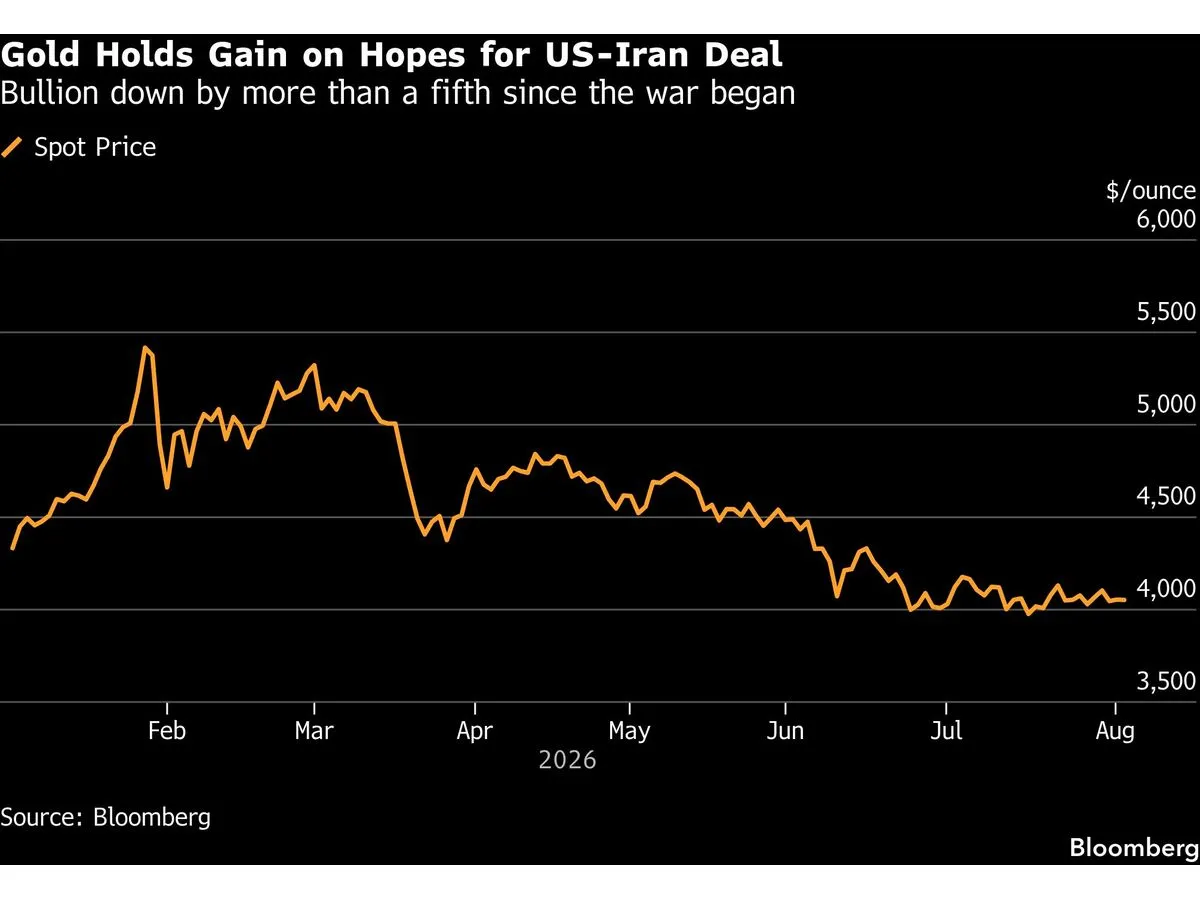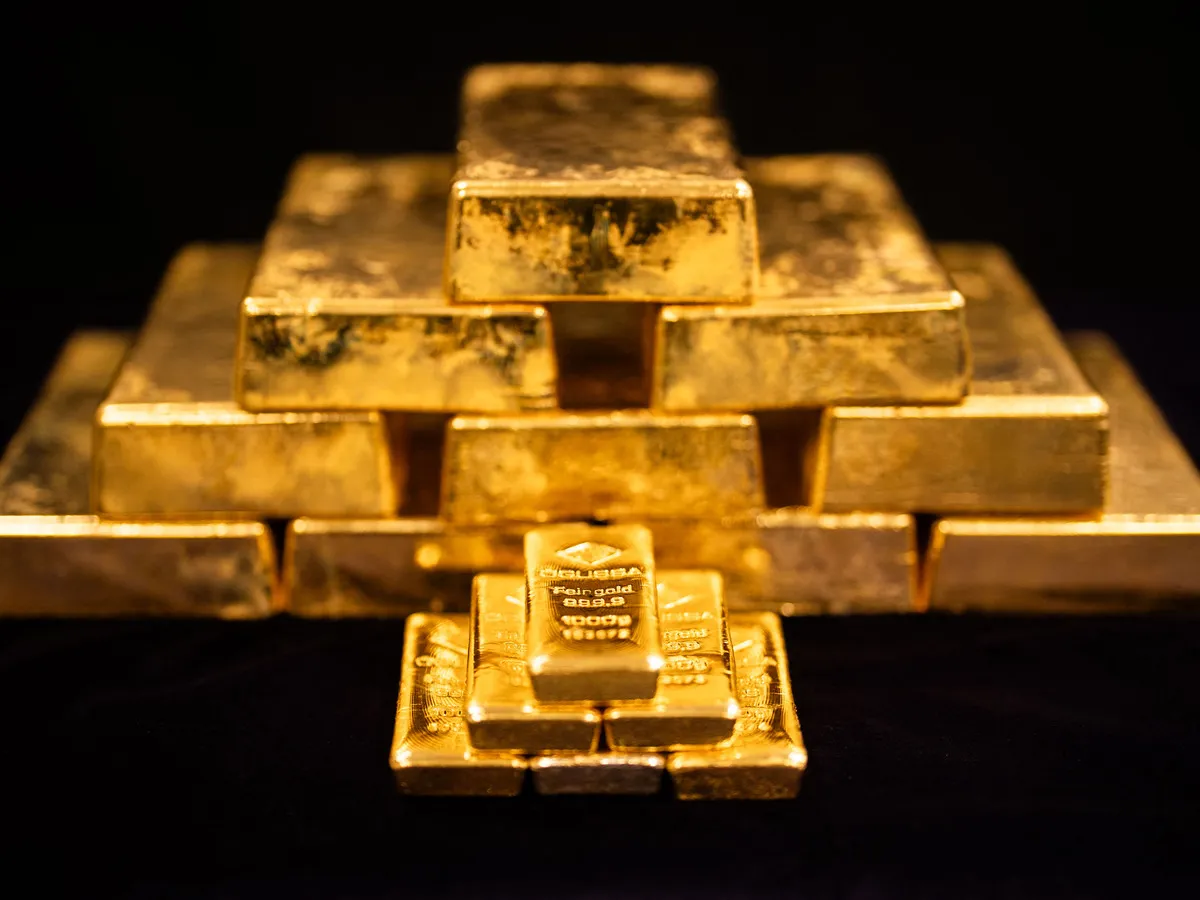
Skip to Content News Archives Economy Energy Oil & Gas Renewables Electric Vehicles Mining Commodities Agriculture Real Estate Mortgages Mortgage Rates Finance Banking Insurance Fintech Cryptocurrency Work Wealth Smart Money Wealth Management Investor Personal Finance Family Finance Retirement Taxes High Net Worth FP Comment Executive Women Puzzmo Newsletters Financial Times Business Essentials More Innovation Information Technology FP500 Podcasts Small Business Lives Told Tails Told Shopping Financial Post Store Obituaries Place a Notice Advertising Advertising With Us Advertising Solutions Postmedia Ad Manager Sponsorship Requests Classifieds Place a Classifieds ad Working Profile Settings My Subscriptions Saved Articles My Offers Newsletters Customer Service FAQ News Economy Energy Mining Real Estate Finance Work Wealth Investor FP Comment Executive Women Puzzmo Newsletters Financial Times Business Essentials HomeCommoditiesEconomyGold declines as Gulf strikes cloud interest rate outlookBullion has slumped more than 14 per cent since the conflict erupted in late FebruaryAuthor of the article:Last updated 0 minutes ago You can save this article by registering for free here. Or sign-in if you have an account.A sustained rebound in gold “requires breaking away from the correlation with risk assets,” said John Reade, chief strategist at the producer-funded World Gold Council. Photo by GEORG HOCHMUTH/APA/AFP via Getty ImagesGold fell as military strikes in the Persian Gulf dimmed hopes for a United States-Iran peace deal and reinforced concerns that persistent inflation could keep interest rates higher for longer.Subscribe now to read the latest news in your city and across Canada.Exclusive articles from Barbara Shecter, Joe O'Connor, Gabriel Friedman, and others.Daily content from Financial Times, the world's leading global business publication.Unlimited online access to read articles from Financial Post, National Post and 15 news sites across Canada with one account.National Post ePaper, an electronic replica of the print edition to view on any device, share and comment on.Daily puzzles, including the New York Times Crossword.Subscribe now to read the latest news in your city and across Canada.Exclusive articles from Barbara Shecter, Joe O'Connor, Gabriel Friedman and others.Daily content from Financial Times, the world's leading global business publication.Unlimited online access to read articles from Financial Post, National Post and 15 news sites across Canada with one account.National Post ePaper, an electronic replica of the print edition to view on any device, share and comment on.Daily puzzles, including the New York Times Crossword.Create an account or sign in to continue with your reading experience.Access articles from across Canada with one account.Share your thoughts and join the conversation in the comments.Enjoy additional articles per month.Get email updates from your favourite authors.Create an account or sign in to continue with your reading experience.Access articles from across Canada with one accountShare your thoughts and join the conversation in the commentsEnjoy additional articles per monthGet email updates from your favourite authorsSign In or Create an AccountorBullion slipped as much as 1.5 per cent as the dollar climbed. U.S. and Iranian forces clashed near the Strait of Hormuz overnight, highlighting the tension between the two sides even as they tout progress toward an interim peace deal. Oil continued to whipsaw on Middle East developments, with Brent topping US$100 a barrel after slumping more than seven per cent on Monday.The exchange of strikes came hours after U.S. President Donald Trump said negotiations with Tehran to extend their ceasefire and reopen the strait are proceeding. Secretary of State Marco Rubio has said negotiations would likely take a few days.“While hope of a U.S.-Iran deal has offered some support, the situation remains fragile and persistent, as inflation fears continue to loom over precious metals,” said Ryan McKay, senior commodity strategist at TD Securities. Trend followers are sellers of gold, and prices still look much more likely to fall than rise, according to McKay.Bullion has slumped more than 14 per cent since the conflict erupted in late February. Traders ramped up rate-hike bets as the war sent energy prices soaring and fanned inflation concerns. Higher borrowing costs weigh on the yellow metal, which doesn’t pay interest.A sustained rebound in gold “requires breaking away from the correlation with risk assets,” said John Reade, chief strategist at the producer-funded World Gold Council. Gold has a better chance of recovering toward the end of the year even if the conflict ends now, as it will take time for the energy balance to be restored, he added.Spot gold was down 1.3 per cent to US$4,509.71 an ounce as of 11:16 a.m. in New York. Silver fell 2.4 per cent to US$76.21 an ounce. Platinum and palladium also declined. The Bloomberg Dollar Spot Index, a gauge of the U.S. currency, was 0.2 per cent higher.—With assistance from Jack Ryan, Yihui Xie and Preeti Soni. Join the Conversation This website uses cookies to personalize your content (including ads), and allows us to analyze our traffic. Read more about cookies here. By continuing to use our site, you agree to our Terms of Use and Privacy Policy.
Gold declines as Gulf strikes cloud interest rate outlook
Gold fell as military strikes in the Persian Gulf dimmed hopes for a U.S.-Iran peace deal and reinforced inflation concerns. Read here now
808 words~4 min read