Tsunamis are mostly associated with the Pacific and Indian Oceans, but Montpellier University professor Frédéric Leone explains why the risk is growing in the Mediterranean.
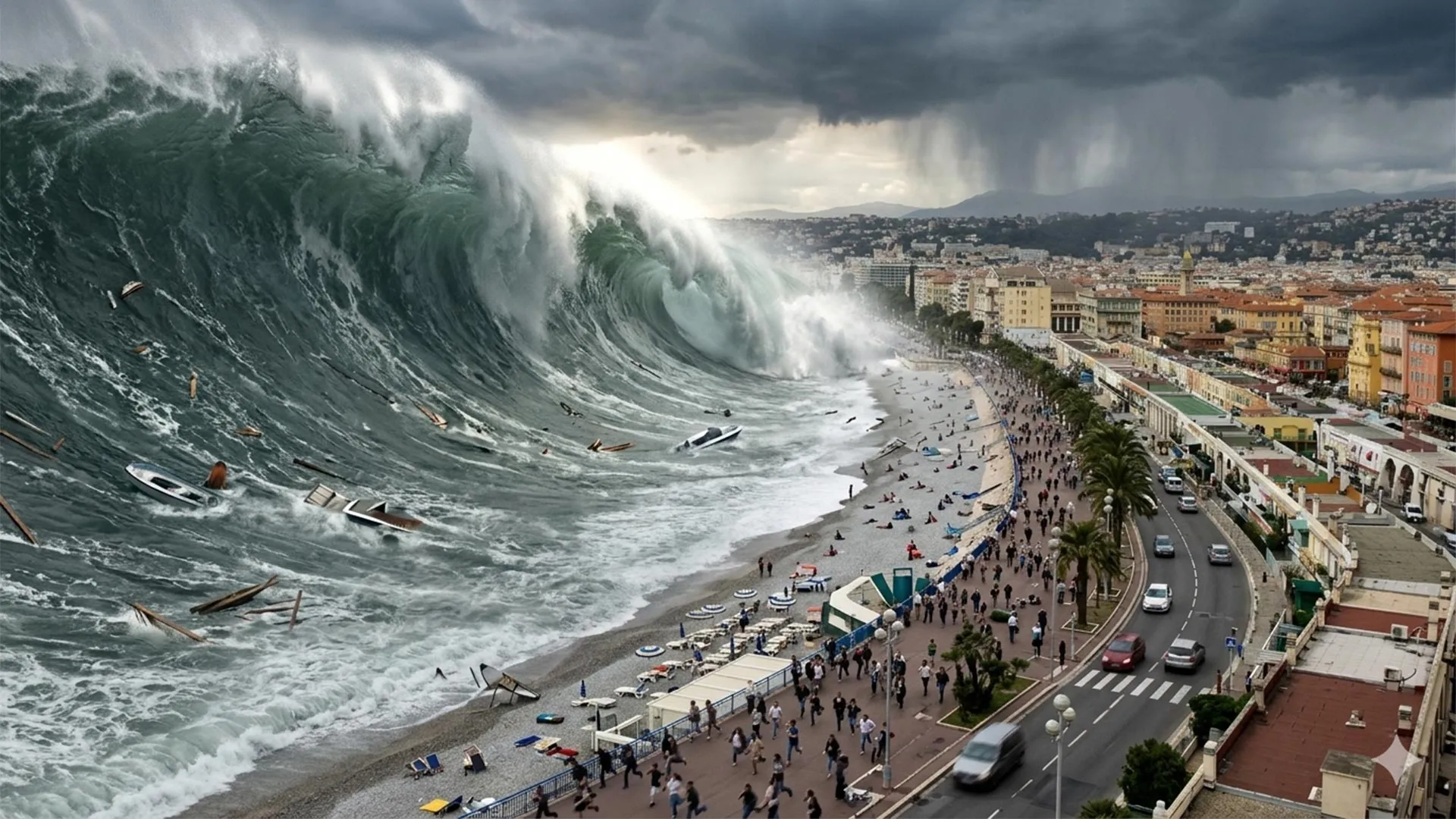
The Mediterranean sea is widely perceived as having a low tsunami risk. History and recent modelling technology have demonstrated that destructive waves have already hit the French coast and could do so again.
The results of a project carried out in Nice and along the French Riviera show why anticipation and preventive evacuation measures remain the only truly effective means of saving lives.
Tsunamis, formerly known as tidal waves, raz-de-marée in France or maremoti in Italy, are among the most destructive natural phenomena. Triggered by earthquakes, underwater landslides or volcanic eruptions, they spread rapidly over long distances before releasing their energy near the coast in the form of sudden submersion and extremely powerful currents.
From several centimetres to several metres, this flooding is generally characterised by several waves, and the first waves are not necessarily the largest. The speed of the current is such that the pressure exerted on coastal infrastructure can reach several tons per square metre