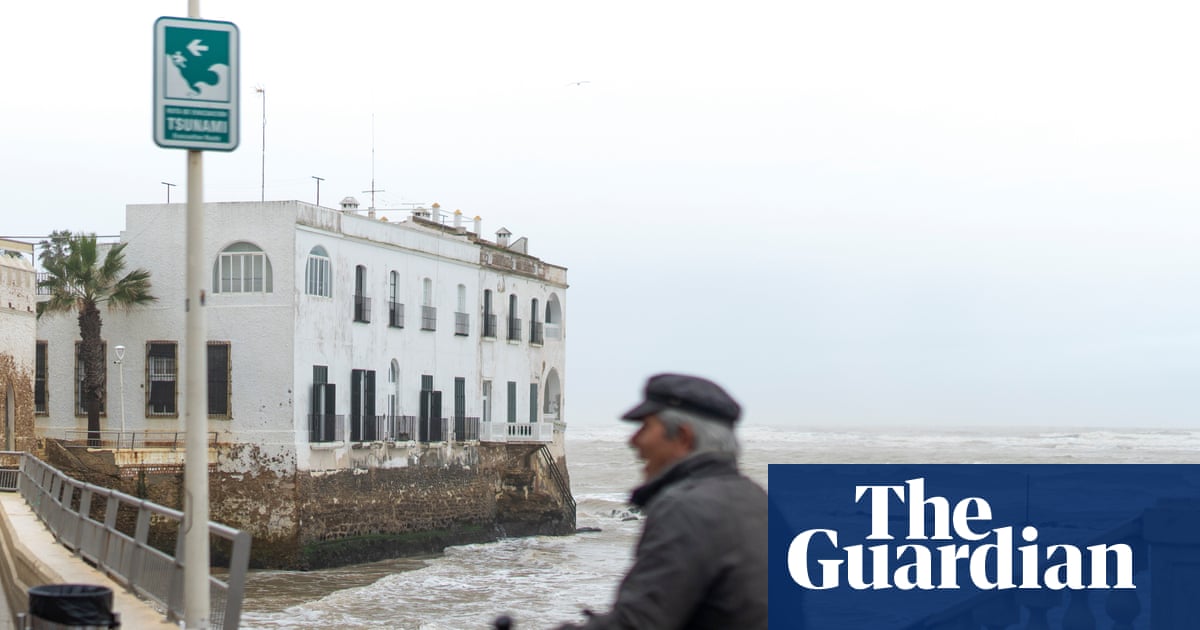
The Mediterranean sea is widely perceived as having a low tsunami risk. History and recent modelling technology have demonstrated that destructive waves have already hit the French coast and could do so again. The results of a project carried out in Nice and along the French Riviera show why anticipation and preventive evacuation measures remain the only truly effective means of saving lives.
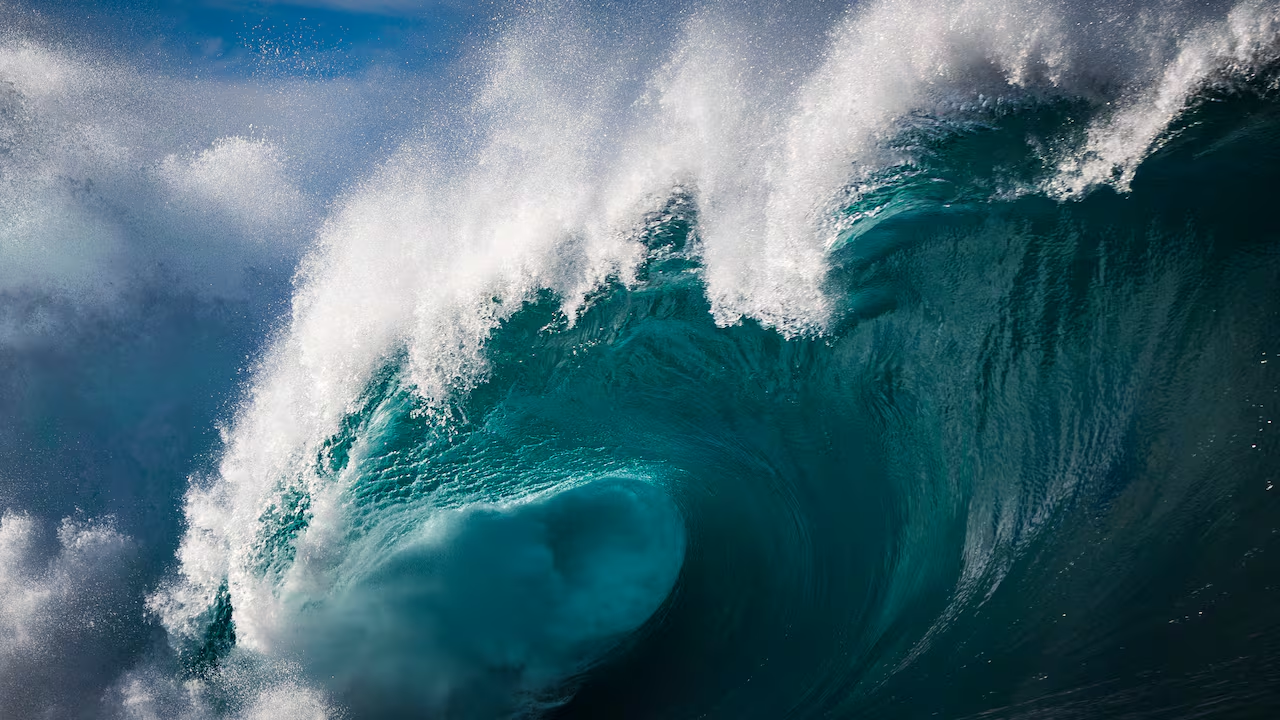
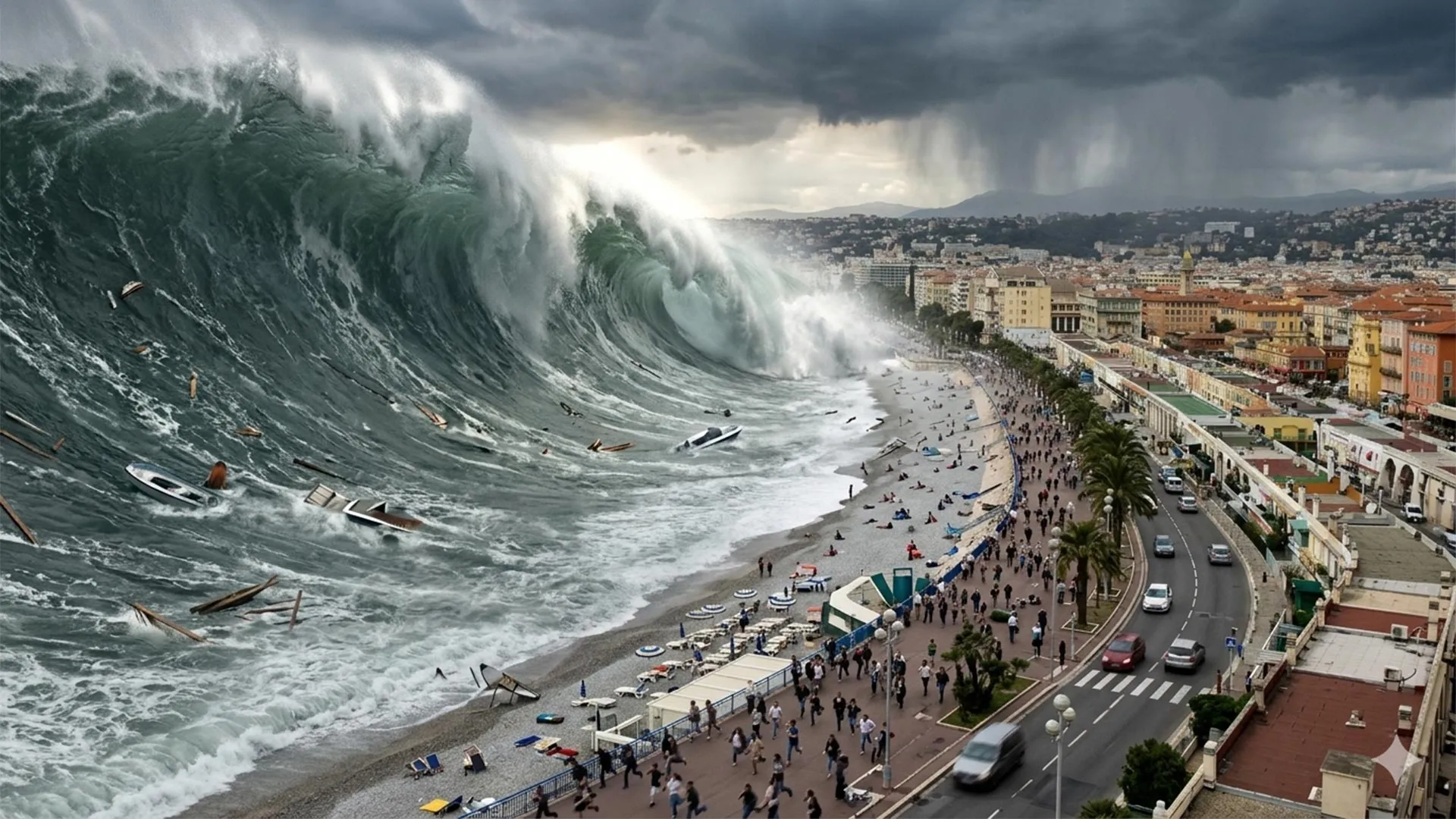
Tsunamis, formerly known as tidal waves, raz-de-marée in France or maremoti in Italy, are among the most destructive natural phenomena. Triggered by earthquakes, underwater landslides or volcanic eruptions, they spread rapidly over long distances before releasing their energy near the coast in the form of sudden submersion and extremely powerful currents.
From several centimeters to several meters, this flooding is generally characterized by several waves, and the first waves are not necessarily the largest. The speed of the current is such that the pressure exerted on coastal infrastructure can reach several tons per square metre
Since 1970, tsunamis have claimed more than 250,000 lives worldwide, notably the Boxing day tsunami in 2004 in the Indian ocean and the tsunami on March 11 2011 in Japan, for instance.A risk that is not so farfetched after allIn the collective imagination, tsunamis have long been associated with the Pacific and the Indian ocean. The risk of an offshore tsunami in the Mediterranean has often been considered marginal, and this in itself could be misleading. In June 2022, UNESCO, which is committed to increasing global tsunami risk awareness among coastal communities, declared:“Statistics show that there is a 100% chance of a tsunami of at least one metre high in the Mediterranean Sea in the next 30 years.”After the Pacific, the Mediterranean basin holds the highest number of historical tsunamis recorded, of which several have impacted France’s Côte d’Azur coastline.