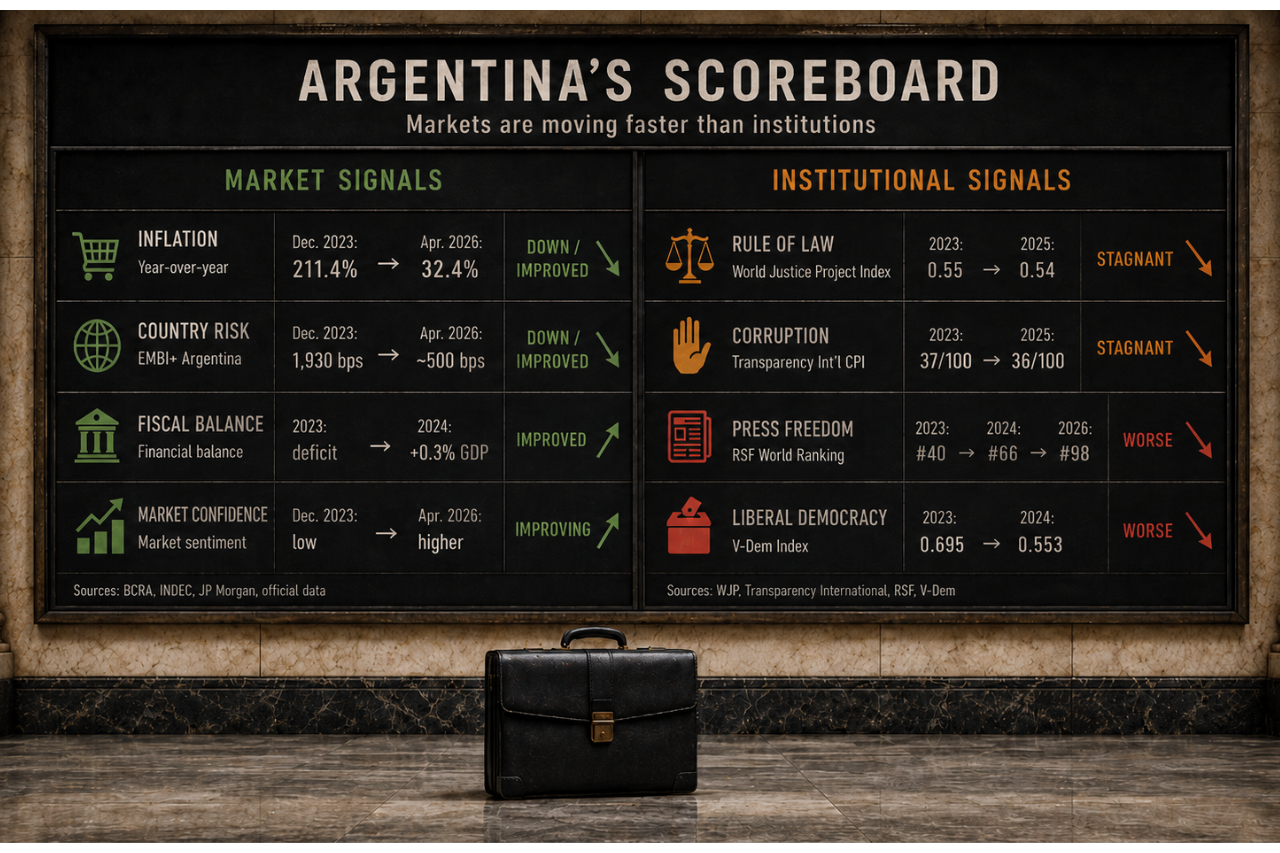
Argentina is in 2026 somewhere between the wreckage of the past and a genuine, if fragile, stabilization. The Milei government delivered one of the largest fiscal consolidations in modern macroeconomic history — and annual inflation, which hit 211% at its peak, has decelerated substantially. None of this means the argentina economic crisis is resolved. But the direction of travel has changed, and the consequences for Brazilian markets and regional investors are real and trackable.
How Argentina Got Here: The Minimum Context
Argentina has defaulted on its sovereign debt nine times since independence. The most consequential modern defaults were in 2001 ($100 billion — the largest sovereign default in history at the time) and in 2020 ($65 billion restructuring with private creditors).
The 2001 collapse of the convertibility peg produced a banking freeze, a 70% devaluation, and five presidents in two weeks. The psychological scar explains both the popular appeal of dollarization and the public’s deep distrust of the peso.
The Kirchner and Fernández Years: Building the Crisis