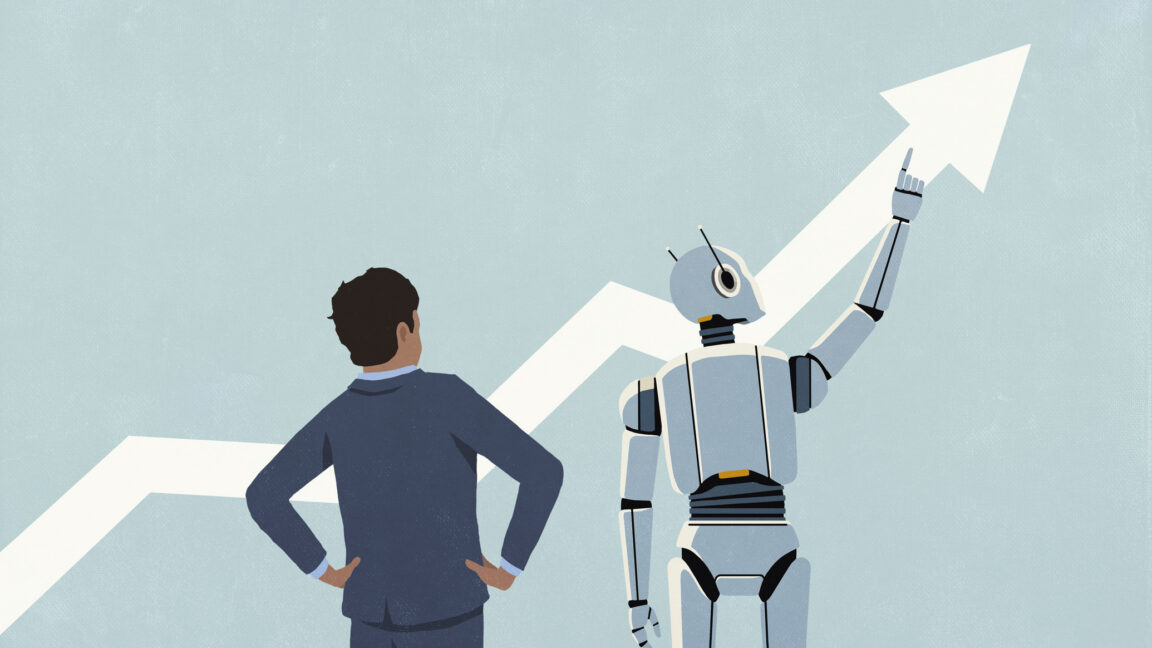
The robots aren’t taking everyone’s jobs. They’re just not letting the new kids get one in the first place.
A working paper from the Stanford Digital Economy Lab, released in November 2025, found that workers aged 22 to 25 in occupations most exposed to AI experienced a 16% relative decline in employment after generative AI went mainstream. The decline persisted even after controlling for other factors that might explain why companies were hiring less. The kicker: older workers in those same roles were either holding steady or actually growing in number.
What the data actually shows
The study, authored by Erik Brynjolfsson, Bharat Chandar, and Ruyu Chen, is titled “Canaries in the Coal Mine? Six Facts about the Recent Employment Effects of Artificial Intelligence.”
The team used high-frequency payroll records from ADP, the largest payroll provider in the US. This isn’t survey data or LinkedIn scraping. It’s actual payroll records covering millions of workers, which makes the signal considerably harder to dismiss.