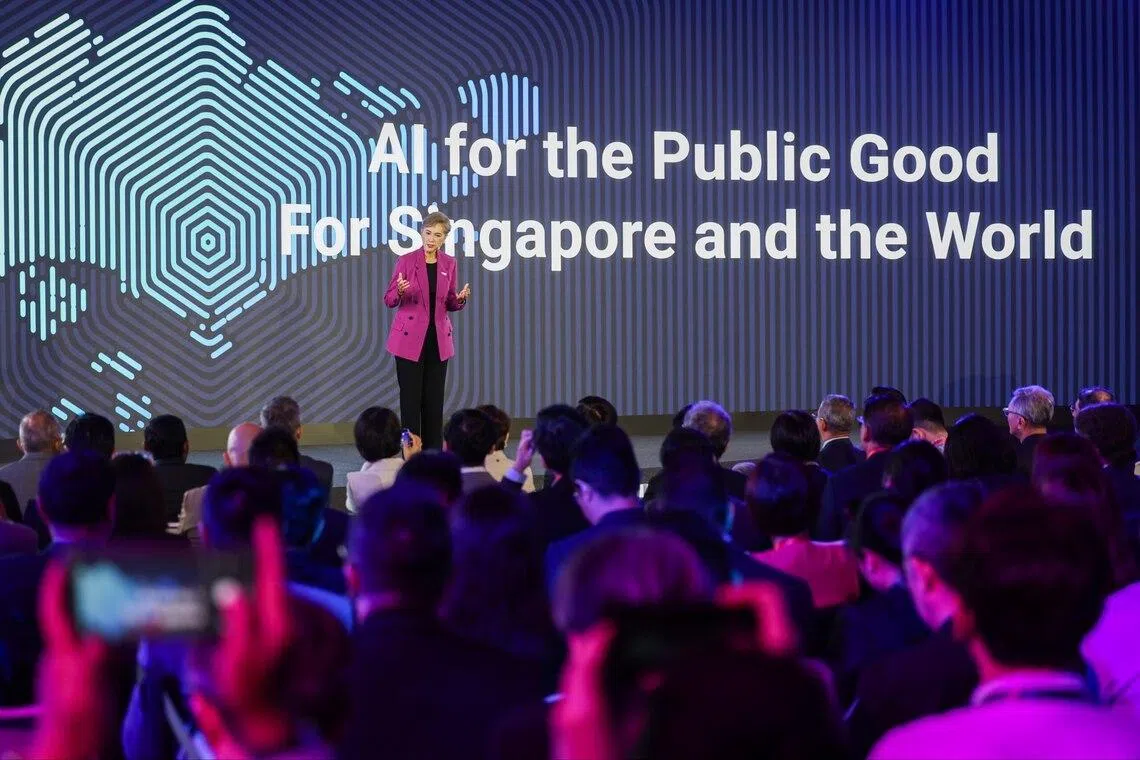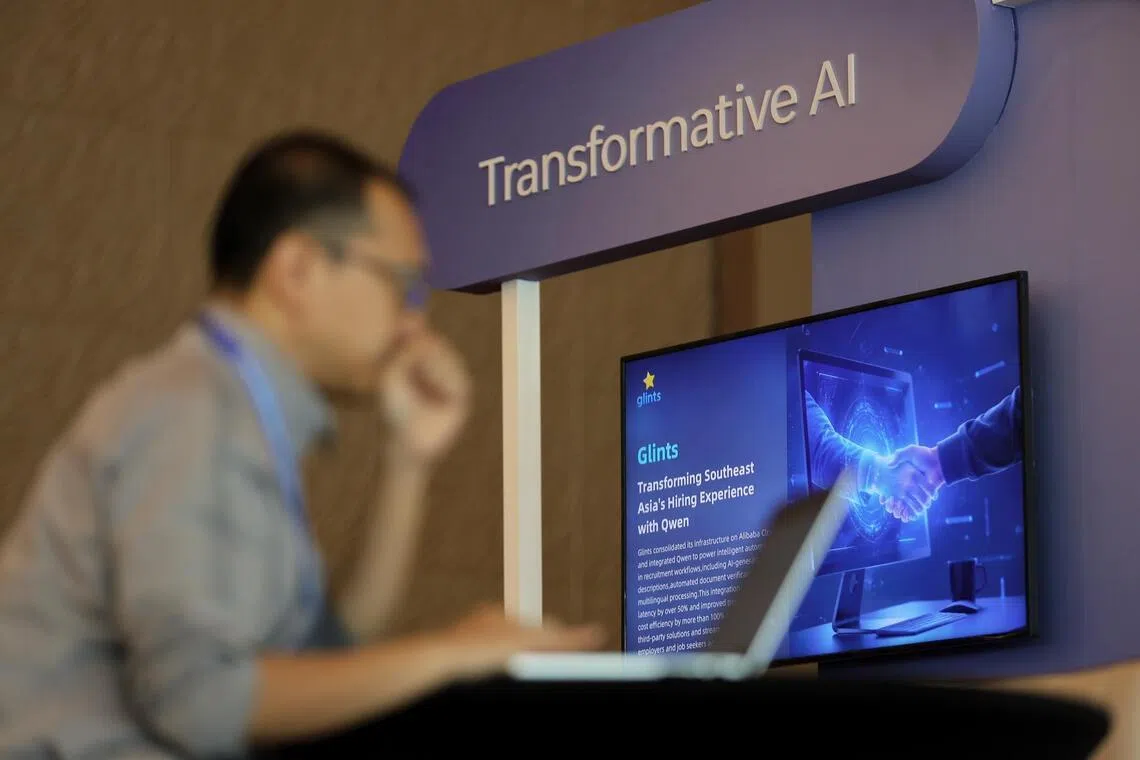
SINGAPORE – Free access to commercial generative and agentic AI tools will be rolled out to more than 800 small and medium-sized enterprises (SMEs), as well as 200 tertiary students and developers, under a new one-year initiative by Chinese cloud computing giant Alibaba Cloud.It follows similar moves by firms such as Microsoft, Google and Amazon Web Services, which offered free access to AI tools to tertiary students and businesses to gain market dominance in this emerging space.Launched by Alibaba Cloud during its inaugural international Qwen Conference in Singapore on May 26, the initiative is a collaboration between the tech giant, the National Trades Union Congress (NTUC) and data centre provider ST Telemedia Global Data Centres.The roll-out will start from June, with up to 200 employees from companies represented by NTUC’s 58 unions to benefit first.They will be eligible to either register for a one-month subscription to AI-powered coding platform Qoder, or receive usage credits for generative AI tools like large language model Qwen and video generator Wan.The usage credits can be used for tasks such as content creation, data analysis, and combining information across text, images and videos.The amount of usage credits is determined during the application process, depending on the intended use case, the tools required and the type of workload involved.“Different applications, such as content generation, data analysis, image creation, coding support or agentic workflows, may consume resources differently,” said Alibaba Cloud’s general manager of Singapore and Thailand, Mr Andy Lee.“The aim is to provide participants with meaningful access to Alibaba Cloud’s generative AI and agentic AI tools, so they can experiment with practical use cases that are relevant to their business, studies or development work.”A one-month subscription to Qoder starts at US$20 (S$30), with the tier provided determined on a case-by-case basis, depending on users’ needs and use cases.While the first phase of the roll-out will focus on companies represented by NTUC unions, it will progressively be expanded to more SMEs, students and developers through Alibaba Cloud’s other partnerships – including with industry and professional organisations such as SGTech, the Singapore Computer Society, Digital Defenders Alliance Singapore and institutes of higher learning.Alibaba Cloud’s Qwen models have also been used as a foundation for South-east Asian large language model Sea-Lion, developed by AI Singapore and designed to better understand regional languages, cultural nuances and local contexts.Singapore-based AI film studio FizzDragon has also used Alibaba Cloud’s Qwen models to develop StoryOS, an AI agent that can help generate scripts and storyboard scenes, and coordinate different parts of the content production process.For example, after a user uploads a novel, the system can break the story down into episodes, generate storyboards for individual scenes, and create character and costume concepts based on the story’s descriptions.“This is a useful example of how AI agents can be applied in a practical business setting, helping teams improve efficiency, accelerate creative development and explore new ways of working,” said Mr Lee.Speaking at the tech conference, Senior Minister of State in the Prime Minister’s Office and NTUC deputy secretary-general Desmond Tan said: “Tools can be deployed at the click of a button, but progress only happens when people know how to use them, improve them and trust them.”In April, Microsoft said it would offer more than 200,000 tertiary students a free one-year subscription to Microsoft 365 Copilot. The subscription is worth $28.99 a month.In a separate initiative by Google, all Nanyang Technological University undergraduates will have full access to premium Google AI tools such as Gemini Enterprise for workplace automation, and AI Studio for rapid app prototyping, from August.From the second half of 2026, Singaporeans taking selected SkillsFuture AI courses will be given six months of free access to premium AI tools from companies such as Google, Microsoft and OpenAI. The programme, announced by Prime Minister Lawrence Wong at Budget 2026, aims to help Singaporeans gain confidence with AI tools by making it easier for them to have hands-on experience. Fuller details will be available at a later date.
Alibaba Cloud offers free AI tools in Singapore
Alibaba Cloud is rolling out free generative and agentic AI tools to Singaporean SMEs and students, fostering AI adoption and innovation. Read more at straitstimes.com. Read more at straitstimes.com.
663 words~3 min read