As geopolitical tensions reach a boiling point in 2026, the modern battlefield bears little resemblance to the conflicts of the past two decades. The era of uncontested GPS dominance is over. Today, the “war of signals” and the rise of counterspace threats are fundamentally redefining how armies maneuver, target, and survive.
The GNSS paradox: a strength turned vulnerability
GNSS jamming and spoofing capabilities are no longer confined to major powers: they are now routine features of the tactical environment, including in lower-intensity conflicts. The maps below tell the story of an increasingly systematic use – defensive as well as offensive – of GPS jamming and spoofing in well-identified conflict regions. It also appears before and during more localized flare-ups, such as in 2025 events in southeast Asia. Everywhere, electronic warfare applied to navigation is evolving rapidly, driven by an AI-enabled arms race of measures and countermeasures.
Escalation of GNSS interference events, 2022 vs. first half of 2025. The increasing density of jamming and spoofing incidents across key theaters highlights the urgent need for navigation autonomy. Source: IATA
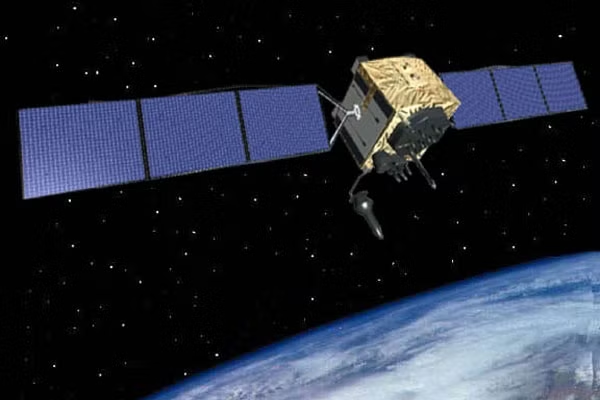
But viewing navigation warfare as limited to electronic warfare would be restrictive: some actors have gradually acquired the means to upend the GPS satellite architecture itself. Counterspace capabilities, and the widely assumed ability of near-peer adversaries to degrade or neutralize geostationary satellites, put the foundations of global positioning increasingly at risk. In the words of General B. Chance Saltzman, the head of U.S. Space Operations, the speed at which these adversaries are deploying counterspace capabilities is “mind-boggling”.