An audit of 2.5 million biomedical papers shows that made-up references in peer-reviewed research have become a systemic issue. Since 2023, the rate has increased more than twelvefold.
Researchers at Columbia University and other institutions have published the largest-ever review of citations in biomedical papers in The Lancet. The team, led by Maxim Topaz, scanned 2.47 million papers from the open PubMed Central archive published between January 2023 and February 2026.
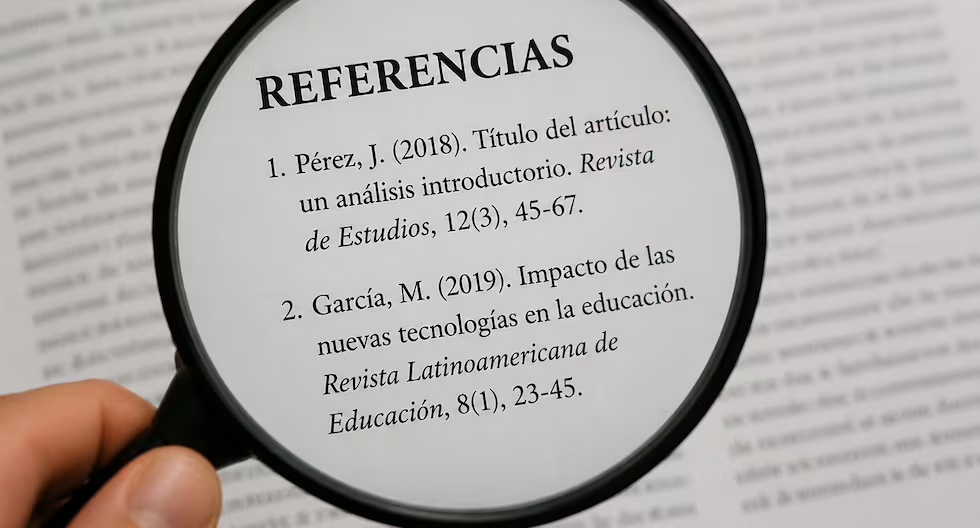
Out of 97.1 million references checked, 4,046 were flagged as fabricated, spread across 2,810 papers. A reference counted as fabricated if its listed title couldn't be found in any of four major databases: PubMed, Crossref, OpenAlex, and Google Scholar.
Flat through 2023, then a sharp spike
The timeline tells the story. Throughout 2023, the rate held steady at about four fabricated references per 10,000 papers. Starting in mid-2024, it climbed fast, hitting 51.3 per 10,000 by the end of 2025 and reaching 56.9 per 10,000 in the first seven weeks of 2026. That's more than twelve times the baseline.