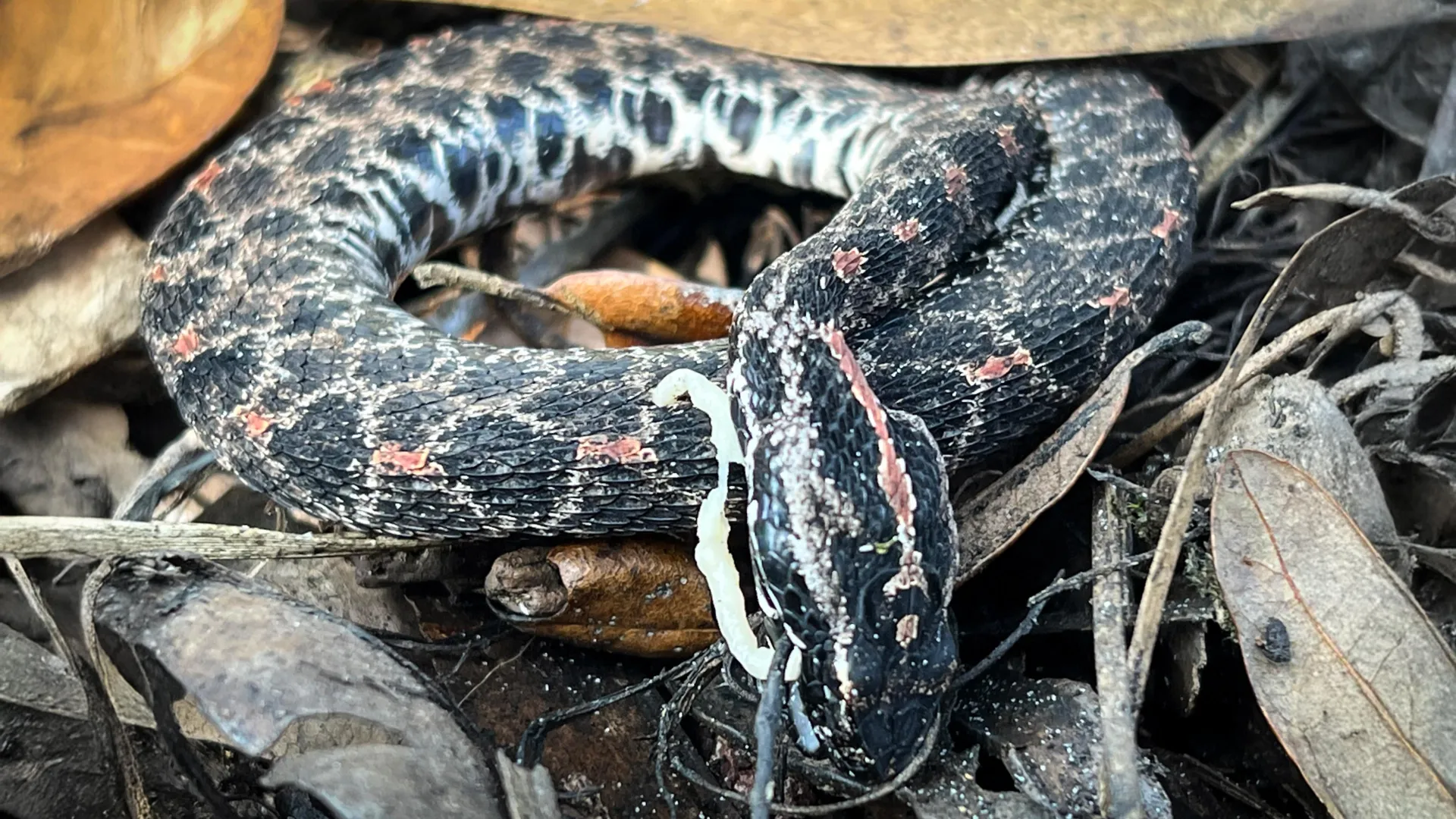
Snakes around the world are increasingly facing the threat of extinction, with disease emerging as a major concern alongside habitat loss. One of the most serious illnesses affecting snakes is ophidiomycosis, commonly called snake fungal disease, which is caused by the fungus Ophidiomyces ophidiicola (Oo). Since researchers first identified the disease about 20 years ago, it has been detected in many snake species.
In an effort to better understand the overall health of wild snakes, researchers in the southeastern United States investigated seven different pathogens in native snake populations. Their goal was to compare infection rates across species, locations, and time periods. The findings were published in Frontiers in Veterinary Science.
"The fungus Oo and the parasite Raillietiella orientalis (Ro), appear to be the most important infectious agents in free-ranging snakes in the southeastern US," said first author Dr. Corinna Mishin (formerly Corinna Hazelrig), a researcher at the University of Georgia. "We also show that increased risks of ophidiomycosis was strongly associated with coinfections in free-ranging native snakes."
Researchers Survey Hundreds of Wild Snakes
The study, funded by the Morris Animal Foundation, involved sampling more than 500 snakes from two wildlife refuges in South Carolina and Florida, covering 29 species. Researchers also collected additional samples from other areas across the southeastern US whenever possible.