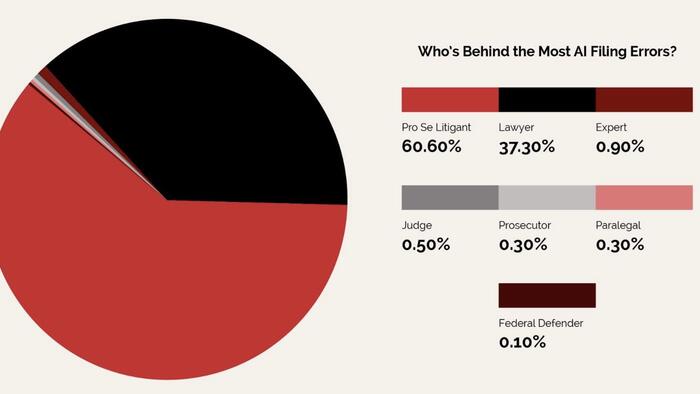
A new study from MIT and the University of Southern California shows that lawsuits filed without a lawyer at US federal courts have nearly doubled since ChatGPT went mainstream. One in five complaints now contains AI-generated text. Judges are resorting to drastic measures to cope with the flood of filings.
The researchers analyzed 4.5 million civil lawsuits from fiscal years 2005 through 2026 and 46 million entries from the electronic case registry PACER. The key metric is the "pro se" rate, the share of lawsuits where plaintiffs represent themselves without a lawyer. The right to self-representation in the US predates the Bill of Rights, and the rate held steady at about 11 percent of all federal civil cases for two decades. In fiscal year 2025, it jumped to 16.8 percent. That year alone saw 41,490 pro se filings, nearly double the pre-AI average. According to the study, 59 percent of all growth in civil lawsuits came from self-represented plaintiffs.
The finding is striking because US federal courts set the highest bar for unrepresented litigants anywhere in the American system. Filing fees run $405, roughly twice what most state courts charge, and formal requirements for complaints are far stricter. Over 90 percent of all civil cases in the US go through state or local courts anyway. The AI effect there is likely even bigger, the study says.