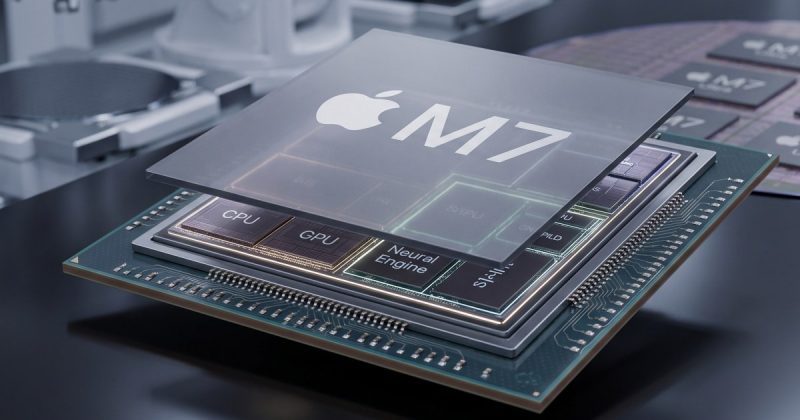
The consensus narrative around Apple Silicon and local AI inference goes something like this: impressive hardware, hobbyist-grade software, fundamentally memory-bandwidth-bound, ceiling already visible. This narrative is wrong—or at minimum, premature. The architectural headroom in Apple's Unified Memory Architecture (UMA) remains substantially underexploited by current inference frameworks, and recent work from Mininglamp Technology's open-source Cider SDK demonstrates that the compute ceiling sits considerably higher than the community assumes.
This article dissects why the ceiling is higher, how activation quantization unlocks it, and what the benchmark data actually shows.
Apple Silicon UMA: Why the Architecture Suits Inference Better Than You Think
Apple Silicon's UMA is not simply "shared RAM." It is a cache-coherent fabric where CPU, GPU, and Neural Engine access an identical physical address space with zero-copy semantics. On an M5 Pro with 64GB unified memory, the system delivers 307 GB/s of memory bandwidth—shared across all compute units without the PCIe bottleneck that plagues discrete GPU setups.
For LLM inference specifically, this creates three structural advantages: