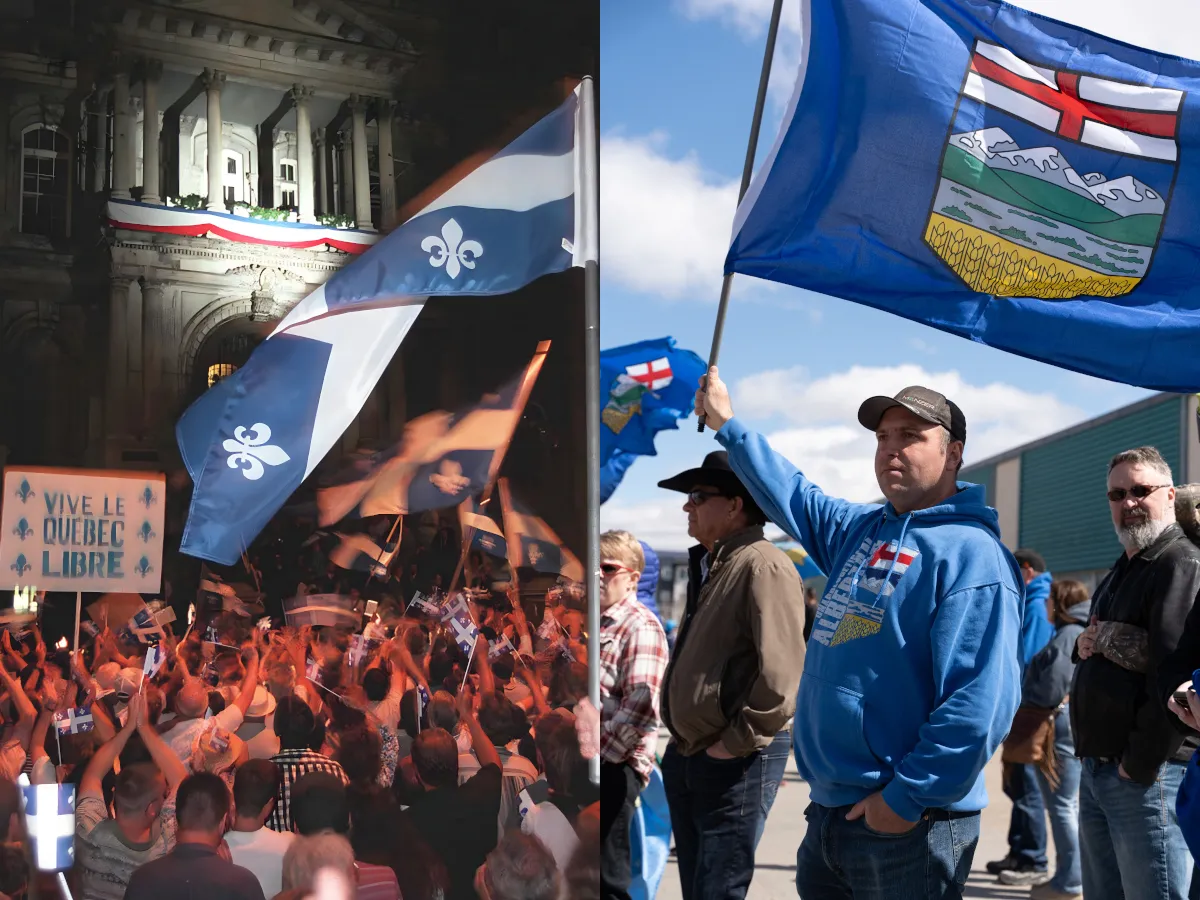
Skip to Content Subscribe Our Offers My Account Manage My Subscriptions FAQ Newsletters Canada Canadian True Crime Canadian Politics Health World Israel & Middle East Financial Post NP Comment Longreads Puzzmo Diversions Comics NP News Quiz New York Times Crossword Horoscopes Life Eating & Drinking Style Sponsored Play for Ontario Travel Travel Canada Travel USA Travel International Cruises Travel Essentials Culture Books Celebrity Movies Music Theatre Television Business Essentials Advice Lives Told Tails Told Shopping Buy Canadian Home Living Outdoor Living Tech Style & Beauty Kitchen & Dining Personal Care Entertainment & Hobbies Gift Guide Travel Guide Deals Savings National Post Store More Sports Hockey Baseball Basketball Football Soccer Golf Tennis Driving Vehicle Research Reviews News Gear Guide Obituaries Place an Obituary Place an In Memoriam Classifieds Place an Ad Celebrations Working Business Ads Archives Healthing Epaper Manage Print Subscription Profile Settings My Subscriptions Saved Articles My Offers Newsletters Customer Service FAQ Newsletters Canada World Financial Post NP Comment Longreads Puzzmo Diversions Life Shopping Epaper Manage Print Subscription HomeNP CommentGeoff Russ: Quebec and Alberta separatists don't hate CanadaThey are disenfranchised by a country that looks down on them, their economies and their cultureLast updated 23 minutes ago You can save this article by registering for free here. Or sign-in if you have an account.Separatists protest in Quebec in 1997, left, and in Edmonton in 2026. Photo by Andre PICHETTE; Henry MARKEN/AFPTaking the anger and dissatisfaction in Quebec and Alberta at face value is the easiest way to misunderstand both. Both provinces are restless and chronically at odds with the federal government. They both produce a wide array of autonomists, nationalists and outright separatists with a talent for twisting Ottawa’s arm.Enjoy the latest local, national and international news.Exclusive articles by Conrad Black, Barbara Kay and others. Plus, special edition NP Platformed and First Reading newsletters and virtual events.Unlimited online access to National Post.National Post ePaper, an electronic replica of the print edition to view on any device, share and comment on.Daily puzzles including the New York Times Crossword.Support local journalism.Enjoy the latest local, national and international news.Exclusive articles by Conrad Black, Barbara Kay and others. Plus, special edition NP Platformed and First Reading newsletters and virtual events.Unlimited online access to National Post.National Post ePaper, an electronic replica of the print edition to view on any device, share and comment on.Daily puzzles including the New York Times Crossword.Support local journalism.Create an account or sign in to continue with your reading experience.Access articles from across Canada with one account.Share your thoughts and join the conversation in the comments.Enjoy additional articles per month.Get email updates from your favourite authors.Create an account or sign in to continue with your reading experience.Access articles from across Canada with one accountShare your thoughts and join the conversation in the commentsEnjoy additional articles per monthGet email updates from your favourite authorsSign In or Create an AccountorHowever, Derek Fildebrandt, publisher of the Western Standard, described the impulses of his fellow Albertans very well: “They do not hate Canada. They do not hate her proud history and achievements. They hate what Canada has become and where Canada is going. And they do not want to go down with the ship.”Despite what many people may say, neither Alberta nor Quebec’s anti-Ottawa tendencies are inherently anti-Canadian. Rather, they are rebellions in defence of two unmistakable but scorned traits of the Canadian character.This newsletter from NP Comment tackles the topics you care about. (Subscriber-exclusive edition on Fridays)By signing up you consent to receive the above newsletter from Postmedia Network Inc.We encountered an issue signing you up. Please try againQuebec’s desire for French-Canadians to survive as a distinct people and culture was one of the founding principles of Confederation. The creation of Canada served as a compact between the English and French to, in-part, safeguard the Canadian francophone minority.Likewise, Canada’s economy was developed around the sale and export of natural resources, and Alberta remains the country’s most proficient practitioner of that tradition, namely in the production of the most valuable Canadian resource: energy.Both the presence of Quebec nationalism and the exporting of natural-resources are deeply Canadian, even if both are officially treated as suspect in modern Canada.The bargain of Confederation was acceptable to the Quebecois because they wished to preserve their unique culture. Support for Confederation in Lower Canada was based on guarantees of the survival of the French-Canadian people and their Roman Catholic faith in the new Dominion.George-Étienne Cartier, one of the Fathers of Confederation, expressed this well at a speech in Montreal in 1866, aimed at raising support for Confederation.“I am a Catholic. I love my religion, and think it the best. But even as I profess myself to be very Catholic … I am also French-Canadian, as are a great many of those I see around me. I love my race. I most assuredly have a natural predilection for it. But as a politician and citizen, I love the others, as well,” he said, referring to the English-speaking minority of Lower Canada, many of whom were present at the event.Alberta is far younger than Quebec, but no less Canadian. It has a long list of justified grievances, including unbalanced equalization payments, impediments to pipelines, bans on oil tankers, hostile carbon policies and the tendency of Liberal governments to enforce their authority on Alberta while turning the other way when it comes to Quebec.However, underneath it all is a desire to expand and profit from the same natural-resource economy that Canada has always enjoyed, rather than gambling on new, “renewable” technologies or industries.The country’s growth was paid for with natural resources. Whether it was fur and timber in the 19th century, wheat and minerals in the 20th or oil and gas today, these have always been Canada’s central industries.The Bank of Canada once printed banknotes celebrating these resource industries without a trace of embarrassment. Portraying Canadians “at work on the land,” the bills contained scenes of fishing, hunting, logging and even a petrochemical plant. It’s hard to imagine the Royal Canadian Mint entertaining the idea of $20 bills with the Trans Mountain pipeline today, even though it is arguably the most important major project Canada has completed in a generation.Alberta and its oil and gas economy are among the last bastions of Canada’s core industries. Before Alberta, Central Canada became the country’s commercial heartland, thanks to industries like logging and the fur trade, but came to treat natural resources as a vulgar vestige of the past once it had mostly transitioned to manufacturing and services. It truly was an unjust about-face.Neither Alberta nor Quebec sits easily within postwar Canada, especially after 1982, with the tragic birth of the Charter of Rights and Freedoms. That document re-imagined Canada as a propositional, multicultural state. In the Charter era, the power of bureaucratic managers and judges rose to challenge that of elected legislatures.Quebec offends modern Canada by using the blunt constitutional force contained within that Charter, the notwithstanding clause, to defend its language and culture against encroachment from non-francophones and the courts. In a similar fashion, Alberta has refused to let federal climate managers and consultants drag down its energy sector without a fight.Canada is better for both of these offences. Quebec stands as a great exception to the post-national ethos of modern Canada, and as a reminder that a nation is a product of its people, not ideas. Alberta stands as the ultimate counter-example to the idea that managers and bureaucrats can run a productive economy, and as a reminder that Canada’s wealth ultimately comes from what it can pull out of the ground and sell abroad.In-fact, both Alberta and Quebec have proven to be very adept at outlasting hostile Liberal governments, and forcing concessions with stubborn patience.A saner and better-governed country would embrace both provinces wholeheartedly, not treat them as rivals, and would recognize that their discontent is a form of fidelity to Canada’s foundation. Quebec is guarding its place in the compact of Confederation, while Alberta is stewarding the economy that pays for it.Even though Alberta and Quebec differ wildly in their ideologies and assumptions about politics, both stand as reminders that Canada has a long, complex history, and that the land and its people made the country what it is today. Surely that cannot be called a hatred of Canada.National Post Join the Conversation This website uses cookies to personalize your content (including ads), and allows us to analyze our traffic. Read more about cookies here. By continuing to use our site, you agree to our Terms of Use and Privacy Policy.
Geoff Russ: Quebec and Alberta separatists don't hate Canada
They are disenfranchised by a country that looks down on them, their economies and their culture
1,420 words~6 min read