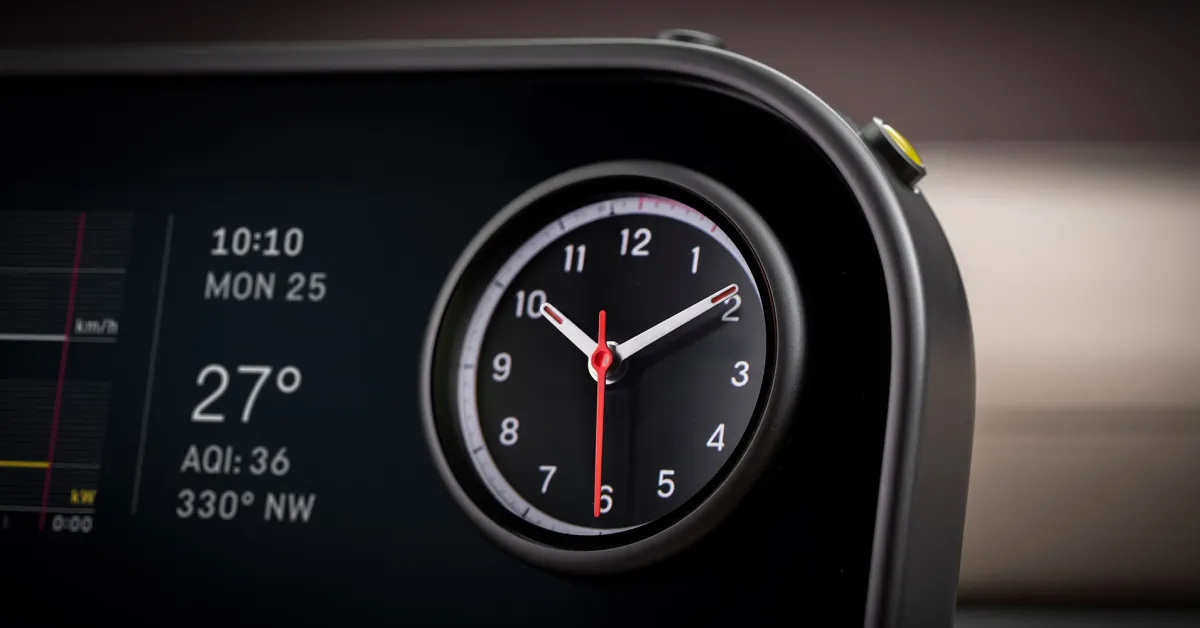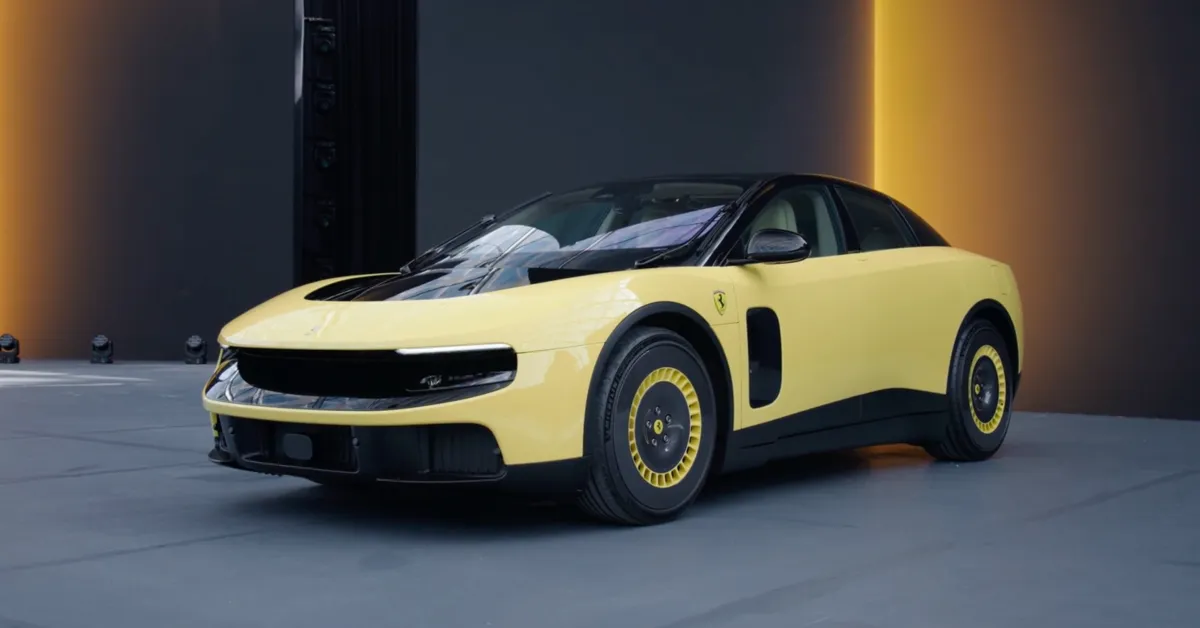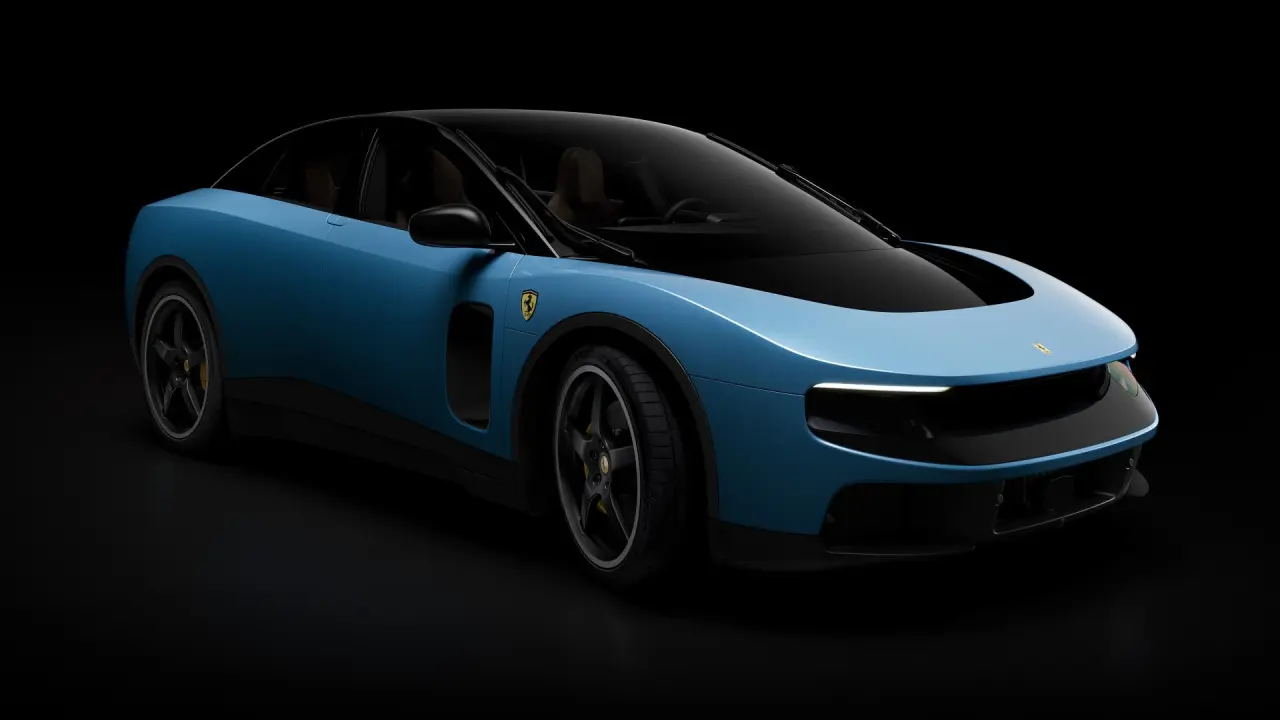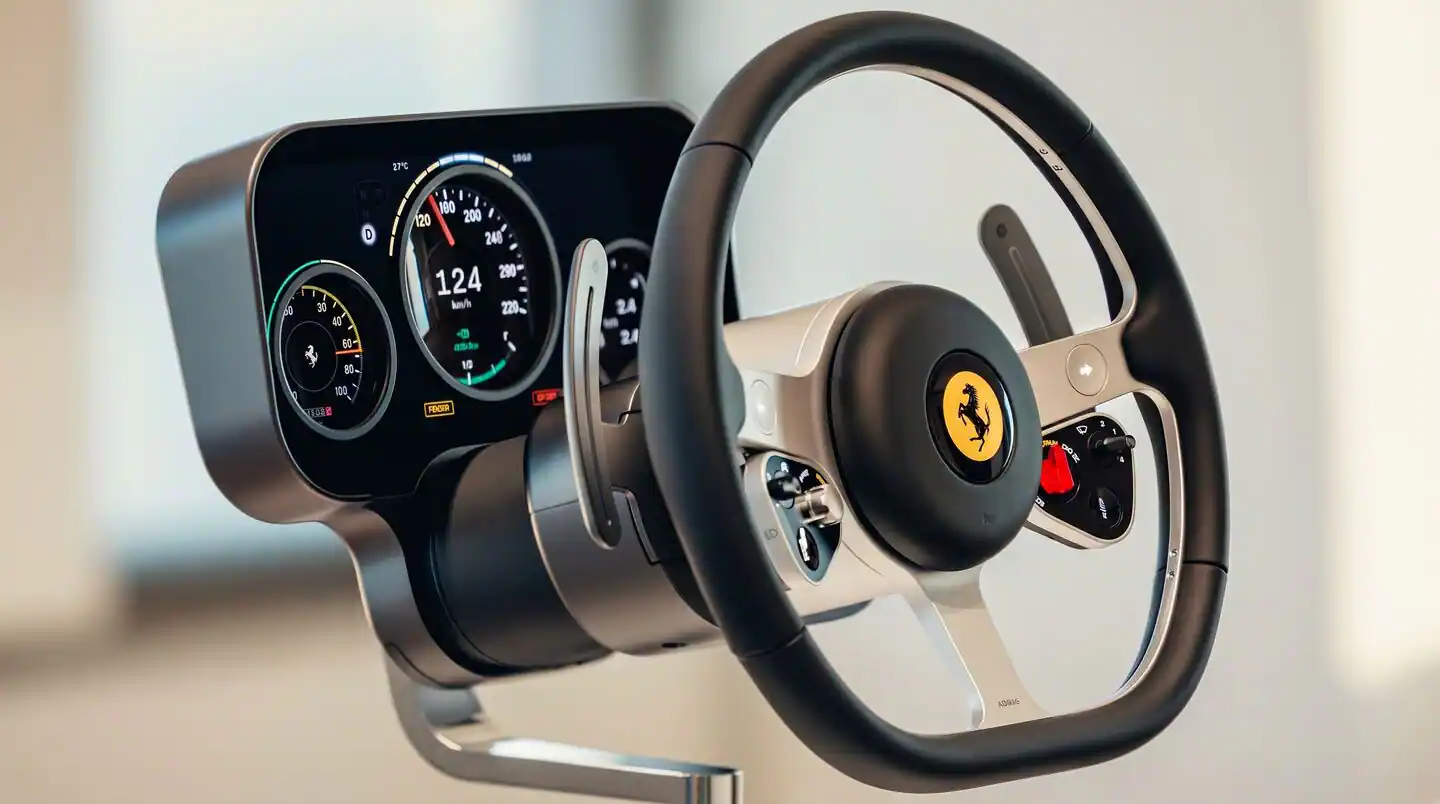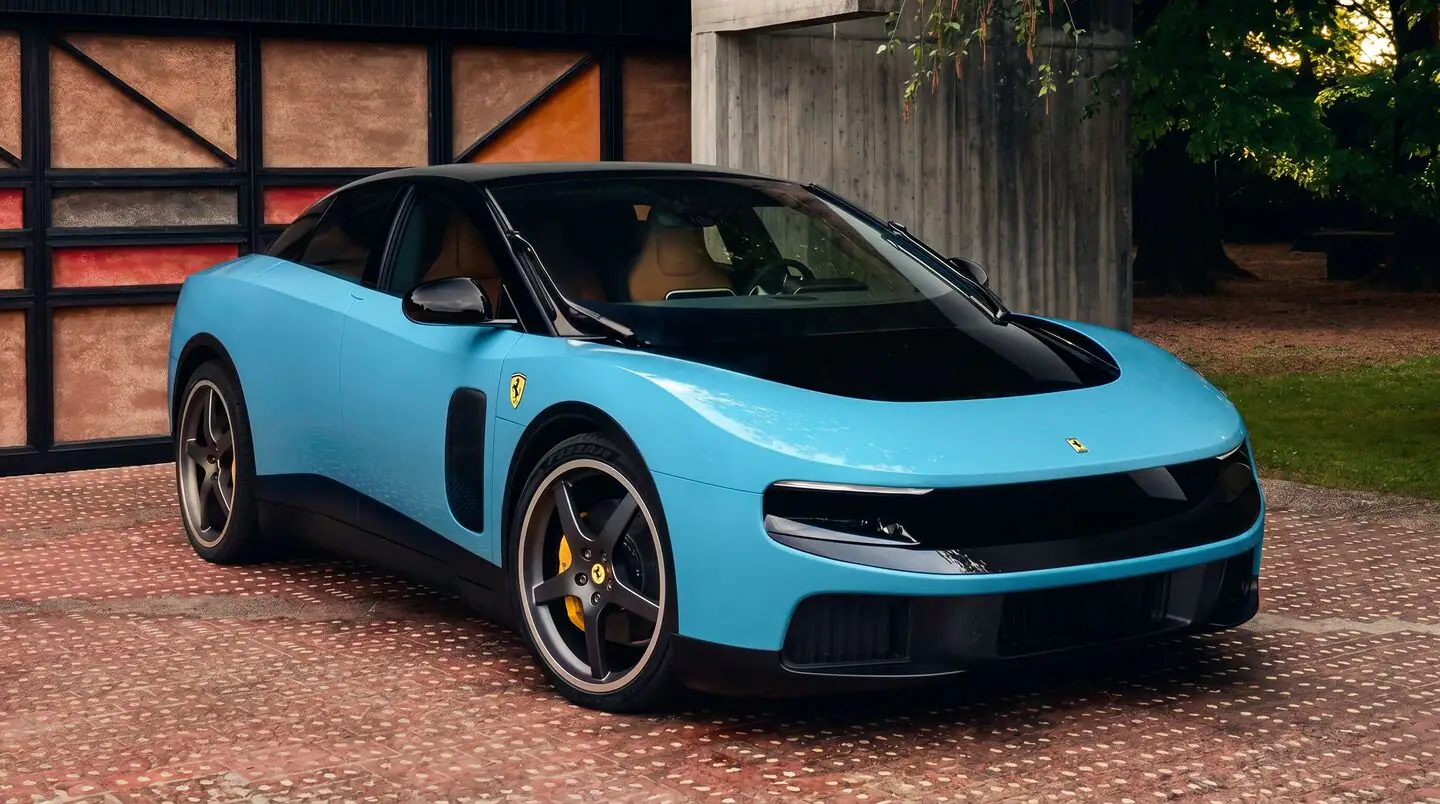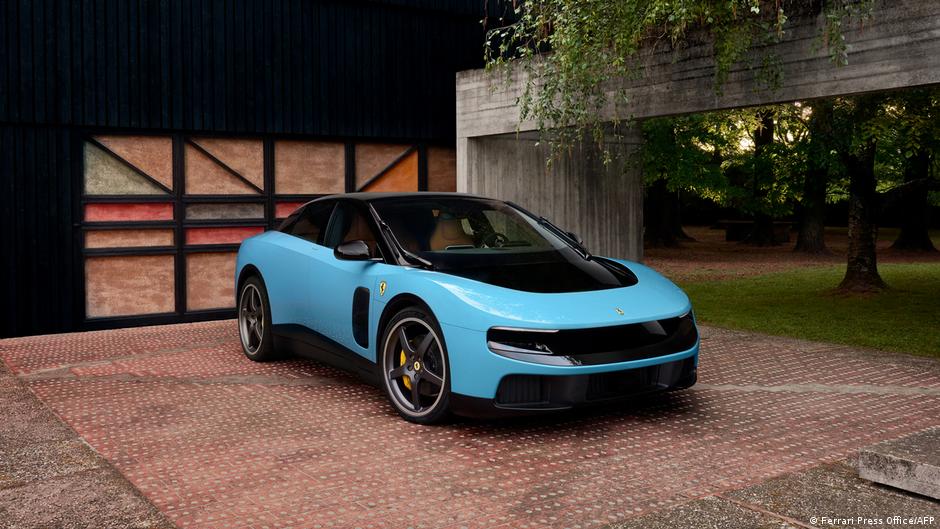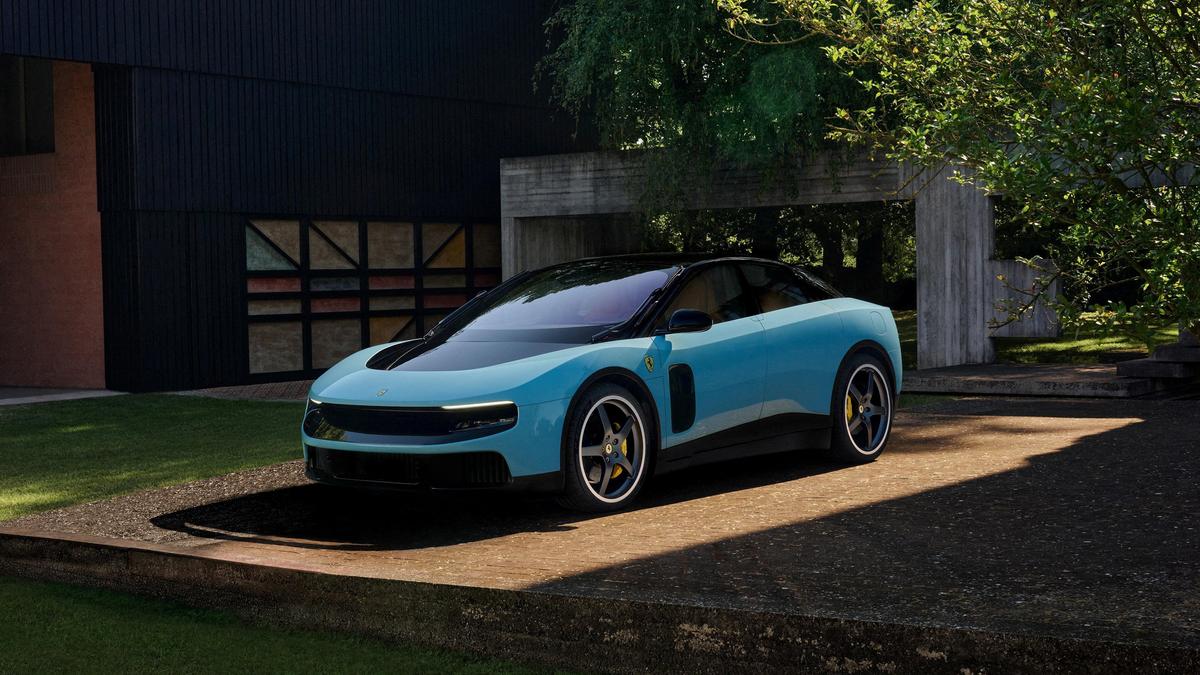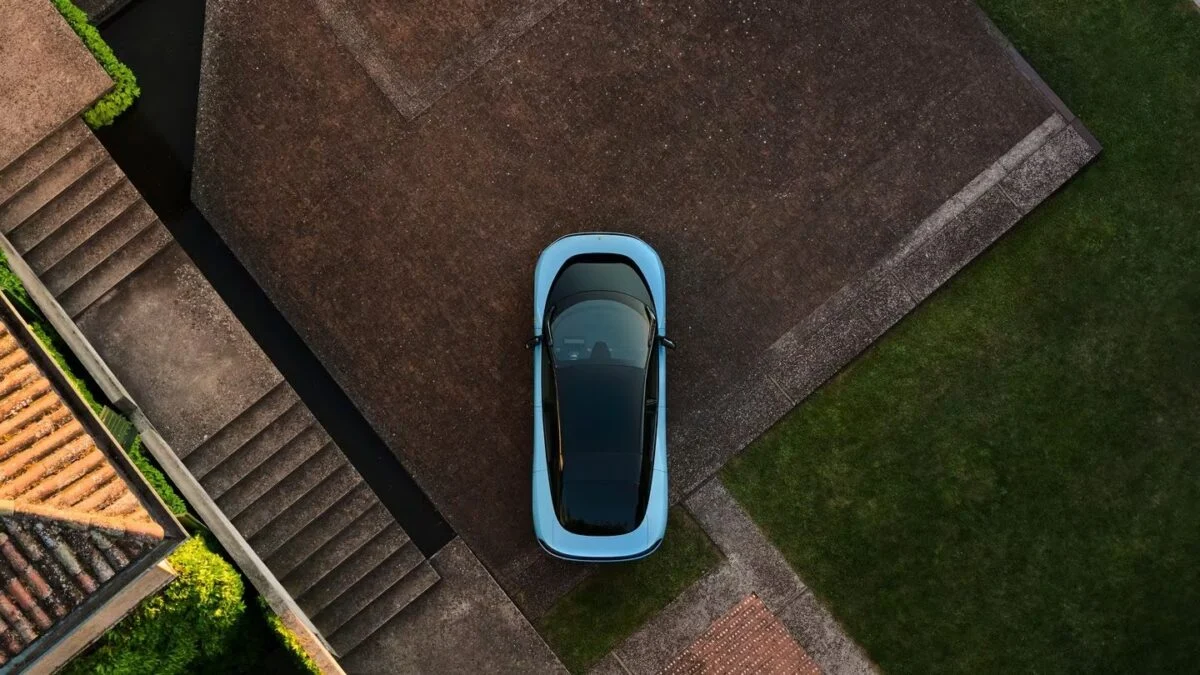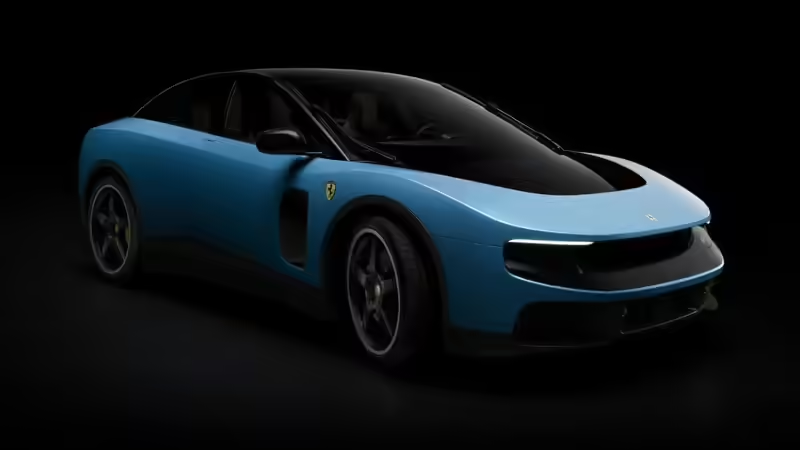
Photo credit: FerrariFerrari has unveiled the Luce in Rome — the company's first fully electric car and, by CEO Benedetto Vigna's own description, "a whole new segment in our range." The cabin was developed with Jony Ive's LoveFrom studio. Four ultra-thin OLED panels supplied by Samsung Display run the cockpit. A new Human-AI Assisted Architecture (HIAA) controls suspension, regenerative braking and visual interface as a single adaptive system. The car carries more than 60 new Ferrari patents. Maranello is positioning the Luce less as an EV transition than as an electric option alongside its existing combustion and hybrid ranges — what Vigna calls "technological neutrality."The Luce is less a product launch than a Ferrari position paper on what an electric Ferrari is permitted to feel like.Why the Luce took a decade to arriveFerrari's electric transition has been the slowest in the European luxury performance segment. Luca di Montezemolo, who chaired the company through its modern golden age from 1991 to 2014, stated on the record, more than once, that Ferrari would not build an electric car. His successors Sergio Marchionne and John Elkann softened the position without committing to a timeline. CEO Benedetto Vigna, the electronics engineer brought in from STMicroelectronics in 2021, was the one who moved Maranello off the fence.The result is a car that arrives roughly five years after Porsche, Lucid, Mercedes-Benz and BMW built their electric flagships. The delay was design, not engineering. Ferrari spent the time working out what an electric Ferrari should feel like before it spent serious money building one.Vigna has cast the late entry as strategic rather than reactive. "A company demonstrates its leadership when it has the courage to dare and to take on the challenge of new technologies," the CEO said. "Ferrari Luce was born precisely from this challenge." His argument is that Ferrari is staying in combustion alongside its electric and hybrid plays. The Luce sits beside the existing ICE and hybrid ranges — Ferrari, Vigna said, is now "the first in the world to combine fully electric, hybrid and combustion engine architectures for sports cars."The strategy has a label. Vigna calls it technological neutrality.Rome and the LoveFrom briefFerrari chose Rome as the launch location. Elkann called the city "the symbolic location of our first victory," a reference to Ferrari's first race win — and a historical anchor the company reached for as it crossed into the electric era.The LoveFrom collaboration is the design half of the same gesture. Elkann described it as "process innovation" — the structural reason Ferrari believes the Luce works at all. "Such a leap forward in product innovation could only have been achieved through process innovation," the President said. "This is why we chose to embark on new collaborations, such as the one with LoveFrom for the design."Ive left Apple in 2019, founded LoveFrom that same year, and signed a near-exclusive design partnership with OpenAI in 2024. The Ferrari brief sits on top of that — LoveFrom's first major automotive collaboration. The fingerprints across the Luce cabin are familiar to anyone who has used an iPhone in the last fifteen years.The dashboard wraps into the door panels in a single sculpted form. The OLED layers float above physical surfaces in a way that recalls the layered glass of the iPhone 6's home screen. The colour palette inside stays restrained — warm metals, soft fabrics, deep red accents that catch the OLED light. The brief Ive's studio worked to, according to Ferrari, was to make a Ferrari interior feel like analogue Ferrari while running on digital substrate.That sentence is the entire car.The four Samsung OLED panels that define the cabinSamsung Display has supplied four flexible OLED panels for the Luce. Each one does a specific job and the four together produce the densest visual cabin Samsung has shipped to any automotive customer to date.PanelFunctionCentre dashboard OLEDMain infotainment, navigation, media, vehicle controlsDriver's binnacle OLEDPerformance cluster, mode-specific graphics, lap timingFront passenger OLEDIndependent entertainment, navigation interaction, vehicle statusRear console OLEDClimate and media control for rear occupantsSource: Ferrari and Samsung Display public materialsThe flexible OLED stack lets Ferrari curve and float the panels into the cabin's sculpted form without the bulk traditional LCD modules need behind them. The blacks are deeper. The contrast is sharper in changing light. The energy draw on the battery is lower per panel than an equivalent LCD would have demanded.Ernesto Lasalandra, Ferrari's Chief Research and Development Officer, said Samsung "was able to fully support the Ferrari Luce's design philosophy" of integrated software and hardware. The four-panel installation, Lasalandra added, delivers "an unprecedented cockpit experience, where Ferrari's heritage and future-oriented technology coexist in harmony."The deal matters for Samsung Display too. Joohyung Lee, Executive Vice President and Head of Mobile Display Business at Samsung Display, described the Luce as a "milestone car that demonstrates OLED's technological advantages in enabling virtually any design." The Luce becomes Samsung Display's flagship automotive reference deployment heading into 2026 and 2027 supply negotiations with rival carmakers.The four panels also share a single rendering layer driven by the HIAA architecture. Dashboard themes shift in real time with weather, driving mode, speed and detected driver state. The cabin is the first production automotive interior built around the principle that the screens should respond to the driver, rather than the driver to the screens.The driver's binnacle is the heart of the electric Ferrari experienceTesla put a single oversized centre touchscreen in the Model 3 and called it the future. Ferrari took the opposite call. The Luce keeps the driver's binnacle — the dedicated digital cluster behind the steering wheel — as the cockpit's emotional centre.The binnacle wraps around the driver in a shallow arc and stays in the natural line of sight. Track mode emphasises battery output, torque vectoring, lap timing and regenerative braking data. Comfort mode brings navigation and media forward. GT mode sits between the two. The graphics draw their visual language from analogue Ferrari instrumentation — layered animations, deep red accents, mechanical typography.Haptic feedback in the steering wheel reinforces the visuals during hard acceleration and cornering. Ferrari engineers wanted drivers to feel mechanically connected to the car with no engine running. The binnacle is where that decision shows.HIAA is Ferrari's answer to Tesla's autopilot storyHuman-AI Assisted Architecture is Ferrari's name for the system that runs everything underneath the visuals — suspension, regenerative braking, climate, lighting, display layout and audio. Most automotive AI today is sold as a step toward autonomous driving. Ferrari built HIAA to do the opposite.The system studies driver behaviour, road conditions, acceleration patterns and cabin preferences in real time. Aggressive cornering on a mountain road triggers sharper steering response and a sportier visual environment. Long highway cruising shifts everything toward comfort. The car becomes the driver's preferences expressed as hardware.Ferrari's pitch is that HIAA enhances the driver rather than replaces them. The structural contrast with Tesla's Full Self-Driving and Mercedes Drive Pilot is the whole point. An autonomous Ferrari is a contradiction in terms. An adaptive Ferrari is a marketing-philosophy victory.60 new patents and an ecosystem of partnersThe Luce carries more than 60 new Ferrari patents, according to Vigna — covering powertrain integration, thermal management, OLED integration, HIAA control logic and the structural architecture that lets the cabin's sculpted form clear crash safety norms. The patent depth is the strongest signal yet that Ferrari is treating the Luce as a platform car rather than a one-off concept.The collaborator list extends past LoveFrom and Samsung Display. Vigna described the Luce as sitting "at the heart of an ecosystem of collaborations with outstanding technology partners." Battery cell sourcing, motor architecture, software stack and AI compute are each handled through dedicated partnerships Ferrari has yet to name in full.Elkann's positioning on the engineering question stayed deliberate. "Our research and engineering excellence have been placed at the service of driving emotions, without compromise," the President said. The Luce, on Ferrari's own telling, is the technical platform that funds and validates the next generation of Maranello's electric work.Materials and craft stay recognisably FerrariThe cabin uses recycled carbon fibre, vegan Alcantara and reclaimed leather alternatives. Ferrari mentions them once and moves on. The positioning is that sustainable materials are a baseline rather than a feature. Stitching, weave, finish and grain remain the visible markers of Ferrari craft. The badge buyers expect on the steering wheel is still the badge they get.Why Ferrari refused the Tesla and Porsche blueprintsTesla treats the cabin as software with seats. Porsche treats the Taycan as a combustion 911 with a different powertrain. Ferrari refused both readings of what an electric performance car should be.The Luce treats the cabin as a stage for the driving experience — emotional, sensory, layered, ornate where the competition stays spare. That choice runs against every minimalist instinct of the past decade in automotive design. Ferrari is betting that luxury EV buyers want craftsmanship and storytelling as much as range numbers and software updates.BrandCore EV philosophyCabin approachDriver experienceTech focusFerrari LuceEmotional luxury performanceImmersive, layered, tactileHuman-centred engagementHIAA personalisation + four-OLED immersionTesla Model S PlaidSoftware-first mobilityMinimalist single touchscreenAutonomy-orientedCentralised software stackPorsche TaycanPrecision performance EVSporty cockpitEngineering-driven dynamicsPerformance engineeringLucid Air SapphireDigital luxury comfortSpacious modern cabinTouring comfortRange and efficiencyMercedes EQSFuturistic executive luxuryMBUX HyperscreenComfort-focusedLarge-scale display integrationSource: Ferrari, Tesla, Porsche, Lucid and Mercedes-Benz product disclosuresThe India questionFerrari India's annual volumes sit in the low three digits, almost all of them combustion. The Luce will arrive through Ferrari's Mumbai dealership at a price tag industry watchers expect to clear Rs 8 crore on the road. The volume will stay tiny. The signal will be loud.India's luxury EV market is small but rising. Porsche Taycan and Audi e-tron GT have growing local order books. Mercedes EQS and BMW i7 have set the urban Indian benchmark for what an electric flagship looks like in Delhi, Mumbai and Bengaluru. A Ferrari electric flagship landing in this segment shifts the conversation upward.For the buyer who already owns a 296 GTB or a Roma, the Luce will be a third car. For Ferrari India, it will be the first vehicle that puts the brand into the same buying conversation as Tesla, Lucid and Audi among India's hyper-luxury early-EV adopters.FAQ: Ferrari Luce in numbersWhat is the Ferrari Luce? The Ferrari Luce is Ferrari's first fully electric production car, unveiled in Rome and developed in collaboration with Jony Ive's LoveFrom studio. It uses four flexible Samsung Display OLED panels across the cabin and a new Human-AI Assisted Architecture (HIAA) for adaptive driving dynamics. CEO Benedetto Vigna has called it a whole new segment in Ferrari's range.Where was the Ferrari Luce unveiled? Ferrari unveiled the Luce in Rome. President John Elkann called the city "the symbolic location of our first victory," referencing Ferrari's first race win at the Italian capital.Is Ferrari going fully electric with the Luce? No. Ferrari is following what CEO Benedetto Vigna calls a strategy of "technological neutrality." The Luce sits alongside Ferrari's existing combustion and hybrid ranges. Vigna has described Ferrari as the first sports-car maker in the world to run fully electric, hybrid and combustion engine architectures in parallel.How many patents does the Ferrari Luce carry? More than 60 new Ferrari patents, according to Vigna — covering powertrain integration, thermal management, OLED integration, HIAA control logic and structural architecture.Who designed the Ferrari Luce? The Luce was developed by Ferrari's in-house design team with significant design input from Jony Ive's LoveFrom studio. President John Elkann described the collaboration as "process innovation" and one of LoveFrom's first major automotive projects since the studio was founded in 2019.What is Ferrari HIAA? HIAA stands for Human-AI Assisted Architecture. It is Ferrari's adaptive AI system that adjusts suspension, regenerative braking, ambient lighting, climate and display layouts based on real-time driver behaviour and road conditions. Ferrari has positioned it as an alternative to fully autonomous driving systems.How many OLED displays does the Ferrari Luce have? Four flexible OLED panels supplied by Samsung Display: a central dashboard infotainment screen, a driver's binnacle cluster, a front-passenger display and a rear-console climate and media controller.When will the Ferrari Luce launch in India? Ferrari has yet to confirm an India launch date. The Luce is expected to arrive through Ferrari's Mumbai dealership in line with global rollout, at a price tag industry watchers expect to clear Rs 8 crore on the road.Can a Ferrari feel like a Ferrari without the V12?The V12 sound is the part of Ferrari identity that disappears under an electric powertrain. Maranello has spent five years working out what to put in its place. The answer the Luce offers is the cockpit itself — the four OLED panels, the binnacle wrapping into the driver's eyeline, the HIAA system reading every input the driver feeds it, the LoveFrom design layer holding the whole thing together. The bet is that the interior can carry the brand's emotional load the way the V12 carried it for sixty years.There is a second bet stacked underneath the first. The Luce represents one Ferrari future. The combustion future and the hybrid future Maranello already sells run alongside it. Vigna's technological neutrality is the strategy Ferrari is betting will outlast whatever Tesla, Porsche, Lucid and Rivian end up doing with their single-architecture commitments. "Never before have we offered our clients such freedom of choice," Vigna said.The market will tell Ferrari whether either bet pays off. The Luce is the first answer Maranello has been willing to commit to in writing.end of articleTrending Topics
Ferrari Luce Unveiled In Rome: First Electric Ferrari Designed With Jony Ive
Find latest technology news, gadgets reviews & ratings. Popular & latest gadgets specifications, features, prices, photos & videos. Trending mobile phone comparisons, slideshows, how tos and videos for latest mobile phones, tablets, technology news updates.
2,222 words~10 min read