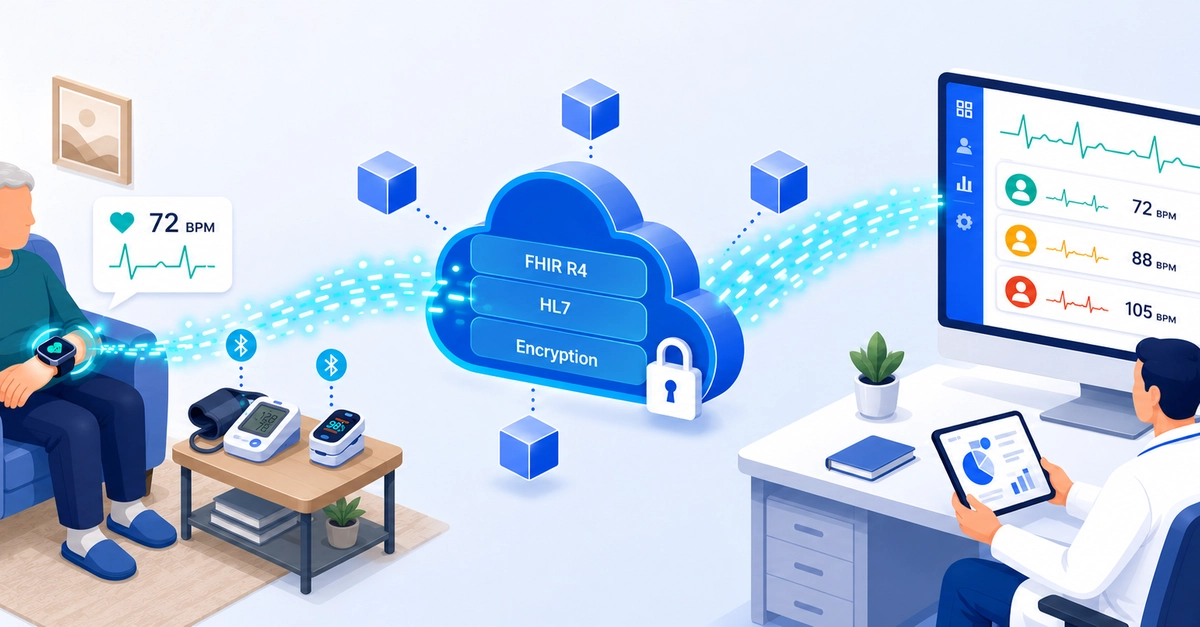
The US remote patient monitoring market is projected at $17.2 billion in 2026, growing to $49.5 billion by 2033. That number is pulling every digital health startup, hospital system, and medtech founder into the same question: should we build one, and what does it actually cost?
Here is the problem. Most teams that build a remote patient monitoring app skip the reimbursement math entirely. They scope the product around features, hit launch, then realize the architecture cannot bill the CPT codes that fund the program. The result is a clinical tool that runs at a loss.
This piece breaks down what to actually scope when you decide to build a remote patient monitoring app in 2026: the features that map to billable services, the architecture that survives an audit, and the cost ranges that match each clinical scope. If you want a partner who has shipped this stack before, hire Mobile app developers with healthcare experience early.
Why 2026 Is the Year to Build a Remote Patient Monitoring App
Two things changed this year that reset the business case. First, CMS rolled out two RPM CPT codes that took effect January 1, 2026: 99445 and 99470. The new 99445 pays $52.11 when a patient transmits readings on 2 to 15 days inside a 30-day window. The new 99470 pays $26.05 for a clinician's first 10 to 19 minutes of remote treatment management each month. The older codes (99454 for 16+ days of data, 99457 for the first 20 minutes of management) still apply. Stack them together and a single RPM patient produces $150 to $200 in Medicare revenue every month.