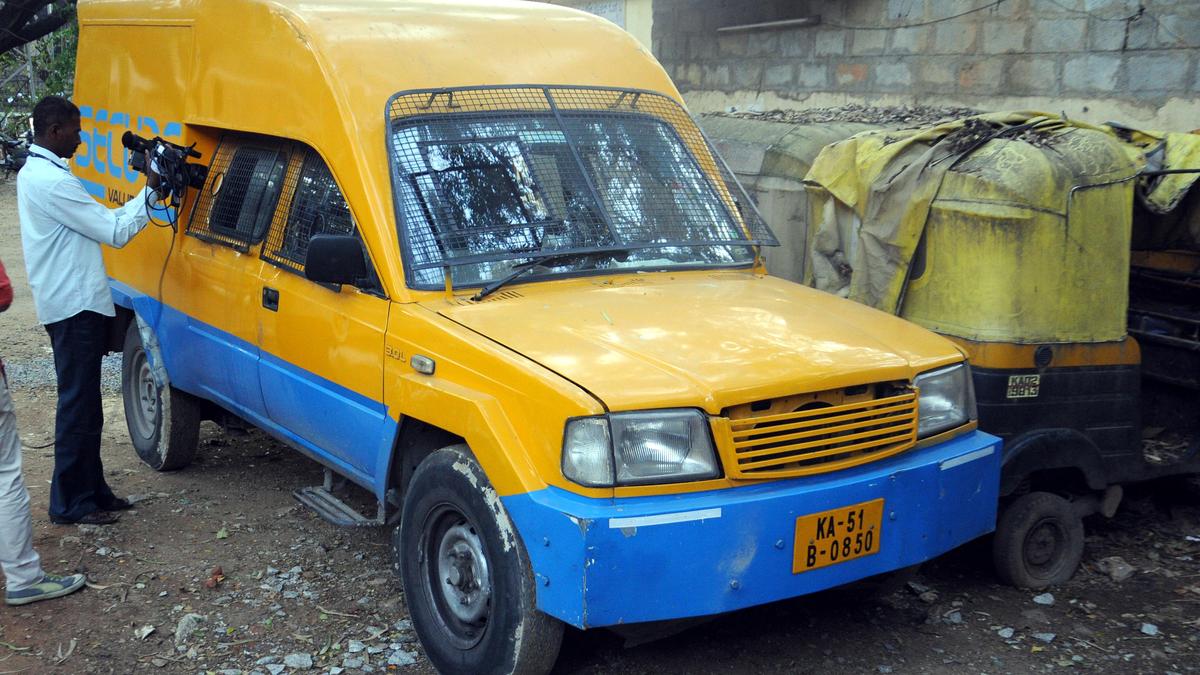
The Currency Cycle Association (CCA), the industry body representing India’s cash logistics and cash management companies, has written to the Indian Banks’ Association (IBA) highlighting that the sharp rise in operating costs due to rising fuel costs and significant minimum wage revisions across several states will require timely pricing realignment with banks.Due to rising cost pressures, the CCA estimated that the industry faces a near-term cost escalation of approximately 15% to 20%.The Association, in a statement, also said it will work with banks to cut avoidable cash-van movement through a demand-led replenishment model in view of the Prime Minister’s appeal for fuel conservation.The CCA cautioned that its underlying cost base is rising materially, on two fronts -- fuel costs are climbing with global crude trading at elevated levels on the back of the West Asia crisis, directly increasing cash van operating expenses and logistics expenses and there has been a significant minimum wage revisions across several states, adding further pressure to the sector’s cost structure.The Association noted that Haryana has increased minimum wages for unskilled workers by approximately 35% to ₹15,220 per month while Uttar Pradesh by around 21% to ₹13,690, with Punjab and other states also revising upward.In a sector where manpower accounts for about 50–55% of total operating costs, these revisions, alongside rising compliance costs, feed directly into the cost base, it added.U S Paliwal, Secretary General, Currency Cycle Association (SRO - Cash Management Industry) said: “Cash logistics is manpower-intensive, and service providers have absorbed a large share of cost increases over the years to keep service uninterrupted.Efficiency measures like demand-led replenishment will help, but they cannot offset cost increases of this scale. Further absorption is no longer sustainable, and a timely pricing realignment with our banking partners is now necessary.”The CCA said such a realignment is essential to ensure the continuity and reliability of cash operations, maintain adherence to regulatory and statutory requirements, and support the long-term sustainability of service providers operating within the cash logistics ecosystem.Smarter cash movement modelsPaliwal said “Every cash van on the road burns fuel...By moving lower-velocity ATMs to a planned, demand-led replenishment cycle instead of loading them every single day, we can take avoidable trips off the road, conserve fuel and run a leaner operation, without compromising cash availability for the public.”Under the proposed approach, ATM replenishment frequency would be aligned with actual cash withdrawal patterns and transaction velocity. Moreover, ATM replenishment frequency would be calibrated to each ATM’s actual cash velocity.High-footfall machines would continue to be serviced as needed, while low-velocity sites move to an alternate-day or demand-led cycle. The CCA stressed that availability at the ATM remains the non-negotiable guardrail, and that the model is designed to optimise routes, not reduce service.Published on May 26, 2026
Rising cost pressures: Cash logistics firms face 15–20% cost surge: SRO
The cash logistics industry anticipates a 15-20% cost increase due to rising fuel and wage expenses, prompting urgent pricing adjustments.
456 words~2 min read