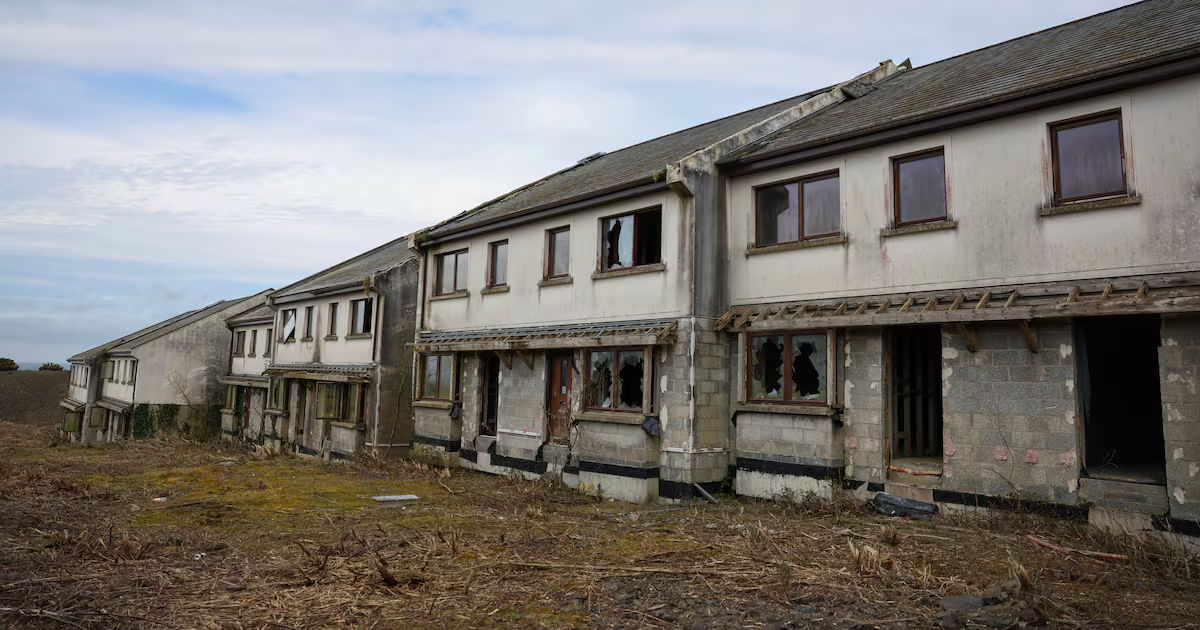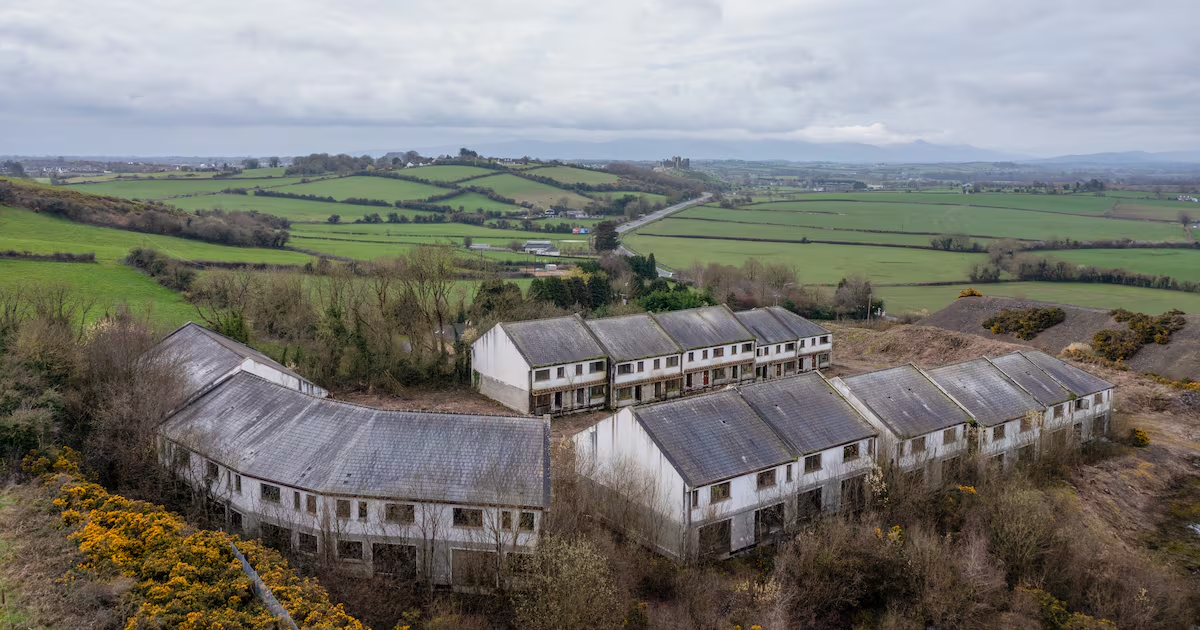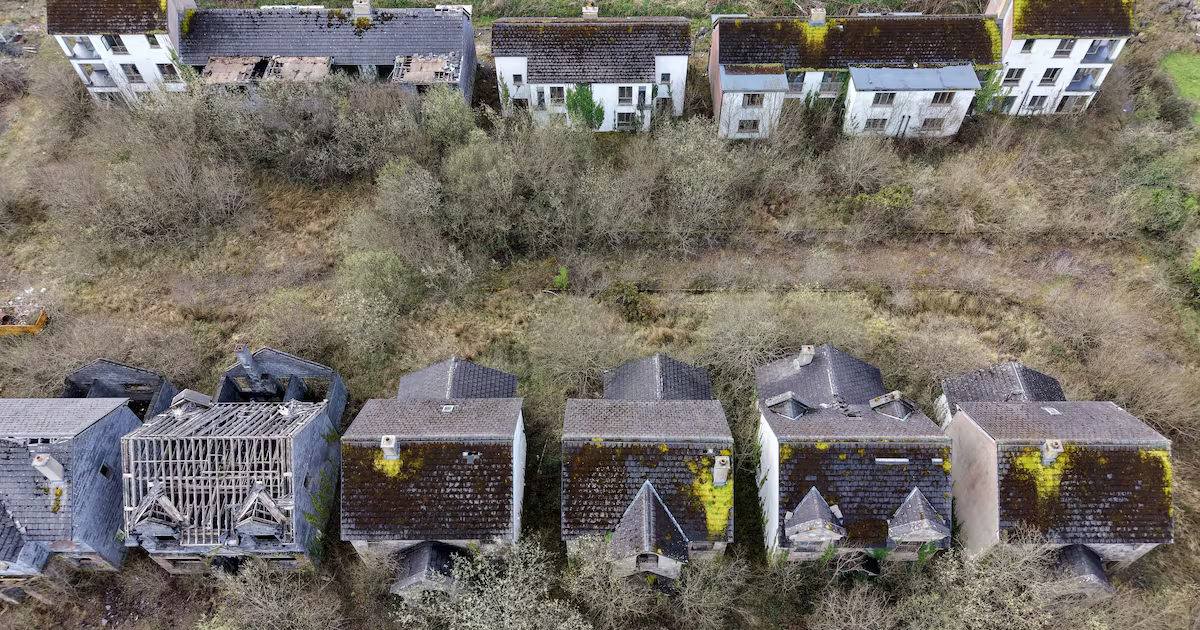
Driving into Castlebar along the Ballinrobe Road, you find your eyes drawn to the Waterways estate. Once described locally as the Taj Mahal of dereliction, the estate in Co Mayo now gives off an apocalyptic aura with its overgrown vegetation and run-down walls.Hoarding placed around a building intended to one day serve as a local shop has been pulled down, but the green mesh fencing around the site itself blocks easy access to the rest of the unused crèche and homes.“Waterways? An eyesore really, sure look at it,” a local resident says. Permission for the estate was granted in 2006, with a series of amendments to the plans sought over the next three years.Planning documents from 2005 show the developer, Richard Coggins, had sought to construct a 65-dwelling housing complex with an adjoining crèche and shop. Over three years of engagement with the council, the number of units was cut back slightly.However, 20 years later, the only evidence of the extensive housing estate planned for the area is a dozen dilapidated buildings and missing deposits.The two lonely rows of homes – just a fraction of the number that was intended to be delivered – are now run down. Moss and mould has grown along the tiled rooftops, but some of the homes never had roofs built at all.The wooden rafters are now weathered as the bushes obscuring the barely visible road through the estate threaten to outgrow the mostly-completed buildings.The Waterways Estate on the Ballinrobe Road on the outskirts of Castlebar. Photograph: Hugh Dooley The ghost estate has become a playground for youths “getting up to no good”, Mary, another nearby resident, says. Glass bottles scattered around the site give a hint of its new reality.[ Dublin building vacant for more than six years to be used for homeless familiesOpens in new window ]A source with knowledge of Garda operations in the area suggested the site has become known for fires, fireworks and general “tomfoolery”. Workers at the nearby car dealership say they often hear noises of activity.To combat this, the council erected a tall green fence around the entire property for “public safety”, the Mayo News newspaper reported in 2015.The original developer was Coggins Construction Services Limited (CCSL). Before the company was dissolved – having operated under the motto Better Built – after making about 25 planning applications over a four-year period ending in 2009.A number of deposits on homes had been paid. In correspondence seen by The Irish Times, the reason behind development ceasing was a financial institution pulling funding.Approached for comment, Richard Coggins said: “Ongoing efforts to progress and complete this development continue to be actively pursued, but have been frustrated by issues relating to Land Registery [sic].”“As these issues are under review and will likely lead to legal proceedings, I have been advised not to discuss the matter further as it may prejudice the outcome of such proceedings.” The Waterways, now a ghost estate, outside of Castlebar, Co Mayo. Photograph: Chris Maddaloni The company was dissolved in 2017, with 19 judgments worth a combined €335,066 against it, according to research by debt judgment publication Stubbs Gazette.Coggins has since begun to make planning applications for further housing developments under a new company.Land registry records show the Waterways land was last held by CCSL, and a series of further claims and mortgages are in place against the property.The chargeholders vary from financial institutions including Anglo Irish Bank, Ulster Bank and AIB, as well as contractors and building suppliers.Following the dissolution of a company, any land it owned falls to the State, under the Minister for Public Expenditure. The Office of Public Works (OPW) is the State body responsible for dealing with the real property of dissolved companies.However, in response to a query, the OPW said it was not “in occupation or control of this land on behalf of the Minister”.The site has entered limbo. Although CCSL has been dissolved since 2017, if the company is resolved within 20 years of that date, the company will revert to its ownership. “The Minister’s interest is therefore regarded as defeasible,” the OPW said, explaining this status.Furthermore, as there are “multiple charges on this property”, chargeholders could exercise their rights over the land “if they so wish”, the State body said.This state of affairs means any public improvement of the land is very unlikely to take place before April 25th, 2037, as the restoration of CCSL would see the State lose possession of the land. Until that date, the OPW will not take control of the land.Locals have largely given up on the estate ever coming to fruition, but the estate has remained in the public eye due to the efforts of Mayo councillors to push the local authority into a compulsory purchase of the site.The main voice on the matter, over some 15 years, has been Independent councillor Michael Kilcoyne.He told a meeting of Mayo County Council in 2023 he had been contacted by local residents who had paid deposits to secure then unbuilt homes and have still not received their money back.Standing at the entrance on a damp Wednesday morning, Kilcoyne regards the estate.“It cannot be allowed to continue like this, because some day in the future, somebody is going to bulldoze it down,” he said.“I am disappointed that when we had a taoiseach [Enda Kenny] in the town, it wasn’t dealt with as it should have been.”He has long bemoaned the lack of action by the council in forcibly purchasing the land and completing the housing, and has repeatedly drawn the link between the development and the rate of homelessness in the county.“In Mayo, there are nearly 200 people in emergency accommodation, and here we have an estate which is here, for the last 12 or 15 years now, derelict,” he says. “Even though it has been raised many times with the county council, they say it is difficult to resolve, [that] there are different groups involved in it.“But at the end of the day, that is no comfort to the people who are either sleeping homeless, or the people who are in emergency accommodation. They should either sort it out with the developer, or CPO the estate. It is that simple.”Responding to queries from The Irish Times, Mayo County Council said it “continues to engage actively with the relevant stakeholders in this site, but it is a site with complex and challenging circumstances”.“Despite these challenges, the council remains committed to identifying a viable and sustainable solution.”Coggins, meanwhile, has begun to file new planning applications under the name of his latest venture, Atlantic Offshore Environmental Safety and Inspection Limited.A new application to build a 12-unit, mixed residential development in Ballina was given conditional permission in early 2025. Coggins declined to comment on these plans. While Waterways remains an unfinished, unresolved memento of the Celtic Tiger, its developer is back on the horse. [ Grace Kelly’s Mayo holiday hideaway: ‘Maybe her dream will come true some day’Opens in new window ]
The ‘Taj Mahal of dereliction’: A ghost estate on the outskirts of Castlebar, Co Mayo
Twenty years after the Waterways estate was granted permission, it remains an unfinished, unresolved memento of the Celtic Tiger
1,161 words~5 min read