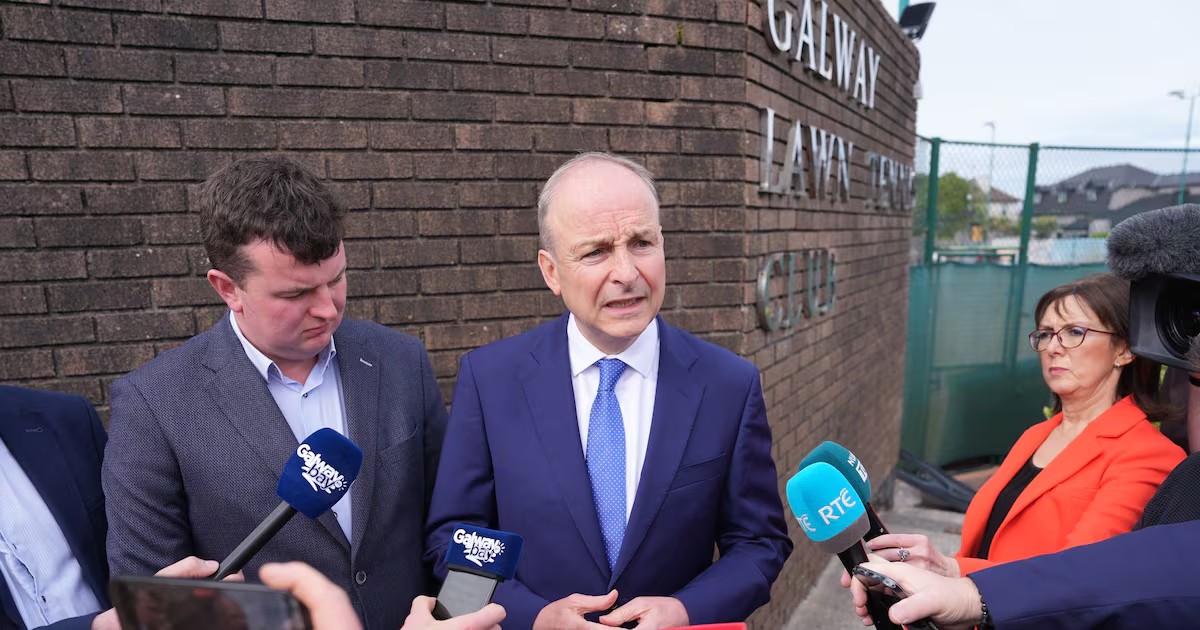
Less than 20 years ago, in the general election of 2007, Fianna Fáil got 15,398 first preferences in Dublin Central – 44 per cent of the vote. On Friday, in the same constituency, Fianna Fáil got 1,049 first preferences – 4 per cent of the vote. This is a decline of 93 per cent.The shocking thing, however, is that there is no shock. Nobody on the ground expected anything different. The pathetic attempts of the Supreme Being of 2007, Bertie Ahern, to suck up to anti-immigrant voters were symptoms of desperation and ideological bankruptcy. The mighty are fallen so low that they scrabble in the dirt.Yet, if we stand back a little, we should be astounded. This is arguably the world’s most successful democratic political machine of the last century. For more than half of that century of existence, Fianna Fáil has held the office of taoiseach (albeit not called by that name until 1937). And, just in case we haven’t noticed, it still does. I’m sure some political anorak (maybe Bertie himself) can answer this question: has any serving prime minister’s party in a stable democracy ever got less than 5 per cent of the vote in a national parliamentary election? I can’t think of any.We must, of course, enter the caveats. This was a byelection with a depressingly low turnout. Most of those entitled to vote couldn’t be bothered. But the Dublin Central debacle doesn’t feel like a freak event either.In Galway West, Fianna Fáil got nearly 9 per cent of the vote: much better than Dublin Central but not out of line with the larger trend. In 2007, Fianna Fáil got 37 per cent in Galway West. The decline is 80 per cent. Good luck with claiming that as good news because it’s not 93 per cent.All of this feels like the trope in the old cartoons where the coyote runs off the cliff and keeps going for a while. He freezes in mid-air, looks down and realises that there is no ground under his feet. It feels like we’re in that strange hiatus now. Fianna Fáil has no ground beneath its feet. Its base has eroded. The urban working class that voted for the party because it built them reasonably decent houses now sees its frontmen as shills for a new landlord ascendancy. The rural voters who once saw it as the beating heart of the real Ireland are increasingly alienated and disgruntled.[ Sinn Féin caught between anti-establishment right and soft left in crucial transfers gameOpens in new window ]Most importantly, the social glue has melted. Fianna Fáil’s hegemony was founded on its determination to stick to the Catholic hierarchy. Once it came in from the post-Civil War cold, it learned very quickly that the route to power lay through episcopal palaces. Whatever the bishops wanted – no divorce, no contraception, no abortion, full control of health and education, a blind eye to systemic institutional abuse – the bishops got. This alliance lasted right up to the heyday of Ahern as taoiseach.The tacit deal gave the party, in return, a rock-solid social and ideological base. The church had immense prestige and overwhelming authority and it lent them to Fianna Fáil as its representatives on Earth. Taoiseach Micheál Martin at the Galway count centre in Salthill. Photograph: Chris Maddaloni/The Irish Times
A party that cannot get a tenth of the vote in Dublin or Galway retains power. This is dangerous
It feels like we’re in that strange hiatus now. Fianna Fáil has no ground beneath its feet
1,054 words~5 min read