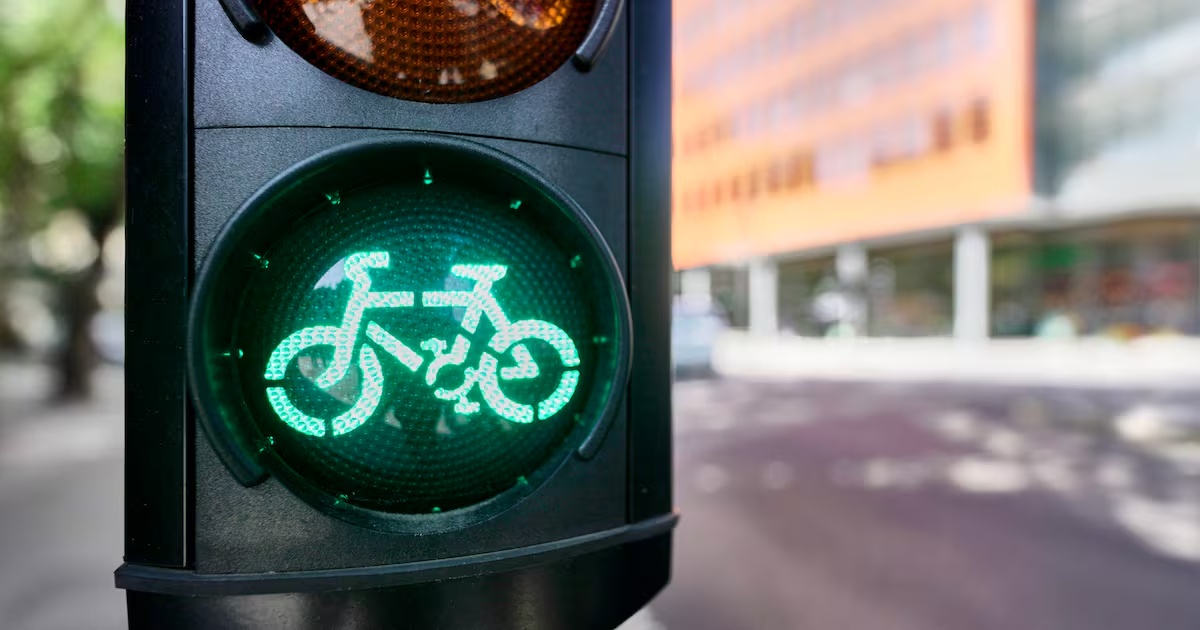
It is not always easy to figure out where Sinn Féin stands on any climate or environmental policy, but if nothing else, they are masters at recycling their own narratives.Two weeks ago, Sinn Féin’s Pearse Doherty launched a broadside against the HSE during Leaders’ Questions over a covered bike shelter on the grounds of University Hospital Kerry for staff use. His intervention just days before two key byelections was calibrated to stir up memories of that other notorious Leinster House bike “shed”. Doherty’s speech will be studied by students of political communications for its clever framing of “wasteful” expenditure on a “designer” bike shed while “mothers” are languishing on trolleys and waiting lists, and carers are grounded due to lack of funding. While the Government is splashing out on “luxury” and “vanity projects”, he argued “vacancies are going unfilled. Staff are working to exhaustion. Patients are waiting for longer and longer. Children are waiting for months for assessment ...” These may all be real problems in the health service, but who needs systemic solutions when you can blame the bike shed instead? Drawing a straight line from one (outrageously overpriced and underspec) bike shelter at Leinster House costing €336,000 to another (perfectly reasonable facility for commuting staff) at the Kerry hospital costing €127,000, Doherty detected a sinister pattern: he warned of a “culture of arrogance” in which there is a slew of past and presumably future bike shed scandals. While he didn’t say it outright, his speech was designed to make the listener believe that bike shelters (inessential and frivolous) are taking resources away from medical care. If that were true, anger would be a very justifiable reaction indeed. It didn’t take long for Doherty’s speech to go viral on social media platforms. Unlike complex macroeconomic debates or scrutiny of why public transport spending is being squeezed across the board to make way for more spending on roads, a six-figure bicycle shelter requires no economic expertise for the general public to grasp. It works beautifully as a highly effective shorthand for perceived State extravagance. Nor does it matter that €127,000 on a transport hub for a busy hospital campus is not even bad value for money, or that it is Government and HSE policy to support cycling, that the staff wanted it, or that it will help to address congestion and ensure hospital workers can get to work on time. It is much more important that Sinn Féin gets to connect its national messaging with local grievances by tapping into popular misconceptions about cycling. What better example of an out of touch and fiscally irresponsible Government than a capital “overspend” on a “vanity” project like a bike shelter?[ Bike shed in Kerry hospital costing €127,000 is ‘pure waste’, says Sinn Féin TDOpens in new window ]Doherty’s speech may not have secured wins for Sinn Féin in the Dublin Central and Galway West byelections, but his intervention could have a chilling effect on active travel investment. It could draw more opposition to decent active travel facilities that support people commuting by bike. It will certainly make State agencies wary of investing in “vanity projects” like staff lockers, showers and secure bike parking, since apparently anything above a flimsy plastic cover could end up before the Public Accounts Committee. Bear in mind that the cost of a multistorey car park is at least €35,000 minimum per space for new builds. Meanwhile, there is little interrogation of the public money and space given over to car parking by the State and its agencies, especially outside of Dublin. An astonishing amount of space in most urban areas is given over to the publicly-subsidised storage of private vehicles . We tend to think of parking as an entitlement, but really we are asking to store our private property in the public realm. That the State should be contributing to such needless waste is a scandal deserving of parliamentary scrutiny. Fragmented accounting and hidden subsidies mean that there are no figures available for the true, complete cost of car parking provision for State agencies and Government departments, so the total annual spend remains hidden from the fiscal scrutiny that is applied to active travel. New bike shed located at University Hospital Kerry. Photo: Domnick Walsh/Eye Focus The idea that cycling has no economic value is seriously mistaken, with study after study highlighting the potential for urban regeneration and financial savings by investing in secure bike parking. Bike parking is more cost-effective per square foot than providing free parking outside businesses, and when bike parking is available, people are more likely to choose to ride to those places and also to cycle in general. Security worries can act as a real barrier to cycling since bike theft is still a serious problem, yet e-bikes and cargo bikes are also game changers because they facilitate longer distances and the school run too. So secure and sheltered parking at the workplace is a vital investment in addition to protected cycle lanes. Storage facilities and showers are an added bonus for a workplace keen to attract staff. In the long run, employers will benefit from the fact that staff who commute actively take on average 4.5 fewer sick days per year.The case for investing in secure cycle parking is well grounded in public policy and mobility studies. In the real world, people are literally voting with their feet. The number of Dubliners using bicycles on an almost daily basis has increased by 50 per cent in just two years, according to recent research from the National Transport Authority.
There is little interrogation of public spend on car parking amid bike shelter angst
Astonishing amount of space in most urban areas is given over to the publicly-subsidised storage of private vehicles
928 words~4 min read