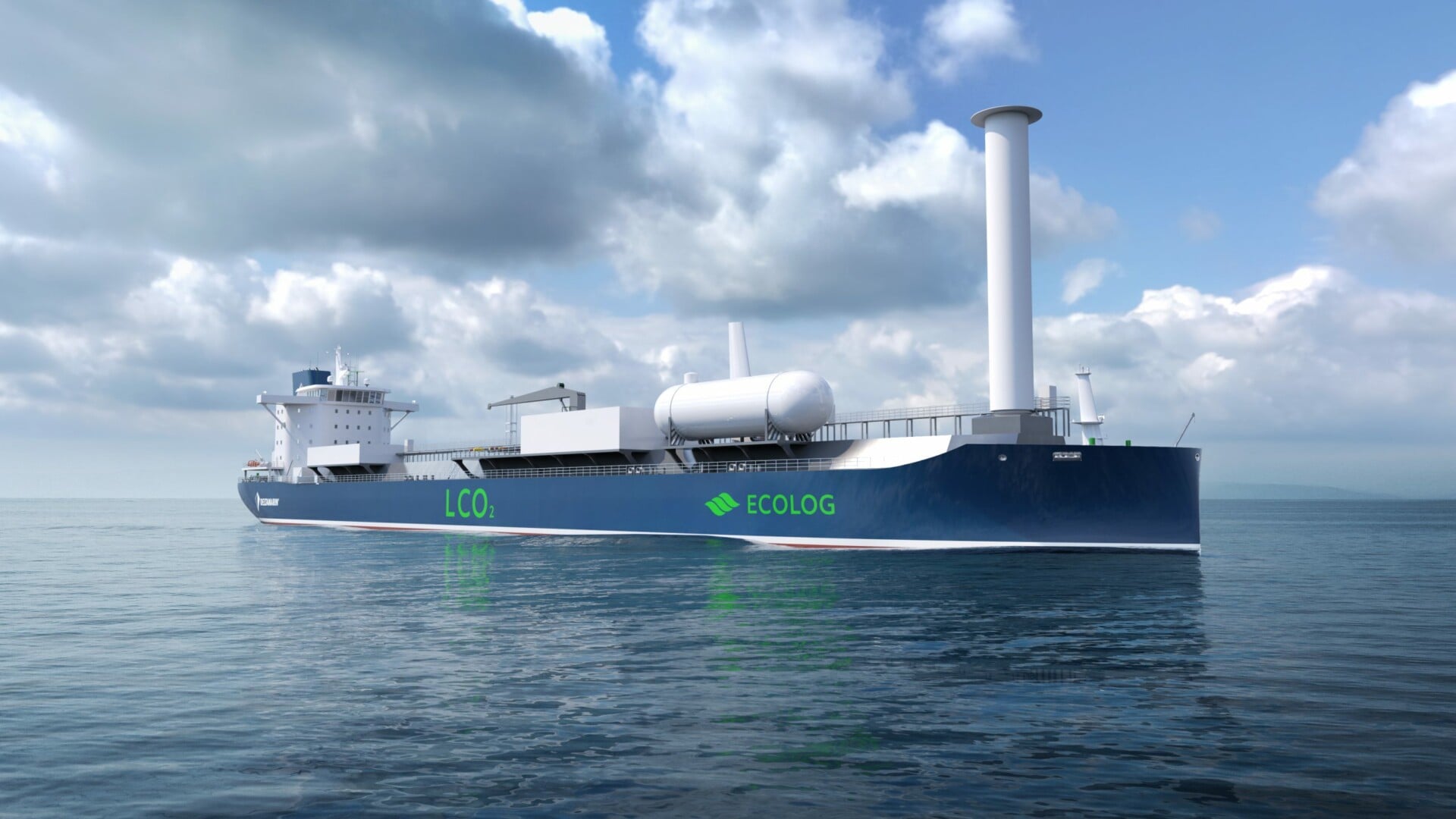
As momentum builds around the European liquefied hydrogen (LH2) supply chain, EcoLog — backed by Peter Livanos interests — sees its Amsterdam project gaining stronger technological, industrial and geopolitical support.The company’s new partnership with Kawasaki, announced during the World Hydrogen Summit in Rotterdam, together with the growing recognition of LH2’s role through the so-called Dutch Hydrogen Trade Agenda — supported by a broad coalition of companies, ports and industrial stakeholders — places the initiative more clearly at the heart of Northwestern Europe’s energy strategy.EcoLog’s core concept is considered particularly ambitious, with the company promoting the development of a liquefied hydrogen import terminal alongside a liquefied CO2 export terminal in Amsterdam’s Afrikahaven area, aiming to create a new energy hub linking clean energy production with demand in Northwestern Europe, while also supporting carbon emissions management.In its initial phase, the project targets a capacity of 200,000 tonnes of green hydrogen and 1.8 million tonnes of CO2 annually. Subject to smooth progress in permitting and investment decisions, the facility could become operational towards the end of 2030.The latest — and perhaps most decisive — development is EcoLog’s agreement with Kawasaki, a company with significant expertise across the liquefied hydrogen value chain. Kawasaki built the world’s first liquefied hydrogen carrier and has experience in vessels, terminal infrastructure and ship-to-shore connectivity systems for LH2 transfer operations.Under the new strategic alliance, the two sides will deepen their cooperation on EcoLog’s maritime corridor, aiming to ensure the safe and stable supply of liquefied hydrogen to Europe from countries including Oman, Saudi Arabia, Spain and Brazil.As highlighted, diversification of sources and routes is now regarded as a pillar of energy security.EcoLog has already taken a series of steps towards implementing the project, including the design of a liquefied hydrogen carrier for which it has secured Approval in Principle (AiP), namely preliminary approval of the core technical solution by an independent classification society.The company said that it has developed a design that significantly reduces boil-off, one of the major challenges in liquefied hydrogen transportation, as part of the cargo tends to evaporate due to the need to maintain temperatures of around -253 degrees Celsius.At the same time, it has already selected suitable shipyards with which it is cooperating for the construction of the vessels.Since late 2025, the company has submitted a full permitting application for the Amsterdam terminal adding it is cautiously optimistic that approvals could be secured within the year.Meanwhile, since January, the project has entered the Front-End Engineering Design (FEED) phase, with the participation of U.S.-based KBR, which has experience in green hydrogen projects, including work related to NASA.In addition, a Joint Development Agreement (JDA) has already been signed for the creation of the world’s first liquefied hydrogen corridor linking Duqm, Oman, with Amsterdam and key logistics hubs in Germany, including Duisburg.The Dutch agendaRecent developments in the Netherlands are also proving supportive. The Dutch Hydrogen Trade Agenda, presented on May 20, acknowledges that the Netherlands could evolve into a leading European hydrogen import hub. However, as noted, achieving this will require three key steps: demand certainty, public funding for infrastructure, and a clear regulatory and permitting framework.
EcoLog: New boost for the hydrogen project
The company’s new partnership with Kawasaki, announced during the World Hydrogen Summit in Rotterdam, together with the growing recognition of LH2’s role
552 words~3 min read