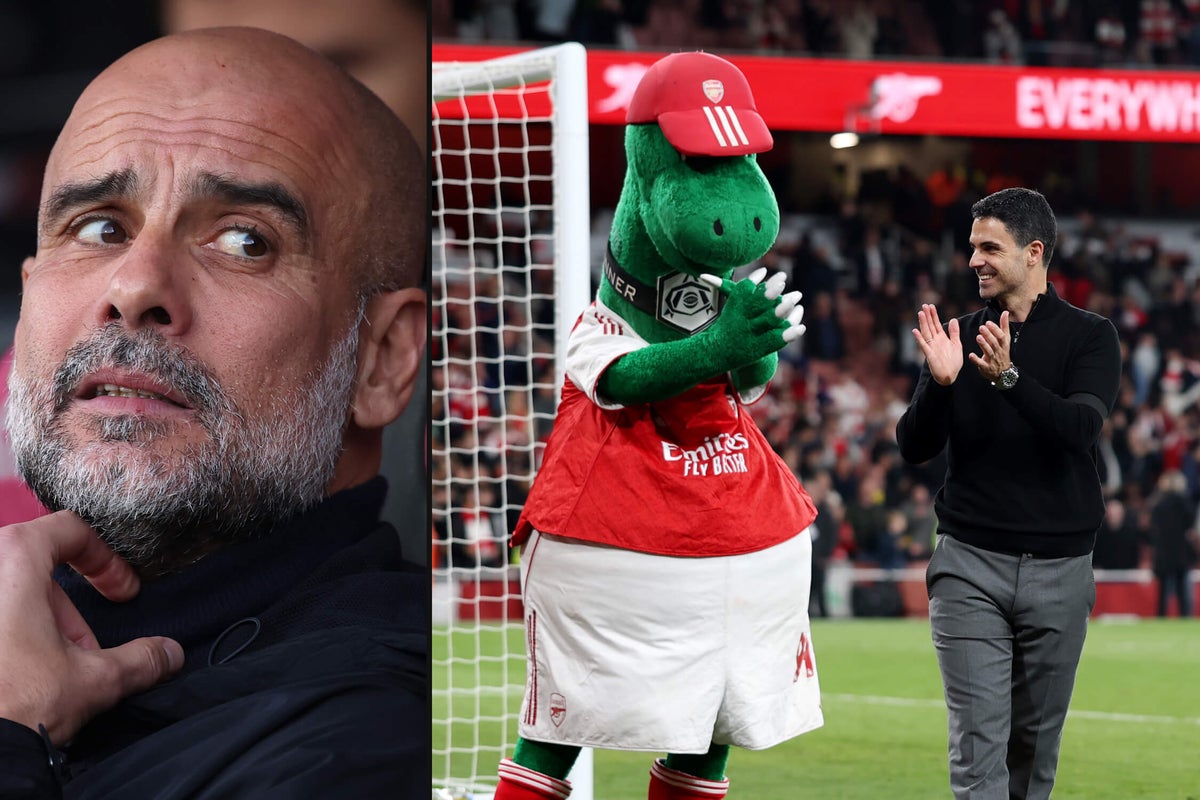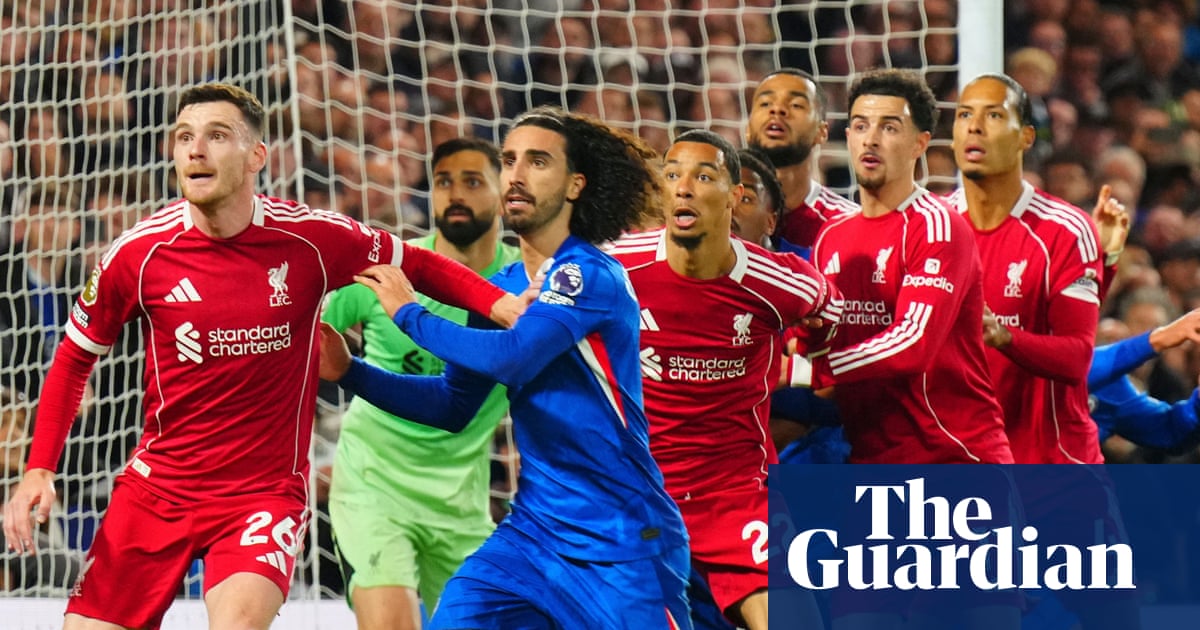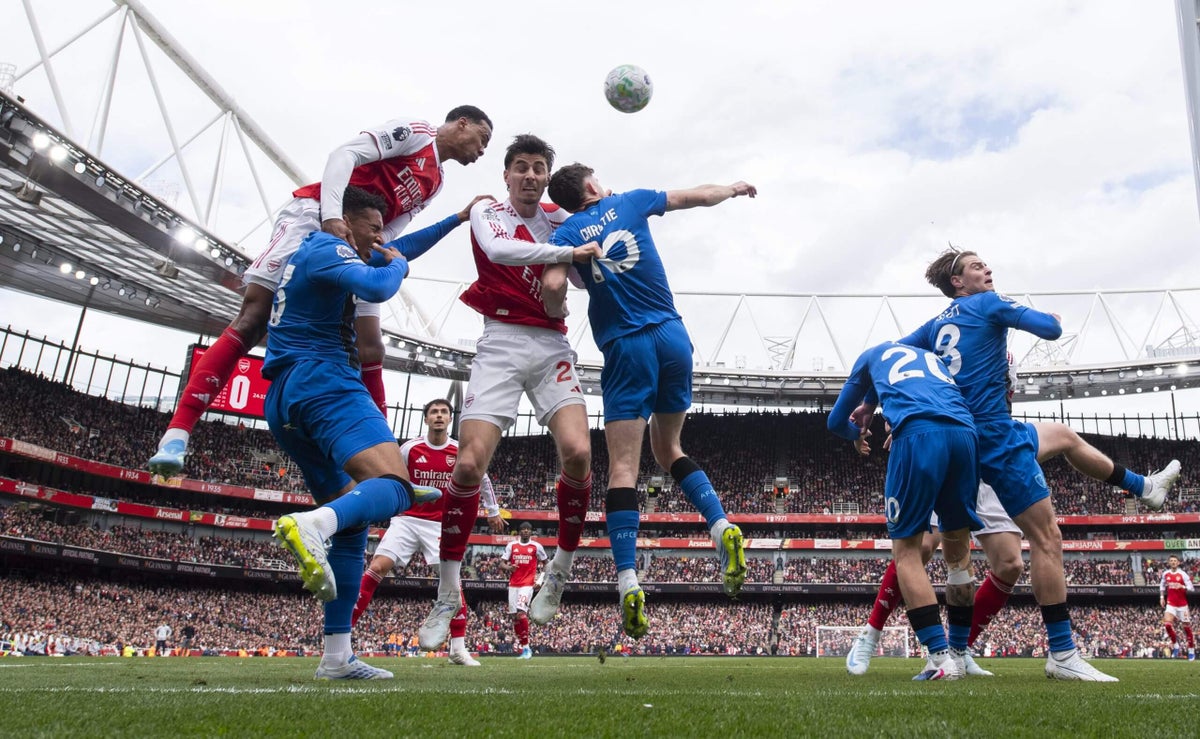
The final day’s action of the 2025-26 Premier League being played amid an early-summer English heatwave was a fitting end to a season defined by rising intensity and pressure-cooker battles at both ends of the table.Arsenal received the champions’ trophy on Sunday after their game away to Crystal Palace, bringing the title back to north London and ending a 22-year drought for the club. It also means we’ve had different winners in each of the past three seasons — something that had not happened since between 2015-16 and 2017-18.Pep Guardiola leaves Manchester City this summer with almost too many trophies to count. Over a decade as their manager, he’s seen the league evolve tactically: first because of the success City had with his ideas of patient possession and territory-dominant football, but now heading towards a new iteration, in which physicality, defending and set pieces have reemerged as fundamentals.His Liverpool counterpart Arne Slot has spoken about these stylistic shifts throughout the season as his side failed spectacularly to defend their title, finishing fifth, 25 points behind Arsenal. “Football has changed, I think we can all see this,“ Slot said, citing how City used to dismantle bottom-half opponents with ease. “That is not the reality of the league any more.”With that in mind, let’s dive into the tactical trends of this latest Premier League campaign.Set pieces go nuclearThe defining theme of this season was corners and long throws, because of how effective they proved and the homogeneity in approach. Arsenal set the tone on matchday one, with an inswinging corner goal to win 1-0 away to Manchester United.Their consistent delivery from both sides of the pitch, repeatable patterns, smart blocking and crowding of the goalkeeper brought 19 corner goals — the most by any Premier League team for the past eight years.North London rivals Tottenham Hotspur were second by that metric (18 corner goals). It was the only phase of the game in which they performed exceptionally. The all-important goal on the final day — which kept them up in a 1-0 win against Everton, and sent West Ham United down — was from Joao Palhinha. He headed Mathys Tel’s inswinging corner onto a post, then tapped in the rebound.Notably, West Ham were the division’s worst team at defending corners, conceding 15 goals from them, including three times in big defeats to Chelsea and Liverpool.Evidently, so many clubs had struggled to defend Arsenal’s corners that they adopted the approach themselves. This season saw an eight-year high for inswinging deliveries, fouls on the goalkeeper and corner goals — the latter going up from 135 last term to 188, including eight in the final gameweek.The proof was Bruno Fernandes. Manchester United’s No 10 broke the Premier League record for assists in a season (he had 21), with almost half of those (nine) being from set pieces. His delivery for Casemiro headers proved particularly effective, and the history-making 21st one was an outswinging corner for Patrick Dorgu against Brighton and Hove Albion on Sunday.Teams pivoted to an aggressive approach at throw-ins: pack the box, cause chaos and try to generate back-post tap-ins from flick-ons, or profit from second balls.Across the league, the volume of long throws nearly tripled from 2024-25.Brentford, as in recent years, dominated these scenarios.Keith Andrews, their first-year head coach, brought his smarts from last season’s role as their set-piece coach. That paired perfectly with Michael Kayode’s (and sometimes Kevin Schade’s) capabilities for big launches. Brentford used these long throws to score equalisers at home to Arsenal, Newcastle United and Chelsea, plus the opener in a 3-2 defeat of visiting champions Liverpool.Defence wins over attackAfter seeing the promoted trio go straight back down in the previous two campaigns, Leeds United and Sunderland made a much better effort with defend-first approaches instead of attempting to play possession football — Daniel Farke and Regis Le Bris had both suffered relegations previously in their careers, and showed they’d learned their lesson.Leeds’ mid-season switch from 4-2-3-1 to 3-4-3 reinforced the defence. They kept games tight, drew plenty of them and finished eight points above the drop zone. Goalkeeper Karl Darlow mostly hit the ball long, and almost always did so at goal-kicks, as Lucas Perri had done too, before he was dropped by Farke in January.Sunderland built their campaign on a strong start and exceptional home form. Not until February, against Liverpool, did they lose at the Stadium of Light. Le Bris kept them tactically flexible, mostly in a 4-3-3 and sometimes a 5-4-1. Ten of their 14 wins were by a single goal and they thrived without the ball for long spells.Arsenal’s title was built on defensive principles. Early on, there was talk of them threatening Chelsea’s record of conceding just 15 goals in 2004-25. While that fell apart mid-season, they finished top by only letting in 27 and faced just 90 shots on target — an average of 2.36 per match. Mikel Arteta’s side put up the best defence since peak Manchester City and Liverpool in 2021-22, but you have to go back to Leicester City in 2015-16 to find lower-scoring champions (68 goals to Arsenal’s 71).Even with possession, Arsenal were patient. They had the second-longest possessions on average (in time), behind City, and conceded just once all season from a fast break — Erling Haaland’s goal for City at the Emirates Stadium in September. Arteta coached an effective counter-pressing team who did most of their defending with the ball but also smothered opponents once they lost it.Arsenal’s mix of a high press with a 4-4-2 zonal mid-block has become the standard defensive scheme across the league.
Premier League 2025-26 tactical trends: Defence over attack, set-piece dominance and ‘wingfielders’
Liam Tharme analyses a campaign in which tactics were debated perhaps more than ever before
2,045 words~9 min read