Audio By Vocalize
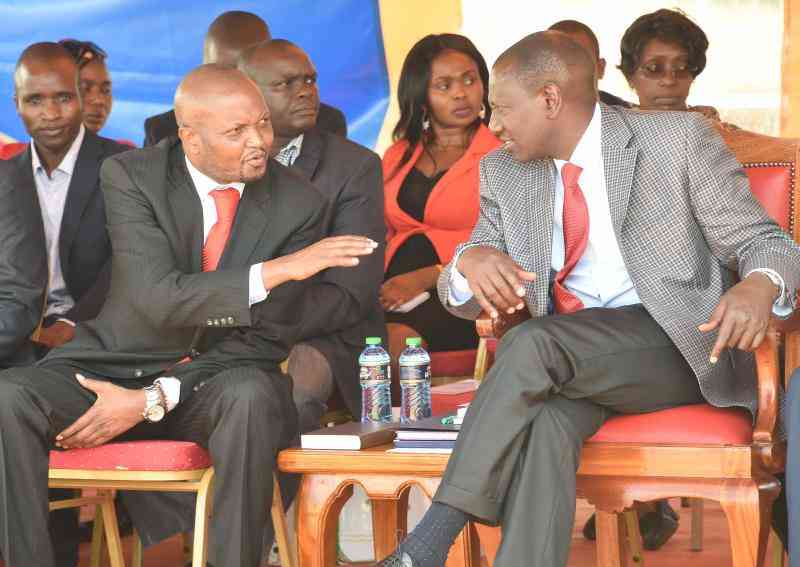
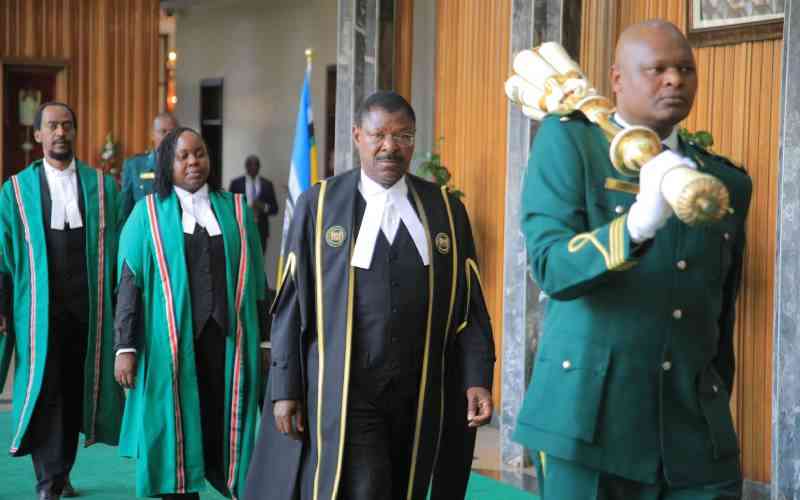
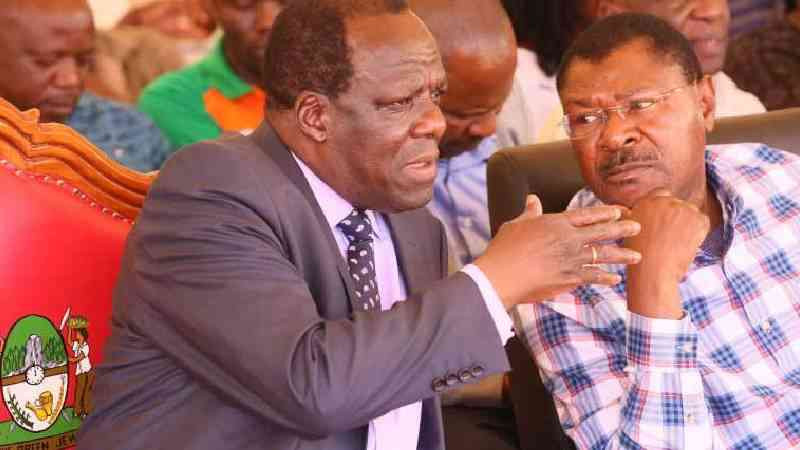
Cabinet Secretary Wycliffe Oparanya and National Assembly Speaker Moses Wetang'ula.[File,Standard]
The excitable nature of our leadership, in part, arises from an allergy to truth. When Cabinet Secretary Wycliffe Oparanya admitted that canvassing votes for President William Ruto in Western Kenya had become a herculean task, local loyalists bridled.
The Luhya community is Kenya's second-largest ethnic bloc, with close to three million registered voters spread across Kakamega, Bungoma, Busia, Vihiga, Trans Nzoia, and Nairobi. Any serious presidential candidate must salivate after such numbers. Yet, going into 2027, the Luhya community presents a fractured political house. Its most prominent leaders are pulling in different directions, making the idea of a united Luhya vote more of a theoretical construct than a political reality.
On the one side are Prime Cabinet Secretary Musalia Mudavadi and National Assembly Speaker Moses Wetang'ula, regarded as the region's kingpins, backing Ruto's re-election bid. Their position is to support Ruto now, consolidate gains, and present their own candidate in 2032. Mudavadi has warned the community against being swayed by Governor George Natembeya and other leaders drifting in a different direction, insisting that Dr Ruto is going to win in 2027 and that the community should not be distracted by leaders whose agenda is ‘insults’.