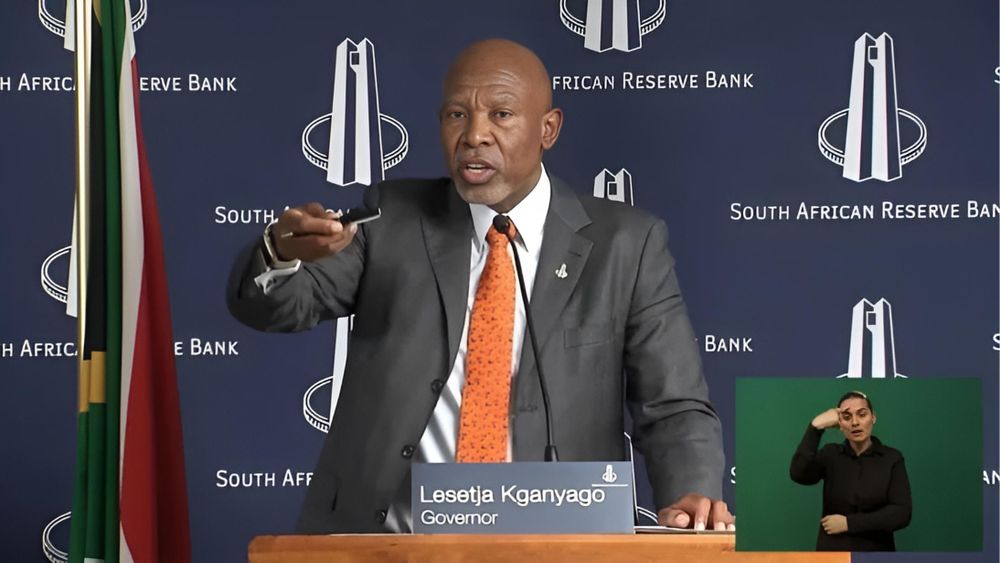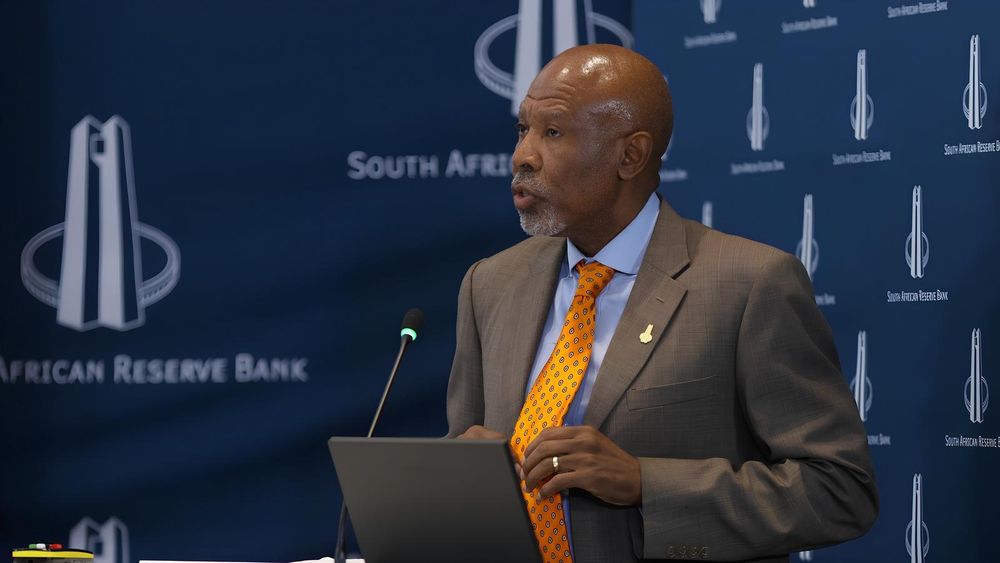
When the Reserve Bank’s monetary policy committee (MPC) meets on Thursday, the headlines will focus on the inflation outlook and repo rate. Most analysis will revolve around the Middle East conflict, oil prices and the first-round pass-through to fuel and transport costs. That is the immediate risk to the economy. However, in a developmental state the Bank and markets also need to observe how domestic execution off the state-owned enterprise (SOE) balance sheet affects the medium-term inflation and growth outlook.The legal framework changed on June 1 2025 when the Treasury gazetted amendments to regulation 16 of the Public Finance Management Act. For public-private partnerships (PPPs) with a capital value under R2bn, accounting officers may proceed once Treasury approval is granted under section 38 of the Division of Revenue Act. (Karen Moolman) Medium-term budget policy statement (MTBPS) approval is no longer required for projects below this threshold. The rule is explicit: Division of Revenue Act section 38 plus accounting officer authority equals delivery.This amendment deals with a process failure, not a budget failure. For two decades, PPP teams waited for the MTBPS to proceed, even though the act set an earlier date. The result was measurable. Projects under R2bn sometimes took years to reach financial close, missing international benchmarks of 18 to 24 months. South Africa missed this benchmark because institutional practice treated a forecast as a trigger.The cost of that delay is visible in credit markets. The Treasury’s 2026 Budget Review shows contingent liabilities from SOE guarantees rose to R453.6bn as of March 2026, up from R443.3bn a year earlier. Eskom and Transnet account for the bulk of that exposure. The Bank’s March 2026 quarterly bulletin notes that while domestic bond yields eased, premia on SOE-linked exposures remain elevated relative to ring-fenced infrastructure.Delivery risk is becoming credit exposure, and this matters for the Bank on Thursday. When projects stall, firms absorb higher costs, margins compress and banks face a higher probability of default on SOE-linked exposures. By contrast, ring-fenced infrastructure and PPP deals funded by private credit funds, development finance institutions and infrastructure funds are clearing at stable pricing. Lenders underwrite offtake agreements and asset cashflows. The guarantee is secondary. This shift demonstrates capital is reallocating to structures that remove SOE delivery risk. The spread between the two structures represents the market’s verdict on SOE reform.The equity market tells the same story. JSE-listed exporters and manufacturers with high SOE dependency underperformed the all share over the 12 months to March. Demand does not explain the underperformance. Transnet’s freight volumes remain below target, and the Treasury’s 2026 Budget Review cites industry data showing exporters absorbed higher logistics costs year on year. Firms that decoupled from SOE delivery held ground. Mining companies with captive rail or solar installations maintained margins despite load-shedding and tariff pressure. Retailers and manufacturers that shifted to rooftop solar and private logistics reported lower volatility in fourth quarter 2025 trading updates.The test of whether the new rule changes behaviour is live. Enterprise Building 3 PPP launched on June 4 2025 at R83.1m. Funding consists of R71m from Absa and R12.1m from Notre Dame Developments, with Enza Construction building. As of June 2025 no MTBPS delay has been reported and the site is active. Should the project reach practical completion without waiting for the MTBPS, the regulatory fix will have worked.Delivery risk is becoming credit exposure, and this matters for the Bank on Thursday. When projects stall, firms absorb higher costs, margins compress and banks face a higher probability of default on SOE-linked exposures. When projects move, private capital steps in, reducing reliance on contingent liabilities and easing pressure on the sovereign balance sheet.Why this mattersThe broader pipeline gives context to why this matters. The National Infrastructure Plan 2050 envisages PPPs covering about a third of the estimated R3.5-trillion to R4-trillion infrastructure gap to 2050. The Infrastructure Fund at the Development Bank of Southern Africa has R100bn in public funding earmarked to crowd in private capital over the next decade.The Treasury is presently revising the frameworks for on-budget and PPP procurement to facilitate an increased flow of PPPs. Live deals show the model is moving from policy to execution. The Durban container terminal pier 2 concession with International Container Terminal Services Inc is an R11bn upgrade over 25 years.The flaw in a developmental state analysis is to downplay these advances. Commentary will focus on the Middle East conflict and oil prices, and conclude the Bank has little choice but to remain hawkish. That view treats supply-side relief as irrelevant to monetary policy. It ignores that credible implementation in logistics and energy lowers cost-push inflation over the medium term. It ignores that reduced reliance on sovereign guarantees lowers the risk premium. Both variables enter the MPC’s reaction function.None of this removes implementation risk. The Competition Commission has warned against structuring PPPs in a way that creates private monopolies. The Bank will weigh this risk against the upside. Supply-side relief on logistics and energy lowers cost-push inflation. Credible implementation reduces the sovereign risk premium.The Treasury fixed the error on paper, but a rule change does not equal behavioural change. The risk is institutional inertia. Teams may wait for the MTBPS out of habit, even when the law authorises them to proceed. That reflex was trained over two decades. It will not vanish by gazette notice. It will vanish only when the first projects prove proceeding works, and that waiting carries career risk.The MPC’s rate decision on Thursday matters, but the signal that will shape credit pricing and the growth outlook comes from project delivery off the balance sheet. Should accounting officers use Division of Revenue Act section 38 to move projects now, private capital will continue repricing risk away from the sovereign. That shift eases pressure on contingent liabilities, lowers the risk premium and gives the Bank more room to look through the looming second-half inflation spike. Should they not, SOE-linked exposure will remain sticky, the premium will remain high, and the MPC will remain cautious. The market will be watching what moves on Thursday.• Maseko is an independent political economy researcher
PHILIP MASEKO | What the Reserve Bank should be watching beyond rates
Market signals show appetite for projects decoupled from state entity risk
1,011 words~5 min read