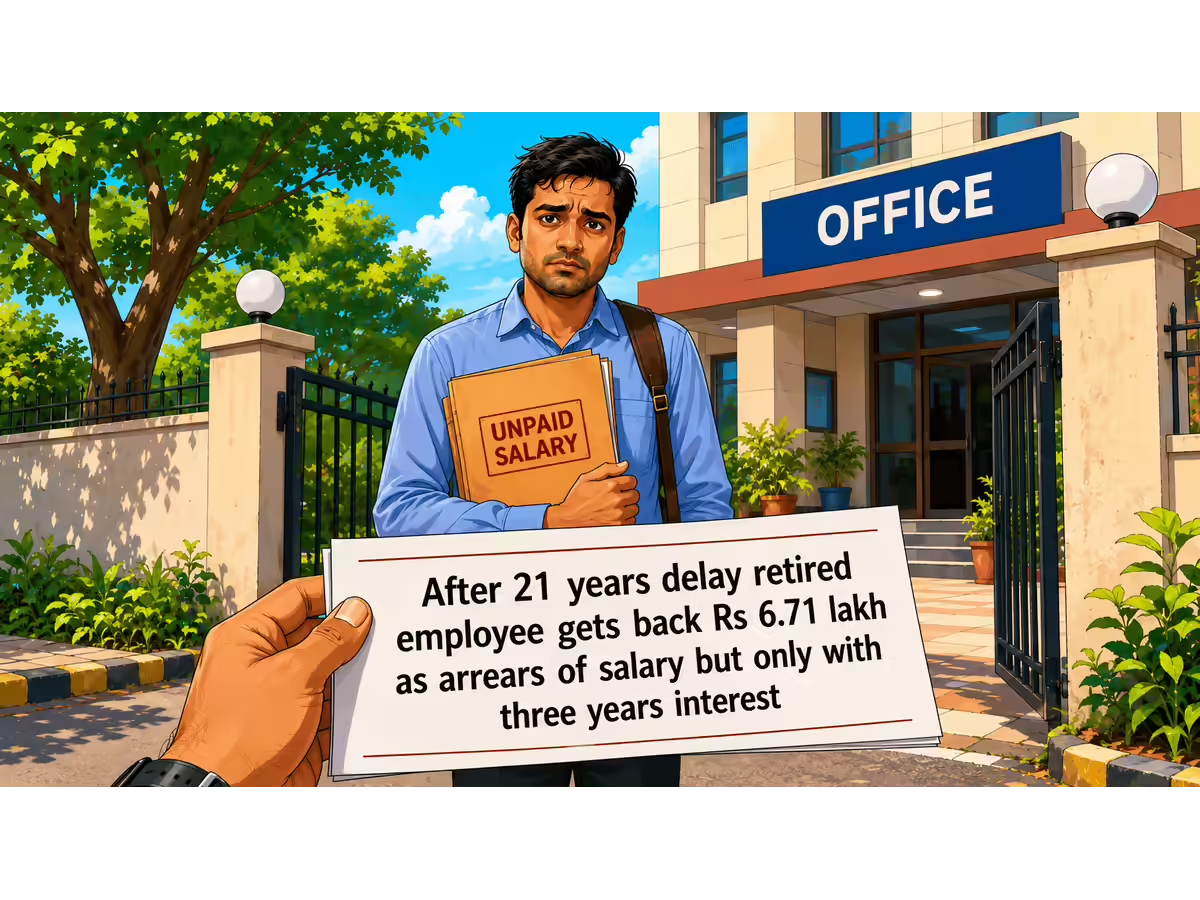
Mr Uday Kumar, the son of the late Ramdeo Prasad from Ghughritand, Chand Chouraha, Gaya claimed that the Bihar government hasn’t settled his father’s salary dues from July 1992 to April 22, 2003. His father worked as a dresser cum compounder at the Government Polytechnic College, Gaya and died in service on April 24, 2003. His mother was a housewife until she passed away on August 5, 2016.After losing both his parents, Kumar submitted a request to the authorities on May 17, 2022, asking them to pay his father’s unpaid salary dues, but no action was taken. Feeling aggrieved, he went to court against the authorities.The court ordered the government to look into this matter and acting on the court’s instructions, the government filed an affidavit stating that after verification of records, they have paid Kumar Rs 6,71,715 but without interest. Kumar was unhappy as he wanted interest compensation as well as litigation costs.The Patna High Court (single bench) ordered the government to pay 6% interest from the date his father’s salary was due till the date the payment was made by the government.Feeling aggrieved, the government appealed before a larger bench of the Patna High Court. The government said that though they have missed paying the salary arrears earlier (paid since then), they can’t be asked to pay interest since his son raised the dispute 20 years after his father died.The Patna High Court’s larger bench ruled that in cases of delayed salary claims, relief relating to arrears must ordinarily be restricted to a period of three years before the filing of the writ petition, and thus modified the Single Judge's direction granting interest on salary dues for a much longer period.The son partly lost the case and the high court restricted the interest payment to three years instead of 20 years he had asked for.The Patna High Court’s larger bench relied on a settled Supreme Court judgement in the Union of India v. Tarsem Singh (2008) 8 SCC 648 and Rushibhai Jagdishchandra Pathak v. Bhavnagar Municipal Corporation (2022) 18 SCC 144 and said that as a consequence, the High Courts will restrict the consequential relief relating to arrears to a period of three years before the date of filing of the writ petition.Applying the above principle, the court held that since this writ petition was filed on September 3, 2022, Kumar would be entitled to interest only for three years preceding the filing of the writ petition, reported LiveLaw.Accordingly, the Court modified the order of the Single Judge and directed that interest at the rate of 6% per annum be paid only for the period from September 3, 2019 to September 3, 2022 on the salary dues already paid.
21-year salary delay case: HC orders payment of Rs 6.71 lakh arrears with restricted interest - The Economic Times
A retired government employee's son finally received Rs 6.71 lakh in unpaid salary after a 21-year wait. While the Patna High Court initially ordered interest on the full arrears, a larger bench restricted it to three years preceding the court filing. This decision aligns with Supreme Court precedents on delayed claims.
451 words~2 min read