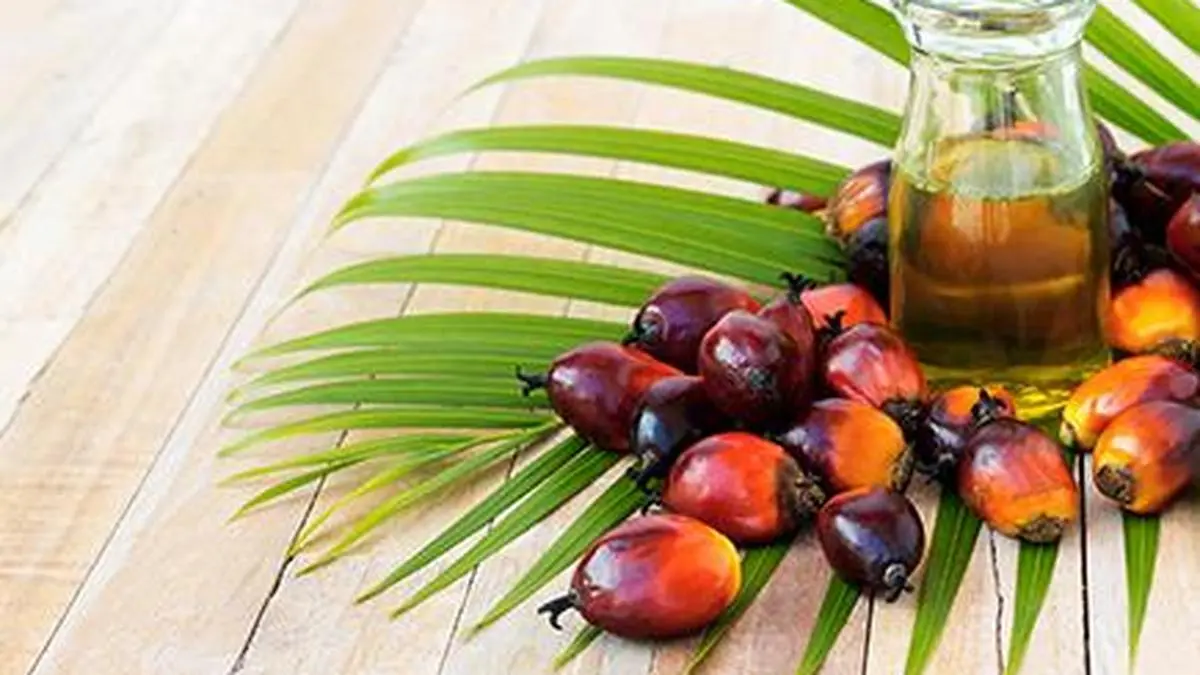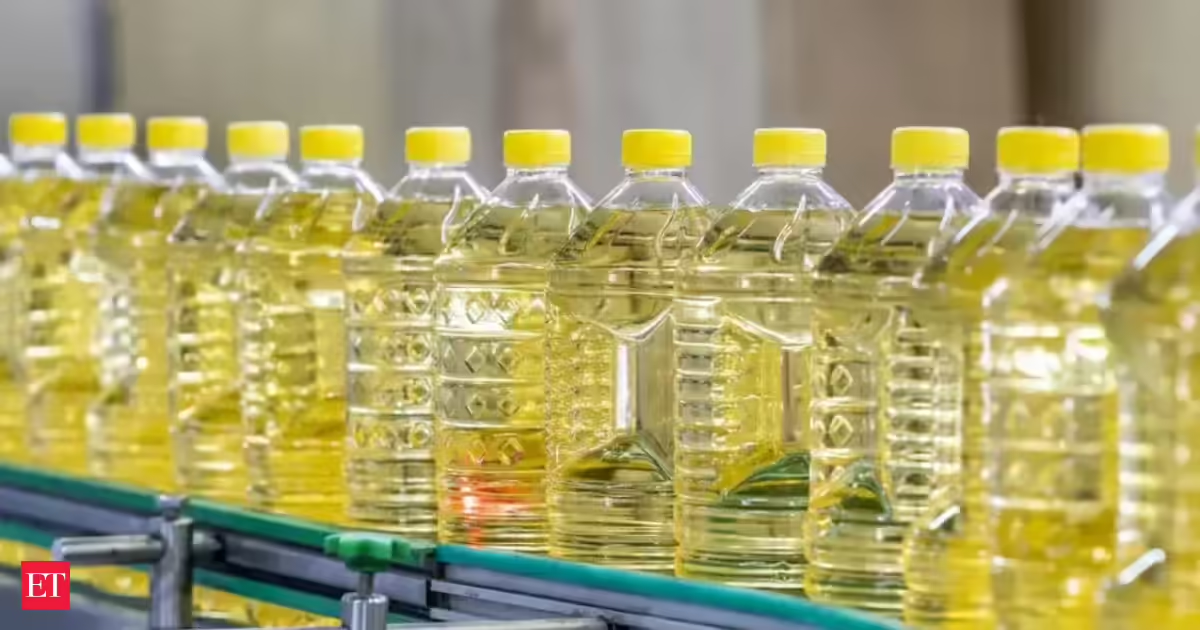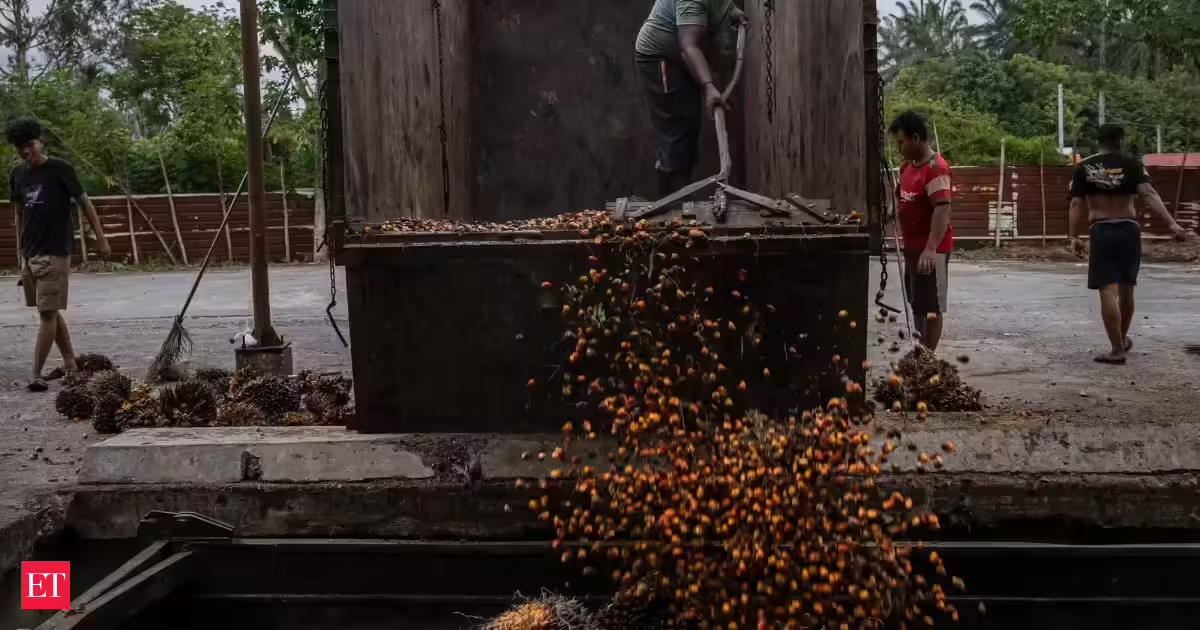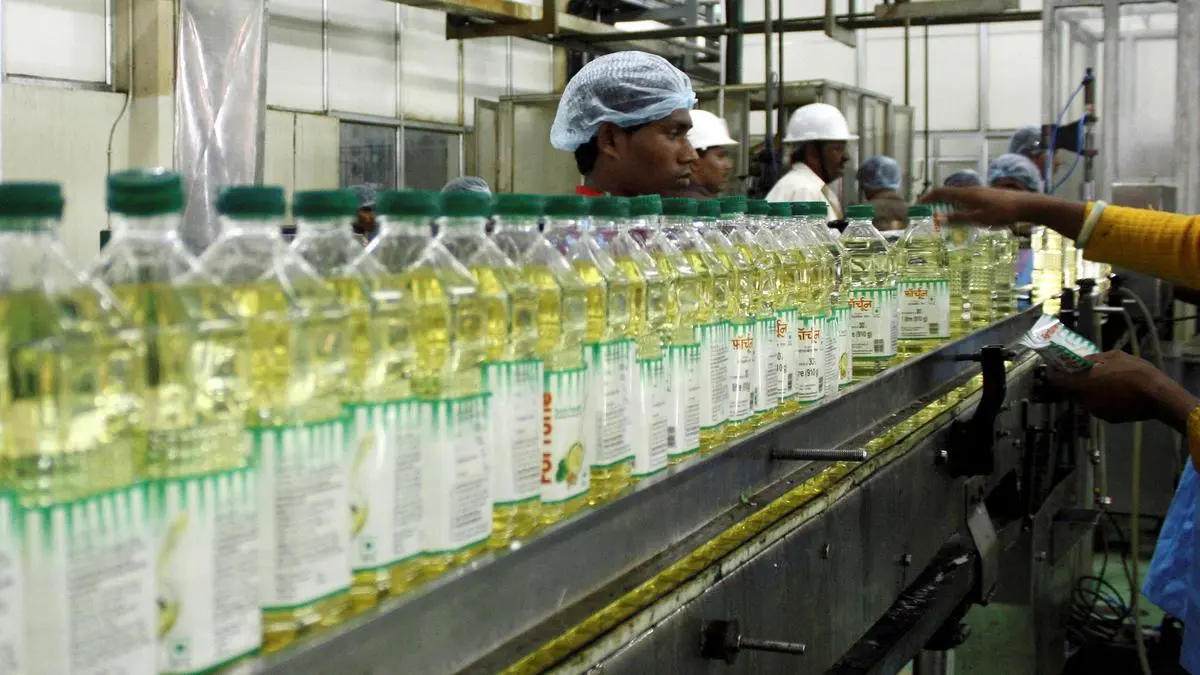
Mumbai: India should aim to be at least 50-60% self-sufficient in edible oils given its large market size, said Kuok Khoon Hong, chairman of Singapore based Wilmar International, the world’s largest palm oil producer.The country currently meets 60% of its cooking oil demand through imports, with palm oil having the largest share, making the country the world’s largest palm oil importer.“When you use a lot of a commodity in a country like India, it is important to be self-sufficient for at least, maybe 50% or 60%,” Khoon Hong told ET in an interview. “A small country like Singapore, with limited consumption, can afford to import 100%.”Known as the Palm Oil King, Khoon Hong said there’s a need for consistency in government policies related to import duties, saying stable policies would encourage Indian farmers to bring more area under oilseed cultivation.Prime Minister Narendra Modi recently urged Indians to voluntarily cut cooking oil consumption by 10% amid concerns about the widening current account deficit and a weakening rupee, worsened by the turbulence caused by the Iran war. The government has in the past raised import duties on cooking oil to protect local farmers from cheap imports and encourage greater oilseed acreage.It had also scrapped import duties in an effort to control high food inflation.Of India’s total cooking oil consumption, palm oil has the highest share at 38%, followed by soyabean oil, mustard oil, and sunflower oil. Indonesia is the largest producer of palm oil in the world, followed by Malaysia.Wilmar International is the majority stakeholder of AWL Agribusiness, a listed food and FMCG company, formerly known as Adani Wilmar Ltd. Wilmar International acquired the entire stake of Adani Enterprises in Adani Wilmar in July 2025.AWL is the largest importer and processor of palm oil in India, and its Fortune brand is the market leader in soyabean oil, mustard oil, and rice bran oil, and the third largest in sunflower oil.Elaborating why he thinks India should reduce its dependence on imported cooking oils, despite his company being the largest owner of palm oil plantations, Khoon Hong said, "I cannot advise something, which is good for the company but not good for the country (India).''He gave the example of China, where Wilmar is a leader in the agribusiness sector, including edible oils.“The Chinese government pays so much attention to food security because the quantity of rice, wheat, and corn they consume is huge,” he said. “If they (Chinese) have a bad crop, if they come to the world market to buy 50 million tonnes of rice, it will go crazy. They have to be self-sufficient for maybe 80%, 90%.”With crude prices surging more than 40% since the Iran war began on February 28, countries like Indonesia, Malaysia, and the US have accelerated diversion of palm oil and soyabean oil for manufacturing biodiesel to reduce reliance on pricier imported crude, creating a global cooking oil scarcity, pushing up prices.In India, retail prices of cooking oils surged up to 20-25% in the last four months.Khoon Hong said palm oil prices will stay at elevated levels till crude trades above $100 per barrel.“Palm oil prices have been very high, with the Middle East problem, with the US increasing usage of biofuel,” he said. “But as crude oil prices remain at $100 per barrel and the US is still trying to encourage biofuels, palm oil prices will remain high.”According to Khoon Hong, India is likely to remain the largest importer of palm oil at least for the next few years since it is suitable for Indian cuisine, especially for deep frying applications. “Self-sufficiency in edible oil remains a long-term challenge,” he said.India’s National Mission on Edible Oils–Oil Palm aims to develop plantations in the Northeast and the Andaman & Nicobar islands to reduce dependence on imports. This has however raised concerns over environmental impact and lack of milling capacity
Wilmar International chief says India must target 60% self-sufficiency in edible oils
India needs to produce more edible oils domestically. Kuok Khoon Hong, chairman of Wilmar International, suggests aiming for 50-60% self-sufficiency. This move is crucial given India's vast consumption and current reliance on imports. Stable government policies are key to encouraging local oilseed cultivation. Global factors are also driving up cooking oil prices.
641 words~3 min read