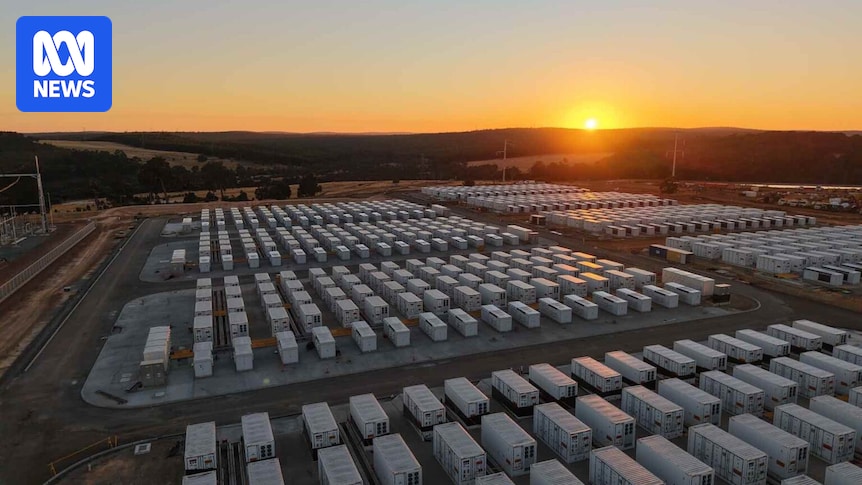
Surging levels of renewable energy and better reliability from coal-fired generators are set to give consumers a break, with benchmark power prices to fall up to 10 per cent for consumers and more for small businesses.In what will be welcome news to power users weary from years of big tariff hikes, the Australian Energy Regulator (AER) has decided to cut the default market offer (DMO) in several states.The offers act as a safety net by setting the maximum, or ceiling, price retailers can charge affected customers.Fewer than one in ten households are on a default offer, but experts say they are a key reference by which all other power prices are measured.Power prices will fall by up to 7.7 per cent in New South Wales, 10.7 per cent in south-east Queensland, and 1.1 per cent in South Australia.Some customers in South Australia, however, will see an increase of 1.4 per cent.The range in prices is due to some people being on a flat rate, while others are on a time-of-use tariff, which changes throughout the day.But small businesses in all three regions will see much bigger falls in their power bills, down as much as 12.8 per cent in South Australia, 14 per cent in south-east Queensland, and as much as 20.9 per cent in New South Wales.In Victoria, which is covered by a separate regulatory regime, benchmark prices will fall by 5 per cent from mid-year under a decision by the Essential Services Commission.AER Chair Clare Savage said today's outcome reflected easing cost pressures in parts of the electricity supply chain."This is a positive outcome with prices coming down for the majority of households and all small businesses across the three regions where the DMO safety net applies," Ms Savage said."The reductions compared to last year reflect easing costs across most components of the DMO, particularly in wholesale energy, where we've seen lower electricity contract prices, reduced spot price volatility, and increased output from wind and battery generation during evening peaks."Despite uncertainty created by conflict in the Middle East, wholesale energy costs have not increased."Big falls in wholesale electricity prices were largely to thank for the relief as increasing amounts of wind, solar and battery capacity coincided with soft coal and gas markets.Why are power prices falling?Part of the story behind lower wholesale power prices is a big structural change in the grid, driven by batteries.Large amounts of battery capacity coming online in 2025 have managed to shift cheap daytime solar power into the evening, when demand is high.The increased storage has started to reduce reliance on expensive coal, gas and hydro generation during evening peaks, setting the wholesale price more often than any other technology in those hours.It is the first release since the regulator submitted a raft of reforms and includes a new tariff offering three hours of free daytime power for customers in most of the eastern states.Clare Savage, the chair of the AER, said the relative calm in wholesale markets was flowing through to lower contract prices between generators and retailers.It was also helping take the volatility out of short-term and spot markets, where prices had been whipsawing savagely in recent years."What is driving [lower prices] is a reduction in the cost of producing electricity. We've seen a lot more batteries and solar systems come into the electricity market in the last 12 months; they've been making the market much less volatile," Ms Savage said."We've not needed as much gas and hydro generation in the evening peaks, and that's what's really cut that cost of wholesale generation."Western Australia, the Northern Territory, Tasmania and regional parts of Queensland are subject to separate pricing systems.Ms Savage said today's decision by the AER also confirmed that households for the first time would have regulated access to free power during the day.Free daytime powerUnder the Solar Sharer Offer (SSO), retailers would be required to give consumers the ability to opt into free usage periods during the middle of the day.The regulator hopes the free power offer will move demand from evenings to the day. (ABC News: Curtis Rodda)The periods would apply from 11am to 2pm in New South Wales and south-east Queensland and 12pm to 3pm in South Australia."The new Solar Sharer Offer is an opportunity to make further savings if households can shift some of their electricity usage, such as washing machines, air conditioning, or electric vehicle charging, into the middle of the day," Ms Savage said.Despite the cuts to benchmark prices, Ms Savage implored households to not rest on their laurels and expect a discount to their bills.Ms Savage noted the vast majority of consumers were on competitive deals or contracts and it was incumbent on people to shop around for the best deal."We encourage consumers to speak to their retailer about how this new option works because for some households, it could be a transformative way to reduce their electricity bills," she said."With the Solar Sharer Offer now part of the DMO, there's the added safety of it being a regulated price, which means consumers can feel confident they are not being overcharged outside the free power period."Iran crisis has little impact… so farThe energy regulator foreshadowed a price drop in its draft release in March, but the US–Israeli war on Iran injected considerable uncertainty to energy cost forecasts.Australia is the third-largest gas exporter in the world, but is exposed to international prices, as there is no policy forcing gas companies to reserve gas for the domestic market.The federal government is working on a reservation policy to start next year.Electricity producers usually buy gas from the short-term market, known as the spot market, which means that they are more exposed to fluctuating prices.Four years ago, the energy crisis sparked by the Russian invasion of Ukraine sent gas prices soaring, increasing power prices by 20 per cent."Despite uncertainty created by conflict in the Middle East, wholesale energy costs have not increased," Ms Savage said.
Breaking: Power prices to fall for most customers with bigger drops for businesses
Surging levels of renewable energy and better reliability from coal-fired generators are set to give consumers a break, with benchmark power prices to fall up to 10 per cent for consumers and more for small businesses.
987 words~4 min read