MercoPress. South Atlantic News Agency
Monday, May 25th 2026 - 21:58 UTC
In all three cities, the main hosts are companies linked to the real estate sector and urban developers, rather than individuals
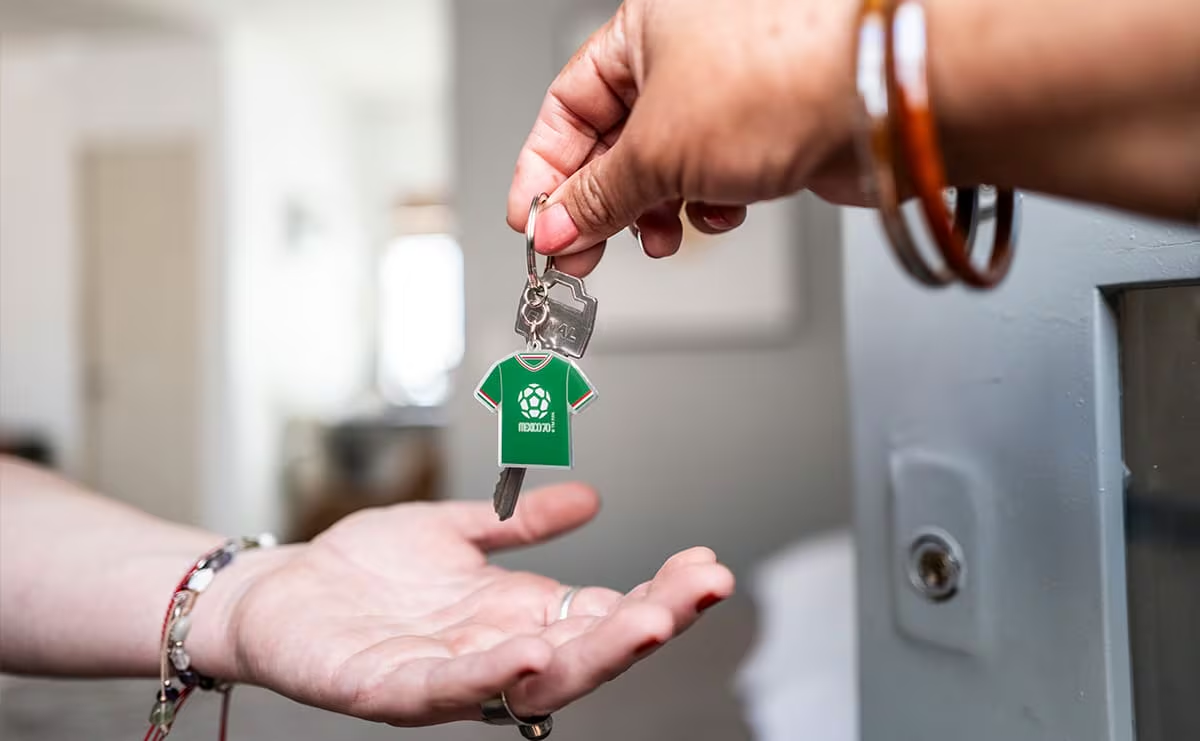
The approach of the 2026 World Cup, which Mexico will co-host alongside the United States and Canada, has accelerated the mass conversion of traditional housing into short-term tourist rentals in the three Mexican cities hosting the tournament, with a sharp rise of real estate firms as the dominant market actor. According to data from the specialized firm AirDNA cited by the newspaper El País, the supply of properties on Airbnb and similar platforms grew in Mexico City by 30% between 2023 and 2026, rising from 18,000 to close to 24,000 units. In the Guadalajara metropolitan area, growth reached 50%, to 9,760 properties, and in the Monterrey metropolitan area it doubled, to 7,274 units.
In all three cities, the main hosts are companies linked to the real estate sector and urban developers, rather than individuals. In Mexico City, the firms Virtual Homes (699 properties), Kukun (568), and Mr. W (279) lead the offer. Virtual Homes belongs to Carcho Administración, whose founder, José Carrillo Chontkowsky, was named in 2012 over alleged illegal financing of the campaign of former PRI president Enrique Peña Nieto. In Guadalajara, Qüarat Living Rentals (265) and Del Mar Boutique (174) dominate, both with direct ties to architectural and real estate developments. In Monterrey, Anfitrip, a brand of AG Proyectos de Inversión, controls 165 properties. These corporate structures fit within a platform originally conceived as the collaborative economy, in practice functioning as parallel hotel chains with looser regulation, according to consulted academics.