Researchers at the Karlsruhe Institute of Technology (KIT) in Germany say ordinary WiFi networks can be used to identify people with an eerie amount of accuracy. In a study, the researchers describe using beamforming feedback information (BFI) and machine learning models to identify people walking within a network’s range. The team found that this BFI-based technique was able to infer a person’s identity with 99.5% accuracy. They presented their findings at the ACM’s Conference on Computer and Communications Security last November. Beamforming, which was introduced with WiFi 5, allows routers to direct their signals more efficiently toward connected devices. To make that work, devices connected to a network send feedback to the router. The problem, according to the researchers, is that this feedback is unencrypted and can be accessed without the need of specialized hardware or even a direct connection to the WiFi network. This method could also identify people that don’t have any connected devices on them as long as they are in the network’s range.
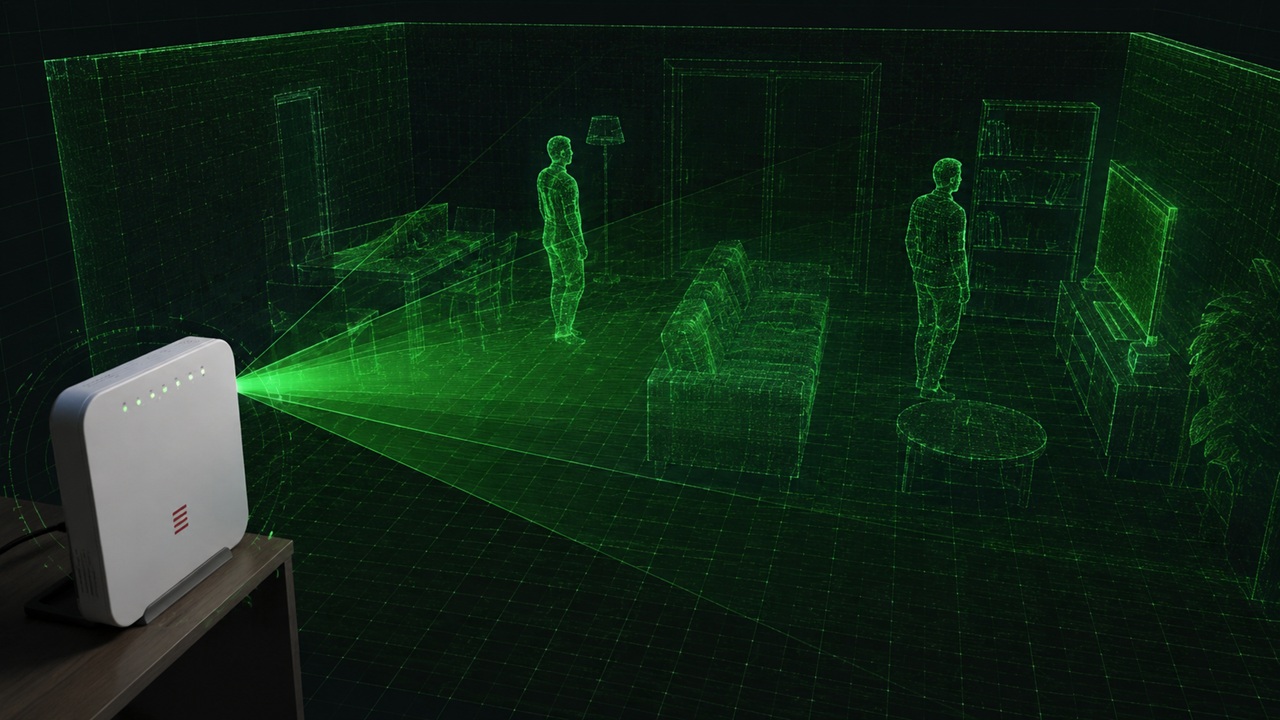
According to the study’s press release, once a machine learning model has been trained, identifying someone takes only a few seconds. This is accomplished through what is known as WiFi sensing, or the use of WiFi signals to infer information about a physical environment. When radio signals like WiFi travel through a space, they interact with the objects and people around them. Those signals can be reflected, scattered, or absorbed. By analyzing how the signal is expected to behave compared with how it is actually received, researchers can infer details about the surrounding environment.