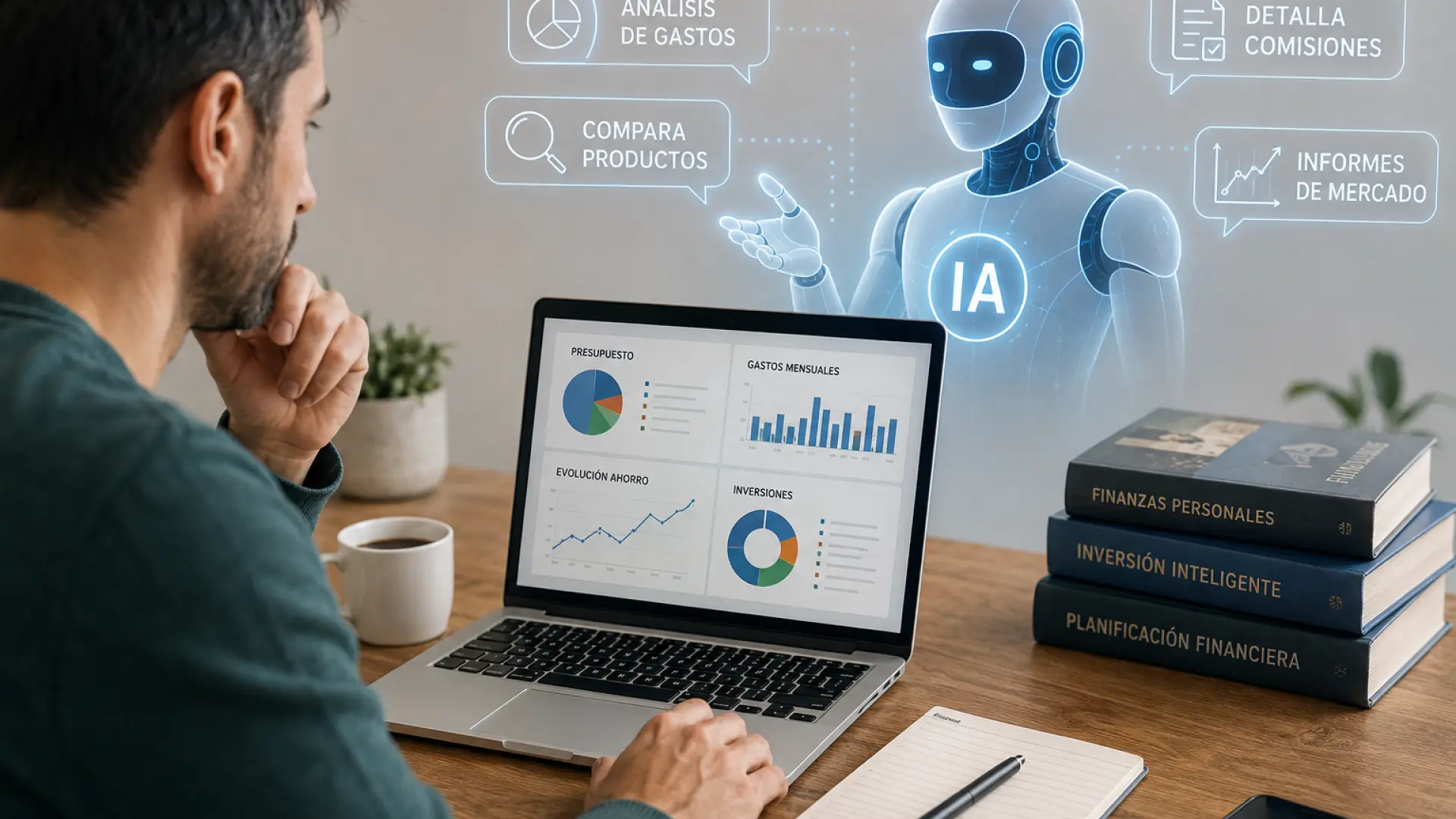
Have you considered using artificial intelligence (AI) to help make a budget or get advice about your finances? In a recent Instagram reel, motivational speaker, podcaster and author Mel Robbins encouraged women to embrace generative AI tools (Microsoft's Copilot in particular, which the caption stated she had partnered with) to help manage their money.And while using AI to help with your finances is not always a bad idea, there are some important things finance and AI experts want you to be aware of before you do.Is AI advice accurate?The Australian government's MoneySmart website says "AI tools can produce inaccurate or biased information".It warns against relying on AI tools such as Copilot, ChatGPT, Claude and Gemini alone, especially for investing.Antoine Didisheim, a senior lecturer in the Department of Finance at the University of Melbourne, has researched large language model (LLM) systems like those used in most modern AI assistants.Dr Didisheim says "hallucination" is one of the reasons these AI systems can provide inaccurate information.AI hallucination is when the technology randomly presents something inaccurate or completely fictitious as fact.Email addressProfessor of business information systems at the University of Sydney, Uri Gal, says hallucinations and inaccuracies happen when using these tools."They're optimised not for accuracy," explains Professor Gal, "they're optimised for plausibility."They're optimised to generate responses that seem plausible to keep you engaged and to keep you on the platform to use the tool."Which can mean, Dr Didisheim says, "you chat with [the AI assistant] and it all sounds somewhat sound, but [the assistant is] just following you along and kind of encouraging you along."And you will not realise you were wrong until your crypto investment hits at zero."Can AI be biased?Bias is another important risk to consider, Dr Didisheim says.In the financial space, AI tools are likely to be influenced by "traditional biases" such as gender and race.Dr Didisheim says some research has suggested that AI might automate financial advice that suits the risk preferences of a young man."AI learnt by reading what humanity wrote, and who is writing finance advice on Reddit [for example]? Well, fairly well-off 30-year-old American white males."Other research, Dr Didisheim says, found AI would stop recommending anything risky at all if it realised the user was a woman."Simple detailed prompting" can help counter this and "remove a lot of those biases", he says.Should you upload financial documents to AI?Professor Gal says "you should be concerned" about your privacy and the security of your financial and personal information when using AI tools."It's difficult to keep track of the ever-shifting privacy policies of all these different companies, but as a starting point, I think we should all assume that whatever we put in there — at the very least — is going to be used to train those models," he says."In worse circumstances, it might be shared with other entities for different purposes and these could range from government bodies, to data brokers, to advertising companies and everything in between."Financial educator, and former financial planner and mortgage broker, Natasha Janssens has similar concerns and recommends against sharing financial documents, such as bank statements, pay slips and tax returns with AI.Natasha Janssens is a financial educator, behavioural money coach and the founder of Women with Cents. (Supplied: Natasha Janssens)How AI can be useful for managing your finances?The MoneySmart website says publicly available, general-purpose AI can be a useful "learning tool".This can include breaking down complex information, answering simple questions, suggesting topics to research next and highlighting general market trends.Ms Janssens says using it when researching a financial concept or approach is a lower risk way to use it for your finances."You could ask it questions like: What are some risks? What are some things that I should consider when I'm researching this particular investment?"Dr Didisheim suggests using AI to help with tasks where you can check over the work and provide timely feedback, such as building a household budget.He explains that one of the problems with using AI tools for personal investing advice is that the negative feedback which helps to tailor the advice "would be very delayed".Dr Didisheim says some AI tools are better at particular tasks than others and the best one to use might come down to what you're asking it to do."I would avoid the free version for something as important as your personal finance," he adds.Dr Didisheim and Professor Gal both recommend cross-checking any information with other sources.You can also use more than one AI tool and compare those responses, they say.Where can you go for reputable financial advice and resources?Reliable and regulated financial advice can be very expensive to access, Ms Janssens says.But, government websites — such as MoneySmart — have become more education focused and often include useful information and resources, she says.Domenique Meyrick says people with financial difficulties are using AI, but the advice can be misleading. (ABC News: Simon Winter )"The ATO has become very user friendly. Whatever you don't understand about tax, you can go there and get that information yourself in a very easy to digest format."If you're experiencing financial difficulty, the CEO of Financial Counselling Australia, Domenique Meyrick, also recommends heading to the MoneySmart website for information.If you need more tailored advice, "you can seek the support of a financial counsellor"."The best way to find a financial counsellor is head to the National Debt Helpline website … It's really important that people know that it's free, independent, and confidential," she says.Ms Janssens says banks and insurance companies also have an "abundance of financial education information".There are also helpful podcasts and books, she says, but adds "you want is to be able to vet that against an objective source."This article contains general information only. You should consider obtaining independent professional advice in relation to your particular circumstances.
How and how not to use AI for help with your finances
"Hallucinations", privacy and other factors to consider if you’re turning to artificial intelligence financial advice.
958 words~4 min read