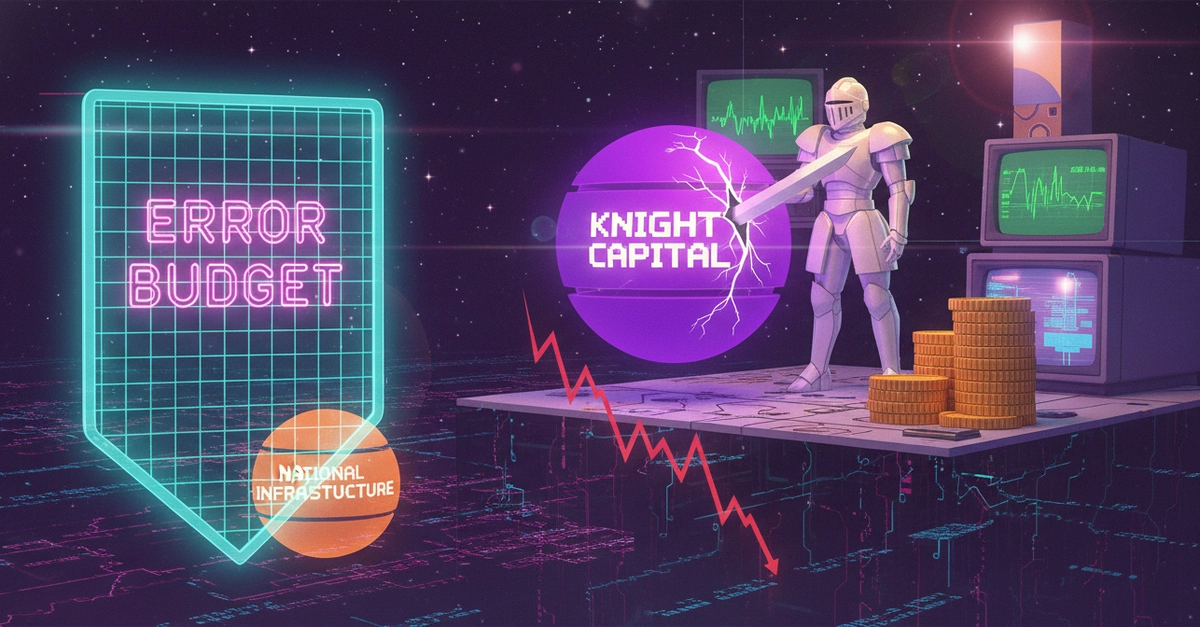
At 9:30 AM on August 1, 2012, Knight Capital Group's trading systems began executing a catastrophic sequence of unintended market orders. A deployment error had activated dormant legacy code — eight years old, never meant to run in production again — which began purchasing and selling equities at high frequency with no profit logic governing the trades. Within forty-five minutes, before any human intervention could halt the process, Knight Capital had accumulated a $7 billion equity position it did not intend to hold, generating a trading loss of $440 million. The firm, one of the largest market makers in U.S. equities, was effectively insolvent before lunchtime.
The Knight Capital event is the most precisely documented example of what happens when a software deployment fails with no circuit-breaker, no change gate, and no reliability budget governing how much risk a release is permitted to introduce into a production system. The technical failure — the accidental reactivation of legacy code — is the detail that makes the news. The governance failure — the absence of any automated mechanism that would have halted the deployment when the system began behaving outside its intended envelope — is the structural lesson that the financial industry, and the broader economy, has still not fully absorbed.