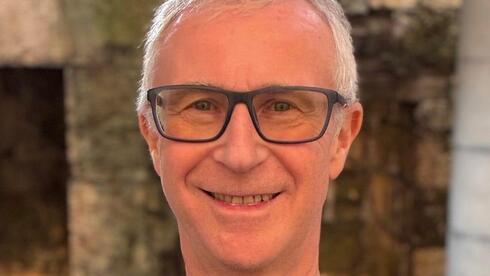
Amid a surge in antisemitism, Jeremy Jacobs, ex-CEO of Britain’s Orthodox Jewish umbrella group, is leaving for Israel, telling The Telegraph he fears wearing a kippah in London and that 'Britain is no longer the country it was'ynet|Jeremy Jacobs, former chief executive of the umbrella organization for Britain’s Orthodox Jewish communities, announced that amid a surge in antisemitism, he has decided to leave Britain and immigrate to Israel. In a letter to The Telegraph, Jacobs said he put his family home up for sale last week and noted: “We are making arrangements to start a life in Israel.”Jacobs formerly served as chief executive of United Synagogue, a charity that functions as the umbrella organization for Orthodox communities in the United Kingdom. “I lost my faith in British society,” Jacobs told The Telegraph after sending the letter to the newspaper. “I no longer believe that people would protect us. Certainly not the majority. When I walk around London with my kippah on, I’m always fearful because should someone attack me, I can’t be sure if anybody would come to my defense.”4 View gallery Jeremy Jacobs (Photo: The Telegraph)Jacobs’ ancestors arrived in Britain in the 1850s. Antisemitism is not unfamiliar to him. “When I was a kid in the 1960s, one of my closest friends was a non-Jewish boy. I was seven or eight, he was 10. We were playing football in the park and suddenly he turned on me and called me a dirty Jew. I remember running home to my mum and crying,” he recalled. “That’s when I first came across hatred of Jews just for being Jews. It was the initiation.”For a long time, however, he was able to live a normal life. “I went to Jewish schools, and things were OK. We learnt about Jewish history, we understood the situation, but we got along pretty well with all our neighbors,” he said. “Later, I went to the London School of Economics, always a hotbed of radicalism, but it was fine. There didn’t seem to be an issue.”4 View gallery Scene of the antisemitic attack in London’s Golders Green neighborhood in April (Photo: Hannah McKay/Reuters)Jacobs described how the Hamas-led terrorist attack on Israel on October 7, 2023, marked a negative turning point. “In November after the attack, I was walking across London with three of my young grandchildren, and we went past University College London. Students were protesting arms sales to Israel, and they started harassing us. They shouted at me because I was wearing a kippah. It was so uncomfortable, having to push my three young granddaughters forward, hoping that they weren’t fully aware of what was going on.”“It is hard not to make historical comparisons,” Jacobs added. “I’m hesitant to refer to what happened in the 1920s and 1930s, but in Germany, it was in academia where the hatred really started to develop, before it was picked up by the political classes. That’s what is happening in the UK today. I have friends and family at university who are suffering. Any connection with Israel is seen as unacceptable.”He stressed: “This is not only a British problem. I was in southern France last year, walking with a friend on the promenade, when a lady came up to me. Speaking very quietly, she said, ‘I really wouldn’t have your kippah on. It’s dangerous here.’ It’s extraordinarily sad. This was a Jewish lady from Paris, on holiday, yet fearful for the safety of Jews in her own country.”4 View gallery Sign at a London rally in support of Britain’s Jews (Photo: Alishia Abodunde / Getty Images)At times, however, he still encounters moments that give him hope. “My wife and I were in a queue at Luton Airport, and a gentleman behind me tapped my shoulder and said: ‘I just want to tell you, we’re with you. We’re sorry about what’s going on’. No government can do this, only individuals. One-on-one support – I can’t tell you how much it helps.”Footage of the stabbing attack in London in April For Jacobs, the reality in which Jews are forced to hide their identity is unbearable. “My grandchildren are suffering because they go to Jewish schools. They have to hide the badges on their blazers,” he said. “Pupils at one Jewish primary school near me have been told recently they’re not allowed to wear their uniform until the end of summer term. It’s just not the way that we should be living our lives in a Western society.”“None of us want to see people being hurt or killed,” Jacobs said. “We’re desperate for the violence to end. Yet every time we come across these marches, or find 'Free Palestine' stickers plastered everywhere, it suggests to me that we’ve passed the point of no return. I don’t think non-Jews quite understand how distressing it is. I see myself as British – a proud Brit – but Britain is no longer the country it was.”In his view, the rise in antisemitism is a predictable symptom of national failure. “When a country is in financial difficulty, as Britain undoubtedly is, the establishment looks for somebody to blame. That’s what’s happening here. The Jews will always be blamed, because of the antisemitic trope that we control the money.”4 View gallery Pro-Palestinian demonstration in London (Photo: Kin Cheung/AP)For him, Israel provides the solidarity he no longer finds in Britain. “My wife and I were in Israel in June 2025, when the first Iranian war took place, and we had to run into the bomb shelters two or three times a night for a week. The atmosphere was so strong, so collegial,” he recalled. “Everyone was so happy to work together, looking out for each other. This idea that people pull together in war – the spirit of the Blitz – that’s how it felt. When I walk in Israel, even in a war zone, I feel at home. In London, where we live, that feeling has gone.”Leaving Britain will take him farther from his children and grandchildren, but he says his family understands the decision. “They are incredibly supportive,” he said. “They are tied by business, work and school, and they won’t move unless they’re forced to. At the moment, we have the freedom to choose. But I do wonder how long that is going to last.”
'I lost faith in British society': Former UK Jewish leader makes aliyah due to antisemitism surge
Amid a surge in antisemitism, Jeremy Jacobs, ex-CEO of Britain’s Orthodox Jewish umbrella group, is leaving for Israel, telling The Telegraph he fears wearing a kippah in London and that 'Britain is no longer the country it was'
1,049 words~5 min read