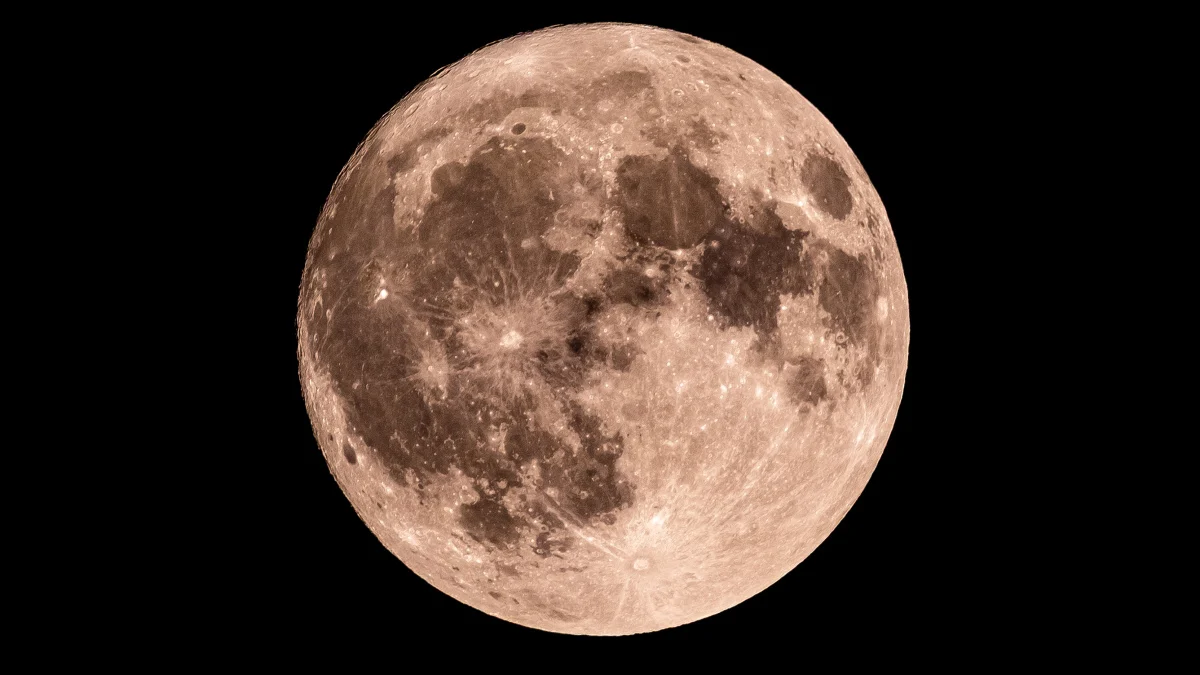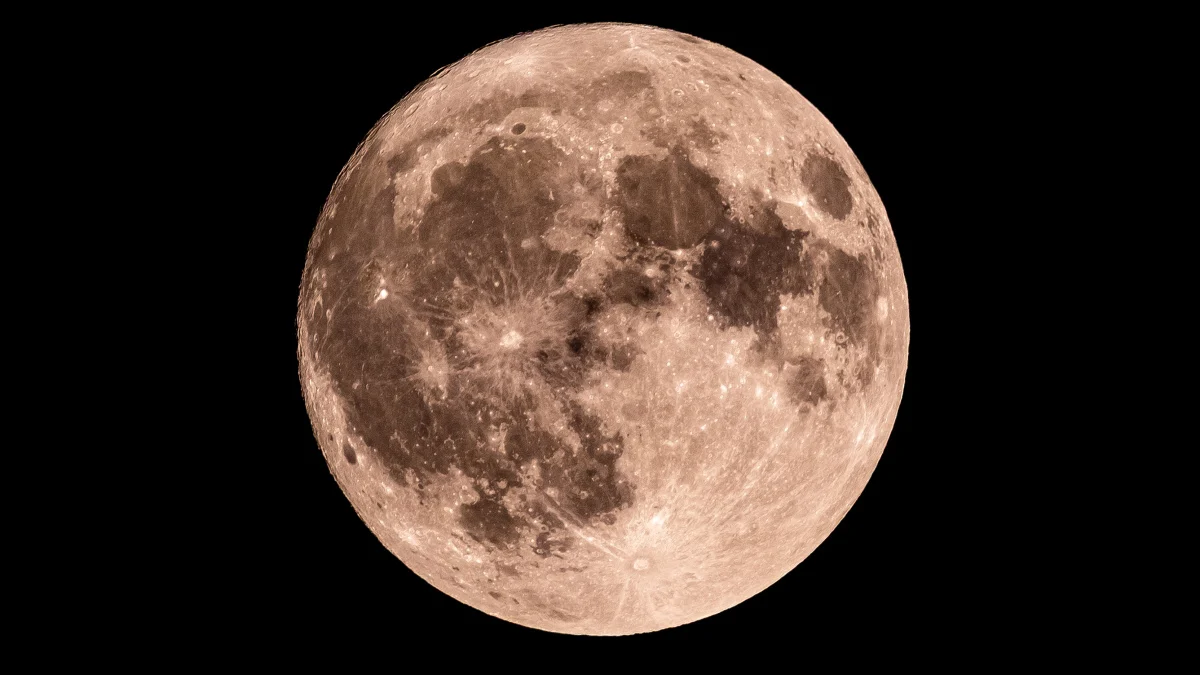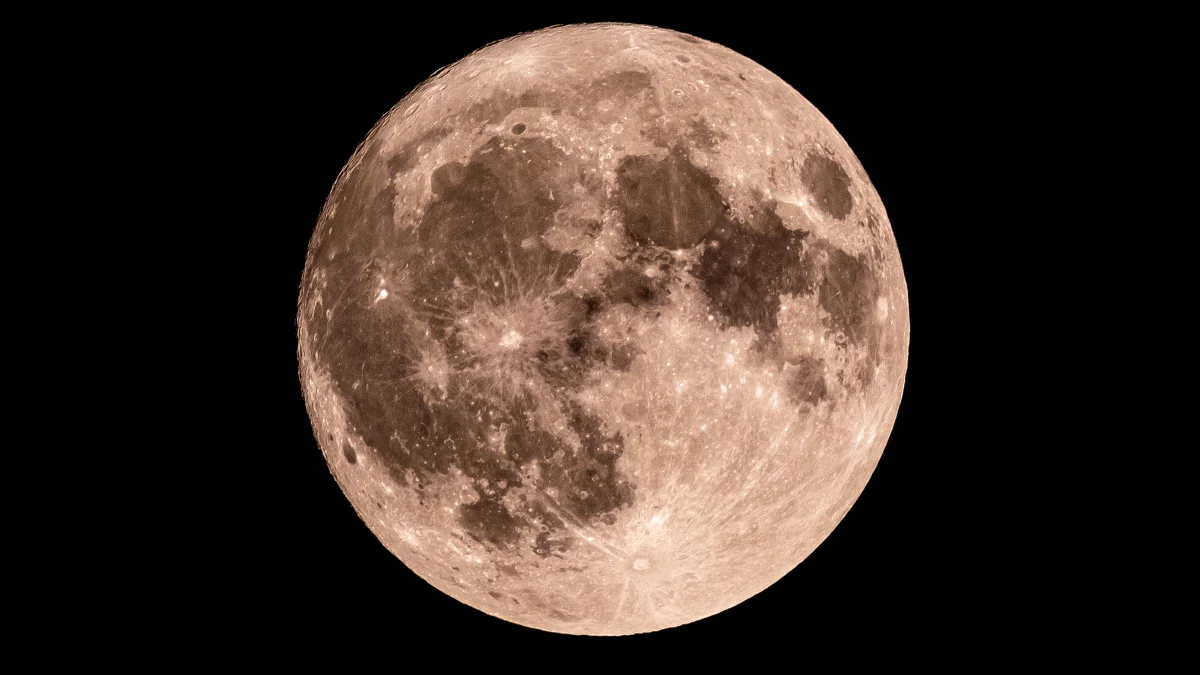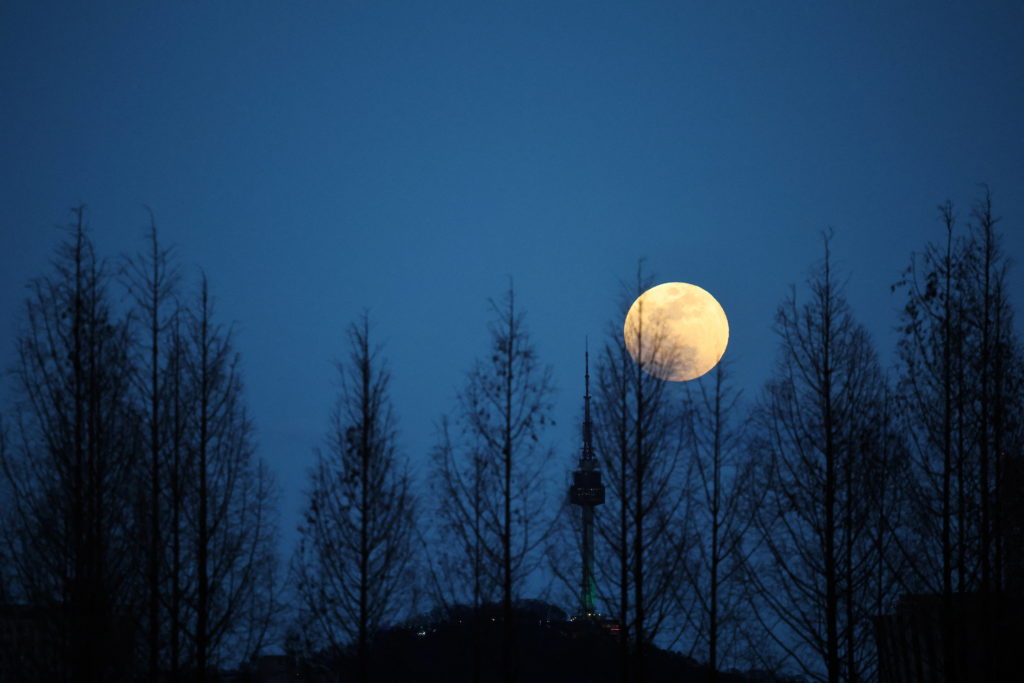
The moon passes close to Spica in the spring sky later this week.
(Image credit: Background: Alan Dyer/VWPics/Universal Images Group via Getty Images. Moon: Alexandra BEIER / AFP) (Photo by ALEXANDRA BEIER/AFP via Getty Images. Created by Anthony Wood in Canva.)
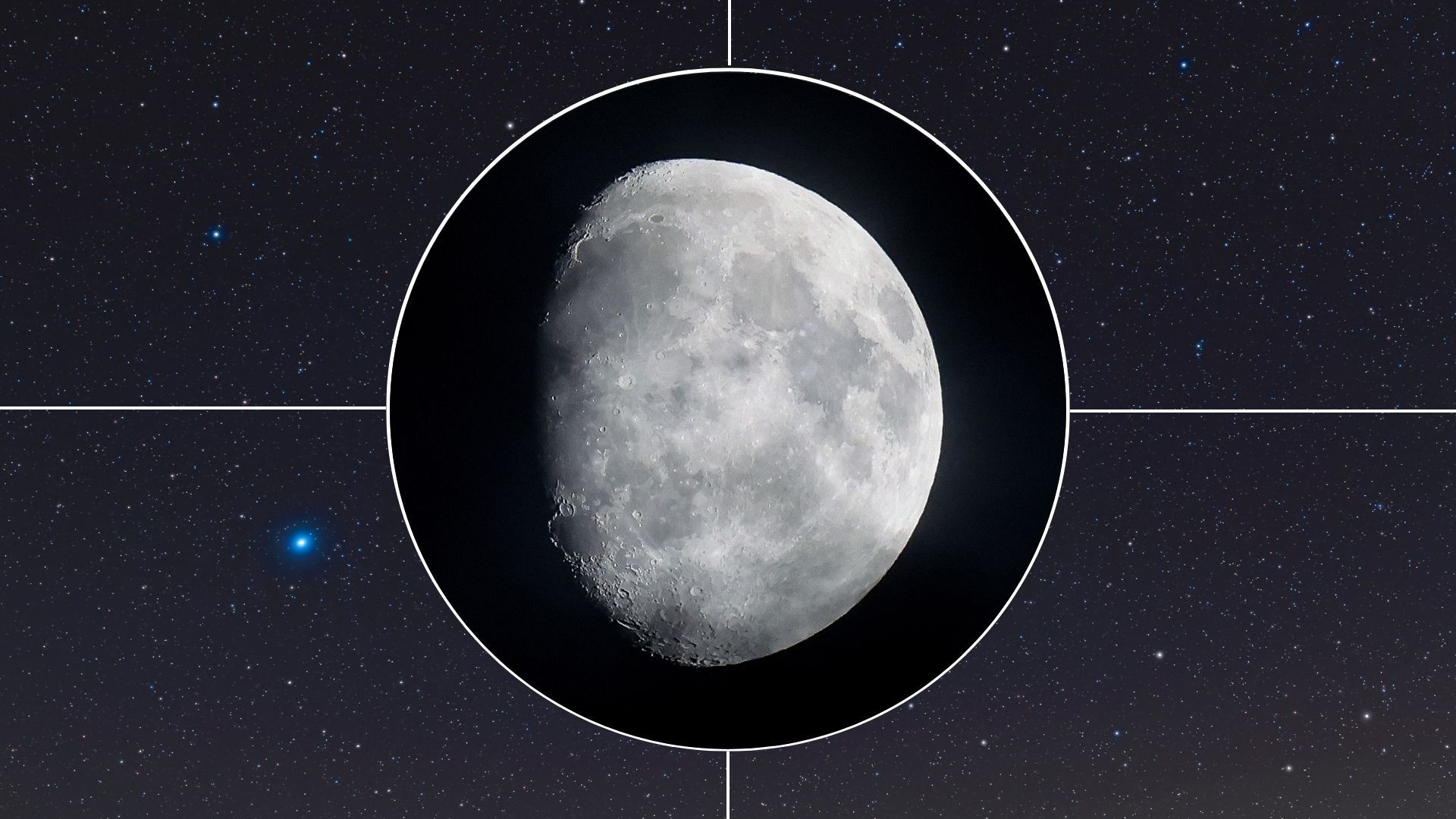
Look to the southern sky at sunset on May 26 to see the waxing gibbous moon shining close to the sparkling blue-white light of the bright star Spica in the constellation Virgo, ahead of this week's rare "Blue Moon".The 83%-lit moon will sit a little under 40 degrees above the southern horizon — roughly the width of four clenched fists stacked at arm's length — with Spica close to its left.Spica's light represents not one, but two colossal stars, which orbit each other once every four days. Together, they shine with a combined luminosity of more than 12,000 suns, according to the astronomy website EarthSky.Turn a pair of binoculars or a small telescope on the moon to see an arc of light shining close to the line separating night from day on the lunar surface, created as sunlight glances off the peaks of the Montes Jura mountain range on the northwestern edge of Mare Imbrium.
The lunar disk presents a wealth of targets around the waxing gibbous phase. (Image credit: NASA Scientific Visualization Studio, created by Anthony Wood in Canva)Celestron Nexstar 4SE