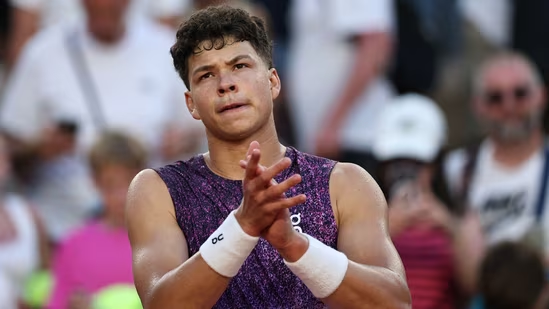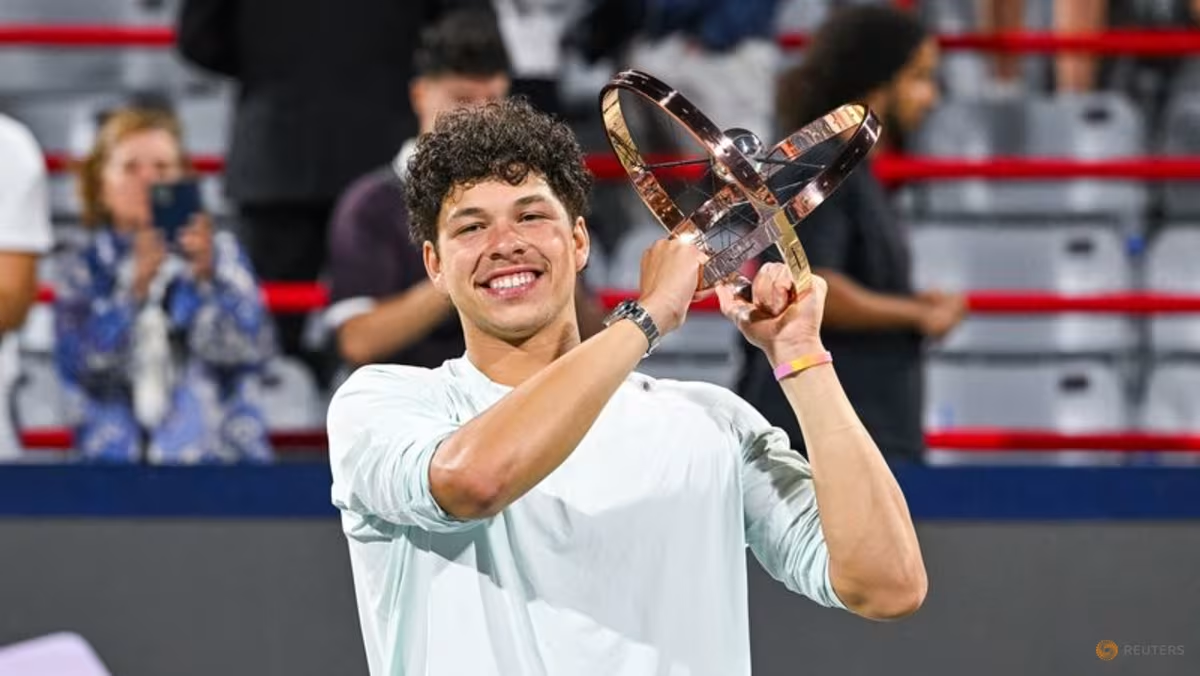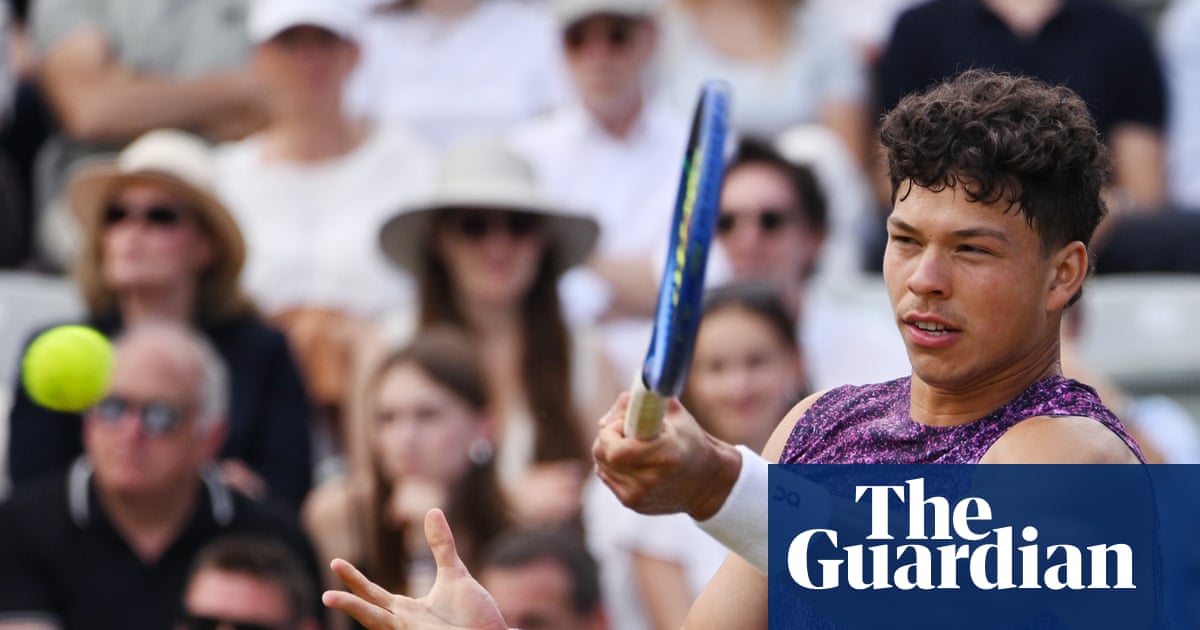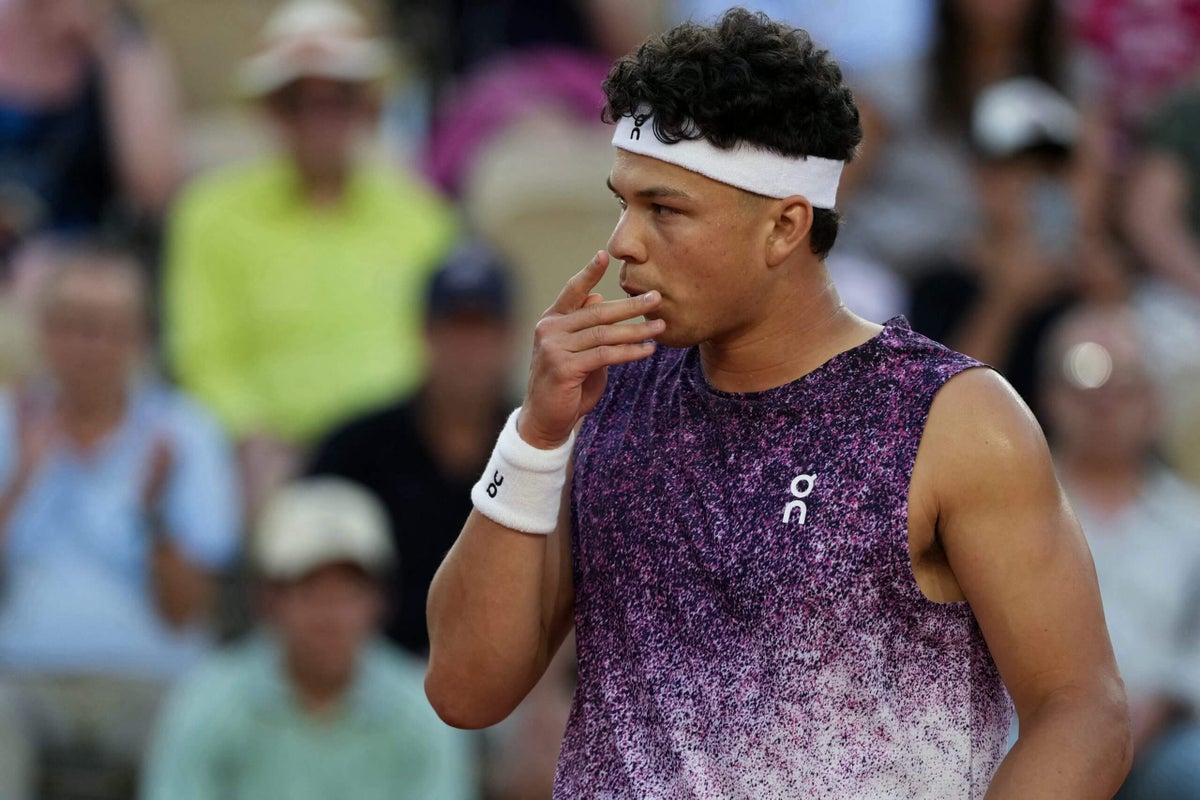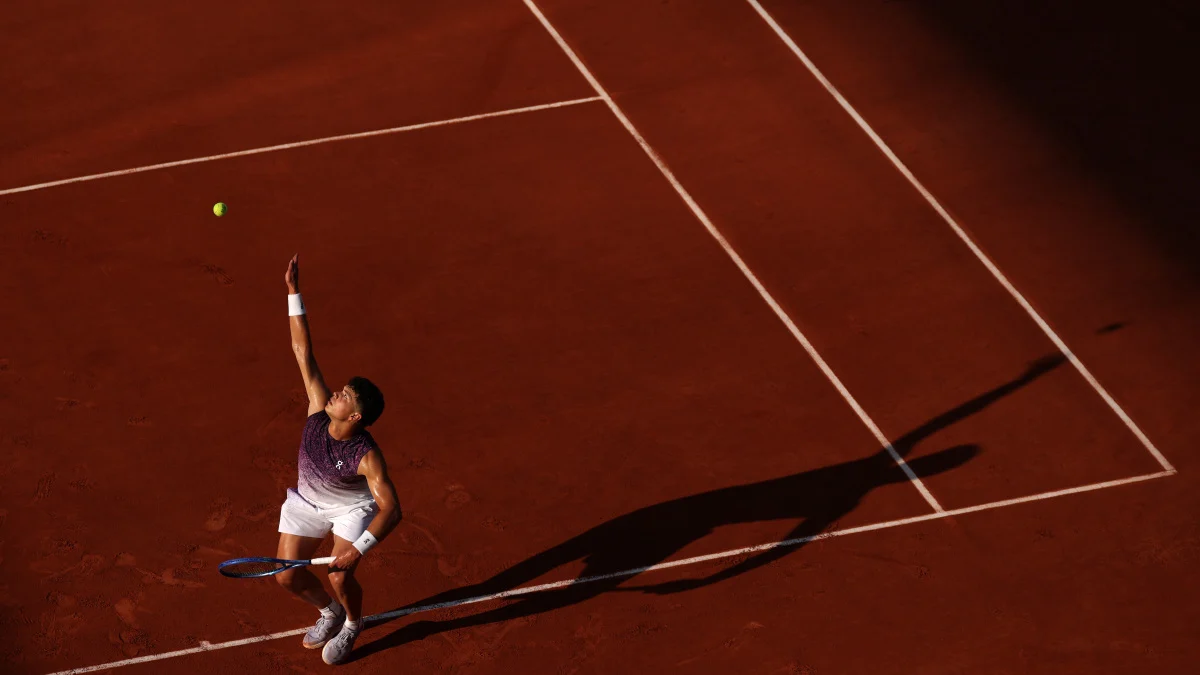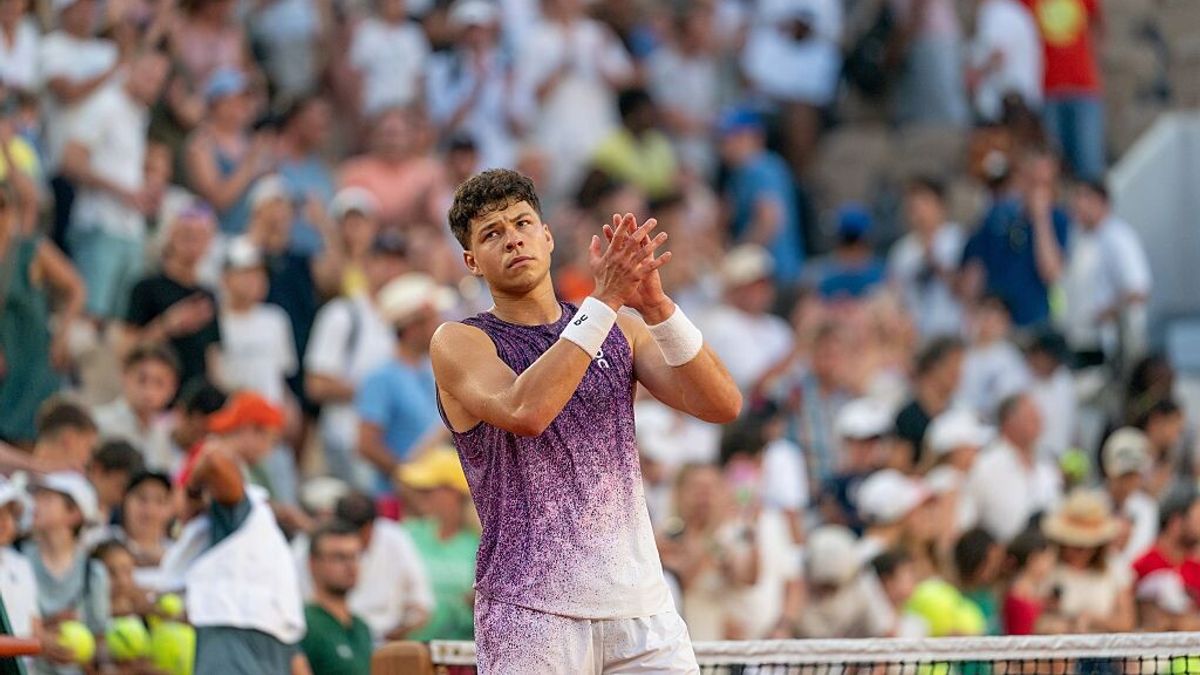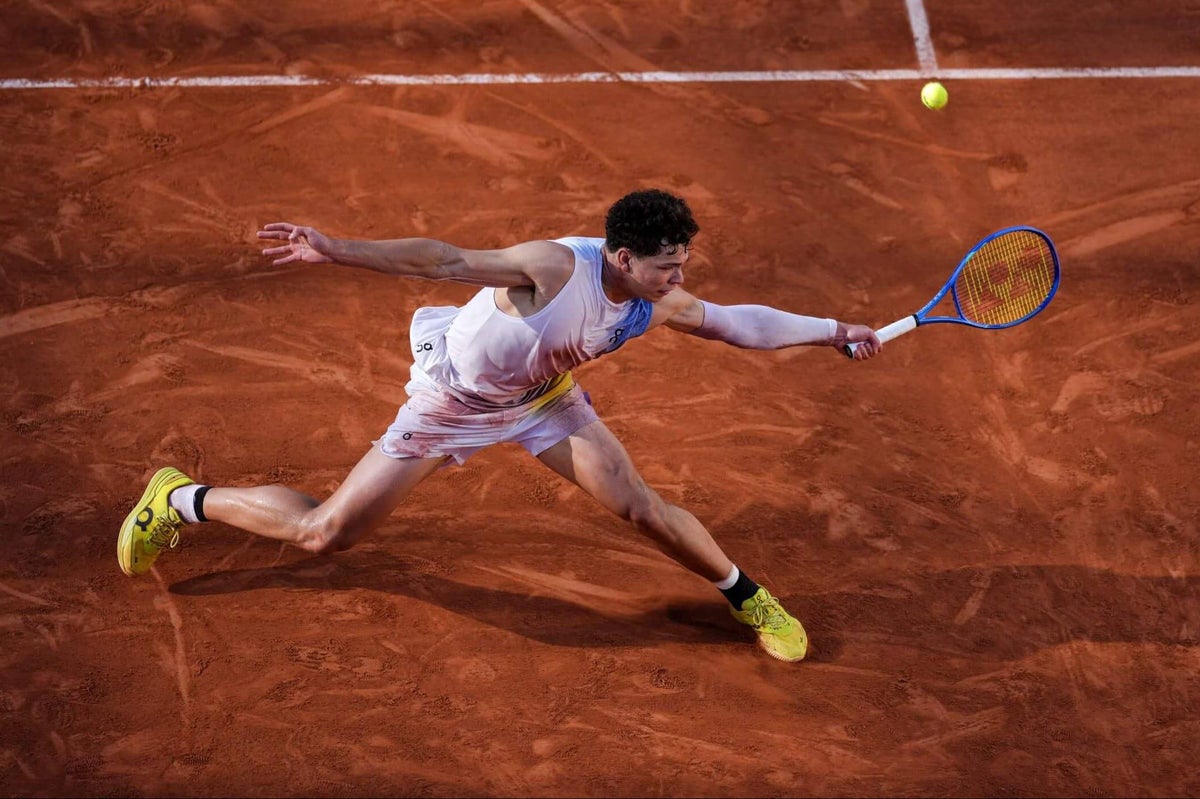
The Athletic has live coverage of Day 2 at the 2026 French OpenPARIS — The answers roll around each spring as tennis descends on to the dirt.Ask Taylor Fritz, the former world No. 4, about European clay-court season and he might shrug. Sometimes, he might smirk. For Fritz, a lot of spring and early summer is about damage control.Clay is not for Frances Tiafoe either. Balls that fly past opponents on hard courts and grass head right into their strike zones on clay. For Tiafoe, clay doesn’t reward his best shots.“It doesn’t reward good shots,” he says.Even Tommy Paul, the 2015 French Open junior champion, is a sceptic. Then, he won a lot of matches playing defense. Winning on clay at the highest level, especially in the past couple of years, is a different animal. It took him another 10 years to get to the semifinals of an ATP Masters 1000 on clay (the 2025 Italian Open) and 11 years to win another title on clay: the U.S. Clay Court Championships in Houston, which is not played on the same silky red dust of Europe’s courts.He reached a clay final just before this year’s French Open, but didn’t sweat a three-set loss to Ignacio Buse of Peru. The rest of the summer, on the grass and hard courts, is his time.Fritz, rusty from a two-month stint out with tendinitis, fell to Nishesh Basavareddy, in an American milestone that came with a double edge. It was the first top-10 win for an American man at Roland Garros since 2000. It just so happened to come against a compatriot. Learner Tien, with guidance from 1989 French Open champion Michael Chang, has the kind of game — sweeping, angled groundstrokes and deftness of touch — that should suit clay, but he is still getting used to its secret codes.Two years ago, Ben Shelton decided he wanted to be different. He wanted to embrace clay, not tolerate it. Earlier this spring, he swaggered onto the red clay of an event in Munich with belief, no matter who was across the net.“That’s something that kind of started for me at the French Open last year with the way that I was playing,” Shelton said during a phone interview after winning the tournament, an ATP 500 event.It was the biggest win for an American on clay since Andre Agassi won the Italian Open in 2002. Shelton is 22. He was not alive for that one. But he speaks differently about red clay than all the other American men, who equate it something like quicksand. Even Tien, speaking on-court after his title at the Geneva Open, said that Chang had probably wanted to be on the court even more than him.“Certainly after this week, I got a lot of confidence about my ability playing great clay-court players,” Shelton said. “Just looking forward to the challenges that I have ahead of me and hopefully be able to do some damage in these next couple of tournaments.”An opening-match loss at the Madrid Open to Dino Prižmić didn’t dishearten him.“This is a tournament that I haven’t had the type of success that I want to have, especially at such a big tournament,” he in a news conference ahead of the Italian Open in Rome. “But I think it’s definitely coming.”It hasn’t gone that way. Another opening-match loss in Rome, and another in his second loss at the Hamburg Open in Germany, have turned him philosophical.“You go through certain parts of the year, you’re in a flow state, certain parts of the year that it goes a lot worse,” he said Friday during a news conference in Paris. “”It’s probably still my best clay season to date so far going into Roland Garros.”What happens next is anyone’s guess. At this point, Shelton would likely be thrilled just to survive the first round in Paris. He plays Daniel Mérida, a dangerous 21-year-old Spaniard. He’s not been past the fourth round of Roland Garros in three tries.Tien, 20, whose Geneva Open title made him the youngest American to win a clay title since his coach in 1989, and Paul have delivered some recent optimism.Ben Shelton’s cannon serve requires nuance from other parts of his game to be a winning weapon on clay. (Getty Images)For the others, clay season is shaping up to be a lot like it’s always been.Fritz is 0-2 after returning from rehabilitating tendinitis in his knee. Tiafoe, who is also managing injuries, missed the Monte Carlo Masters and the Madrid Open before going 1-1 in Rome after getting upset by Andrea Pellegrino, the world No. 155, in straight sets.Alex Michelsen is 3-5, including a first-round loss at a ATP Challenger Tour event in France. Tien picked up two wins in Rome after skipping Monte Carlo and losing his opening match in Madrid. Then he fell to the new Spanish wunderkind, Rafael Jódar. He found a groove in Geneva. Same goes for Paul in Hamburg. He managed one win in three matches in Madrid and Rome, before last week.Last June in Paris, Shelton was a point away from taking the first set against Carlos Alcaraz. Then he won the third, on an afternoon of peak tennis athleticism and acrobatics from two of the fastest, fittest and most dynamic players in the sport. While anyone can lose three of four matches on their least favorite surface, Shelton had started to represent a pivot — or at least said he really wanted to.Forsaking clay, if only in terms of expectations, means writing off a little more than 20 percent of the season, a quarter of the Grand Slams, and, for now, a third of the most important ATP tournaments, the Masters 1000s. But Shelton’s desire is running up against the problem of how to make up for lost time.He barely played on it growing up in Gainesville, Fla. Alcaraz, and countless other Europeans, learned to play tennis on red clay. The developmental tournaments and lower rungs of the tours, where players build up match toughness, rankings points and the skills that clay teaches — movement, defense, patience, forecourt awareness — are played on it too.Not so in the U.S., where cement dominates. Michelsen, Tien, Fritz and Brandon Nakashima were California hard court kids. Unlike Hailey Baptiste, Tiafoe did not fall in love with the two red clay courts at the Junior Tennis Champions Center in College Park, Md., where both trained as youngsters.Paul played on green clay in at a local club in North Carolina as a youngster. He was always fast and steady and excelled at the defensive part of the game that can dominate junior tennis. But figuring out how to build a consistent attack on clay on the ATP Tour has been a puzzle.In Florida, Shelton built his game around a serve that he can blast at 150 mph and a whipping forehand. Those weapons become decidedly less effective on clay, where the friction of the court takes a bite out of the ball’s velocity, putting big serves into an opponent’s strike zone. It also makes hitting through the court far more difficult, and puts a premium on the return of serve, which is one of Shelton’s developing areas. He is third-worst in the top-50 for return points won in 2026, having played against a median rank of No. 59.And before taking a whack at a ball on clay, Shelton first had to learn how to get to it properly. There is no shortage of footage of Shelton from his early career, bounding after balls with the fury of a linebacker chasing down a quarterback and then sliding through them — too far through them.That doesn’t really work on slippery clay courts like the ones across Europe, especially in the heat of the late spring. There, balance is easy to lose and nearly impossible to regain. Sliding through a shot often means forfeiting the point, since every split-second spent sliding after a shot represents time not spent scrambling back into position to chase down the next one.“Sometimes I feel like I’m moving at a high level, really elite level on the clay,” he during the interview. Sometimes I’m, like, you know, some of these footwork patterns still need work. I just need to become a better mover on the surface.”Shelton and the rest of the Americans have continued to learn all this the hard way, often losing as much or more than they win during April, May and early June.Shelton has tried the hardest to get different results. He doesn’t see any reason why he can’t adapt his game to the red clay. He is faster and blessed with more athletic gifts that much of the tour. In addition to his heater, he has developed a nasty kick serve jumps off the red clay and forces opponents off the court.Ahead of the 2024 clay court season he hired Gabriel Echevarria, the Argentine coach based in the U.S., to help him learn how to move on clay in a way his father, Bryan, never did, when he was serving and volleying his way through his career in the 1980s.“Paso a paso,” Echevarria told him in his native Spanish. “Step by step.”That was fine with Shelton. He likes challenges. And at the end of the day, it’s tennis. He’s good at it. And he has a game plan.“Aggressive, patiently aggressive,” he said in Rome ahead of the tournament. “But with very good ball control with a low unforced error count, and getting forward to the net as many times as possible.Sounds a lot like the usual Shelton approach. How hard could it be?Well, as it turned out, pretty hard, a lot harder than winning the U.S. Clay Court Championships in Houston in 2024. That clay is is dark red, but the similarities to Europe’s clay end there. Red and green clay in America is coarse stone that has far more friction and less give than European clay. After playing on the clay of Roland Garros for the first time, Emma Navarro compared the experience to “playing on silk” in a news conference.Shelton went 4-4 on Europe’s red clay in 2024, the season he had Echevarria tutoring him along the way. He went 8-5 on the dirt last season, including his run to the finals of Munich where he lost to Alexander Zverev, a Roland Garros finalist and one of the world’s top clay court players.The data gets a little complicated after that. He went 1-2 in Madrid and Rome, and while he made the second week of Roland Garros, the run included a walkover and a third-round win over Matteo Gigante, an Italian qualifier who was the world No. 167. Still he held his own for stretches of a warm afternoon against Alcaraz on Court Philippe-Chatrier as he felt his clay game begin to click and his confidence grow.After Munich this year, Shelton patted himself on the back.“My shot tolerance has improved a lot,” he said. “My ability to hit the backhand at all different levels of the court and heights has improved. And my return of serve was honestly a weapon down the stretch in this tournament.”On his way to the final, Shelton beat an American lucky loser, a wild card, the rising but still inconsistent Brazilian, João Fonseca, who was the world No. 35, and Slovakian Alex Molčan, the world No. 166. In the final, he overwhelmed an exhausted Flavio Cobolli.He said he has learned to change which serves and returns he uses on clay compared with on other surfaces. Those shots set up everything else, he said, “the patterns of play that I use to be in positions that I want to be and that I can hurt my opponent.” But Shelton remainsHe wants to stand as close to the baseline as he can, using his height to hit down on balls that pop up. He is also willing to accept that his matches on clay are going to have a different feel than those everywhere else.“You’re gonna have to hit a few more shots,” he said. “The ball’s going to come back a few more times and you have to be able to adjust bad bounces out here.”Then came the early losses in Madrid, Rome and Hamburg. Maybe he’s not back at square one, but sometimes it can feel like he’s still on the first quarter of the game board.“The biggest piece from me is what my identity is on the clay, how I want to play,” he said. “From surface to surface that can vary a lot, which makes it difficult.”What works in Munich, nearly 609 meters above sea level, may not work in Rome. Something that works really well at Roland Garros when it’s hot and dry, may not work at night.“That’s the beauty of clay and also the difficulty,” he said. “Each week you have to be able to adapt and sometimes play a completely different game style based on the conditions.”
Ben Shelton’s mission to master clay-court tennis slid off course. Can he find his feet?
Shelton has been bullish about taking a different approach to clay than his compatriots. He's still figuring it all out.
TL;DRAI
Shelton, 22, won the Munich ATP 500 (biggest U.S. clay win since Agassi 2002) but then lost three straight opening rounds in Madrid, Rome and Hamburg. Hard-court development leaves American players structurally behind on clay; the gap won't close on intent alone.
2,157 words~10 min read