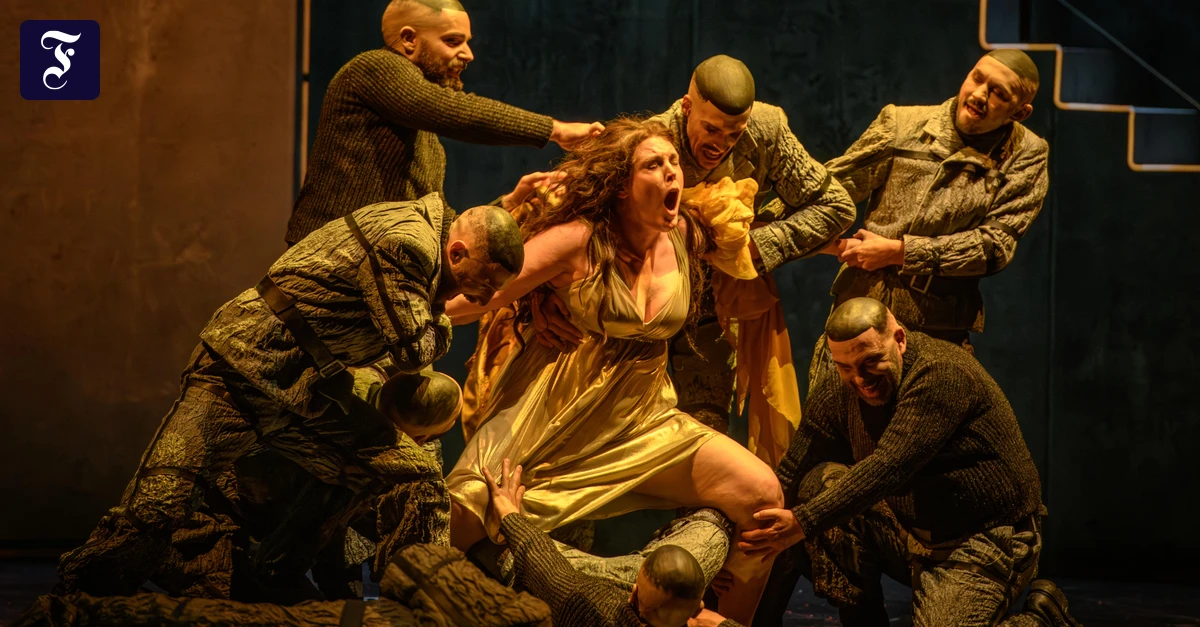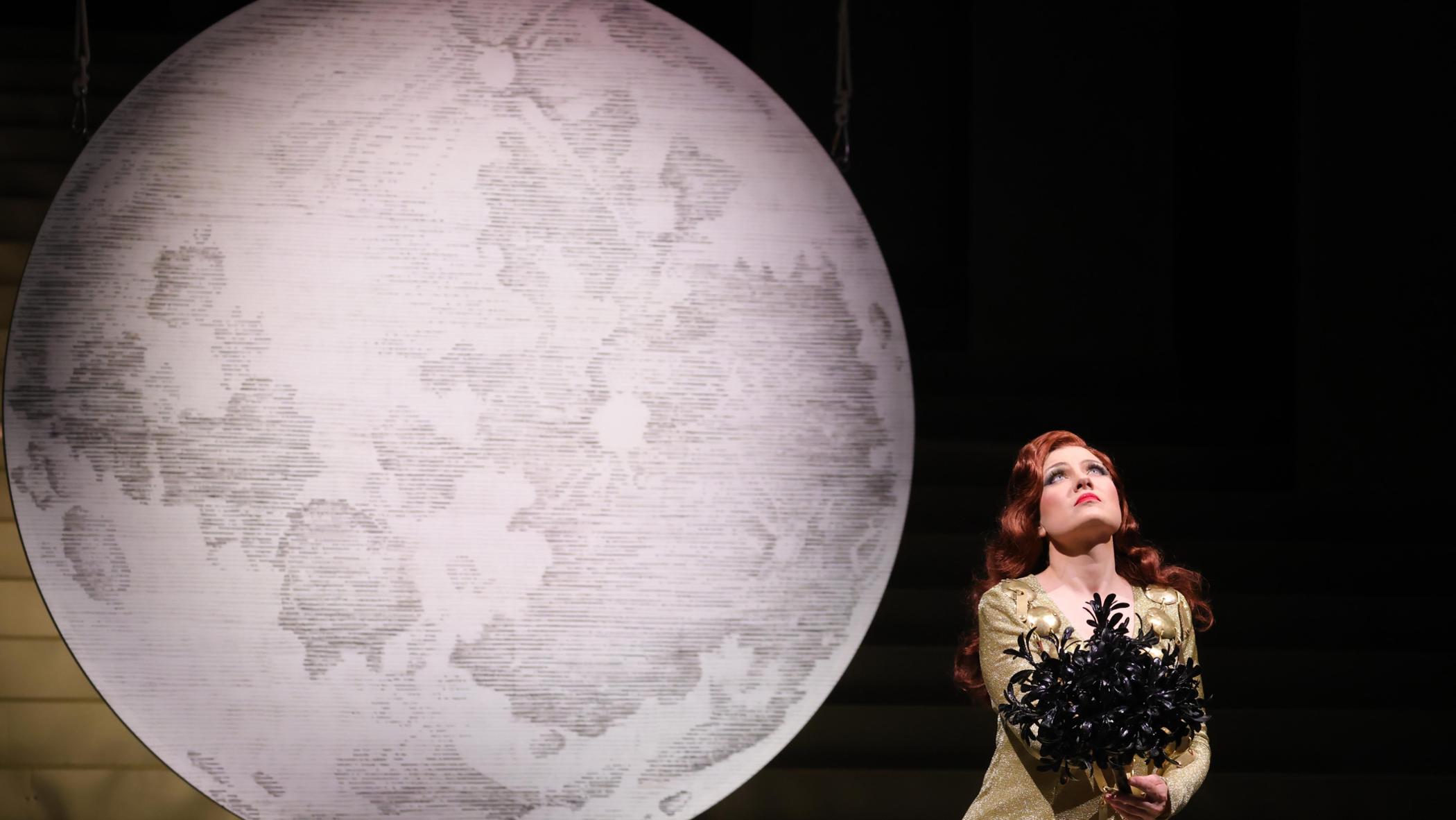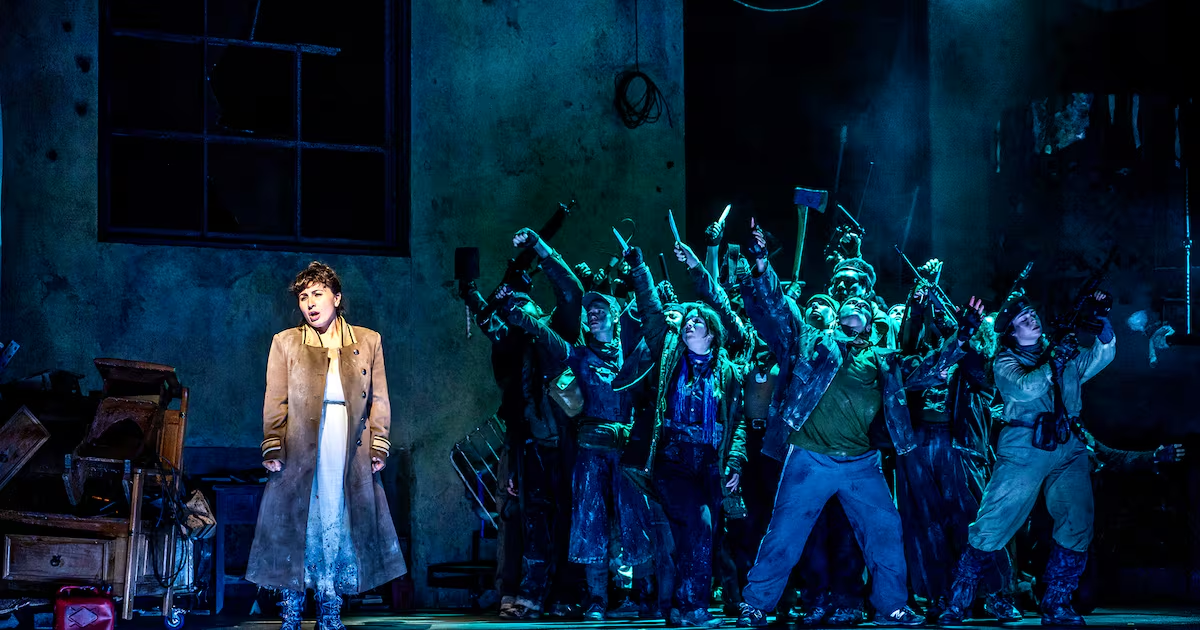
NormaGaiety Theatre, Dublin★★★☆☆Norma is a strong woman, but she has a lot going on.Deep in the woods of Gaul, only Norma, the druid priestess, can initiate rebellion against the Roman occupiers. The people have full faith in her, unaware that she has had a secret relationship and two children with a Roman, the proconsul Pollione. Not even Norma’s friend Adalgisa, who is herself in a relationship with Pollione, knows it.Messy. Which relationship will prevail? And the friendship between the two women? What about the children? How will the people respond? What about Norma’s father, the arch-druid? And will her anger with the proconsul persuade Norma to abandon her customary caution about attacking the Romans? In 1831 Vincenzo Bellini wrote for Norma what is generally considered one of the most vocally challenging soprano roles in all opera. Bellini gives musical expression to Norma’s multiple and intersecting emotional and dramatic cross-currents via lines that demand tremendous vocal stamina, virtuosic agility and dynamic diversity, and a huge range reaching up to high C.Norma: Salome Jicia (back) in the title role and William Guanbo Su as Oroveso. Photograph: Ruth Medjber Norma: Salome Jicia in the title role, Aaron O’Hare as Flavio, Mario Chang as Pollione and William Guanbo Su as Oroveso. Photograph: Ruth Medjber Norma: Siobhan Stagg as Adalgisa. Photograph: Ruth Medjber This means that the priority for Irish National Opera’s current production was to find the right soprano. It did. Salome Jicia surmounts every vocal challenge while also giving meaningful expression to the text and keeping up a strong dramatic presence. Operagoers with a special interest in the athletics of bel-canto style are unlikely to be disappointed.INO also succeeds in surrounding Jicia with a well-matched trio of supporting singers. The tenor Mario Chang, as Pollione, and the bass William Guanbo Su, as the father, Oroveso, both have controlled but powerful voices. The soprano Siobhan Stagg is not out of place vocally either – and, additionally, is the most successful with her pacing of the gestures of human chemistry, which is not easy in an opera featuring such extended passages of personal exchange. Indeed, there is an overall high quality of dramatic presentation, notably of facial expression, under the direction of Orpha Phelan. This extends to the chorus, in fine form both dramatically and musically while ranging from robust and bellicose to tender and even vulnerable.Phelan takes the story away from pre-Christian Gaul and relocates it in a dystopian future. Madeleine Boyd’s striking costume designs are very Mad Max (but with winter coats), and her sets feature towering barricades chaotically formed from furniture. The sets do start to stagnate over the course of a long opera, and they require the sacrifice of the woodland beauty that is one of the things the Gauls hope to safeguard from the Romans. Perhaps by making no distinction in costuming between the Romans and Gauls, Phelan wants to bring out our very contemporary reality of conflict arising from polarisation within society. But this means removing the dynamic between invader and colonised that is the backdrop to the original.The conductor Maurizio Benini and the INO Orchestra fluidly navigate Bellini’s beautiful though sometimes incongruously jaunty score, achieving their greatest depth in the introspective sequence that opens act two.Norma, staged by Irish National Opera, is at the Gaiety Theatre, Dublin, on Wednesday, May 27th, and Saturday, May 30th; at the National Opera House, Wexford, on Wednesday, June 3rd; and at Cork Opera House on Saturday, June 6th
Norma review: Irish National Opera’s priority needed to be finding the right soprano. It did
Salome Jicia surmounts every vocal challenge of the role. She is well matched with Mario Chang, William Guanbo Su and Siobhan Stagg
576 words~3 min read