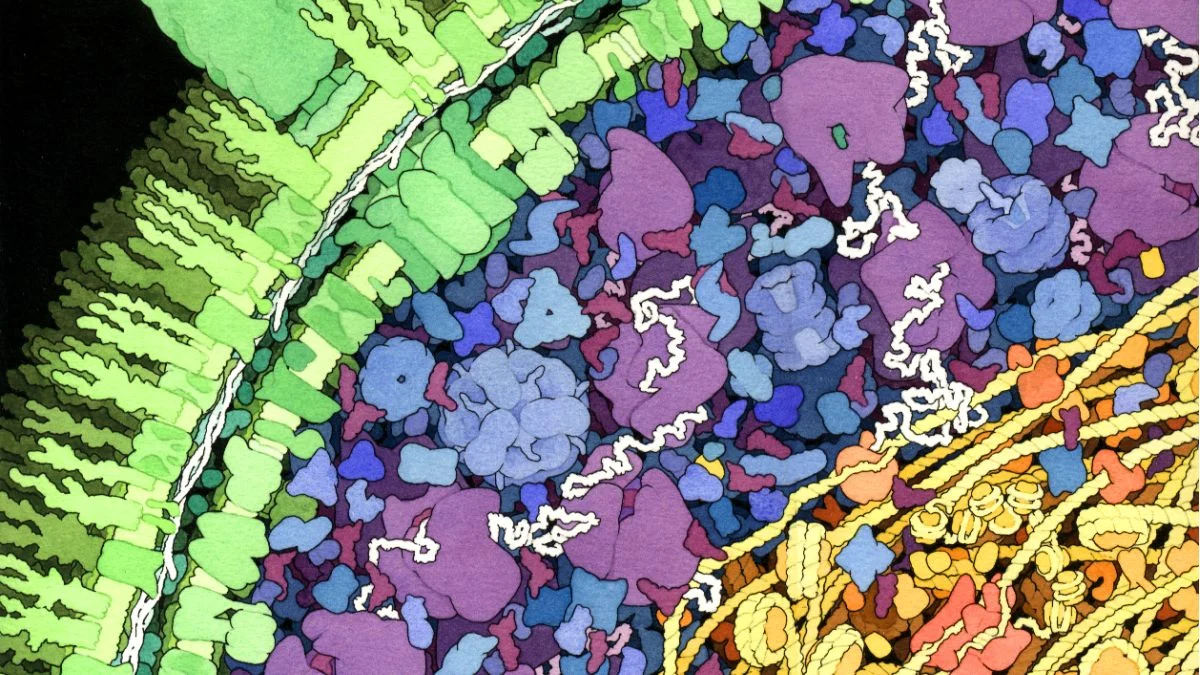
Every second, countless cells in the human body divide to create new cells. It is one of the most important processes in biology, and it depends on thousands of molecules working together with incredible precision. But sometimes the process breaks down in unexpected ways.
Before a cell can divide into two separate cells, it first has to copy all of its DNA so each new cell receives a full genetic blueprint. In some cases, the DNA is copied successfully, but the cell never fully splits. The result is a single cell containing twice the normal amount of DNA, a condition known as whole genome duplication (WGD).
A simple way to imagine this is like making two photocopies of a document but accidentally placing both copies into the same folder instead of separating them.
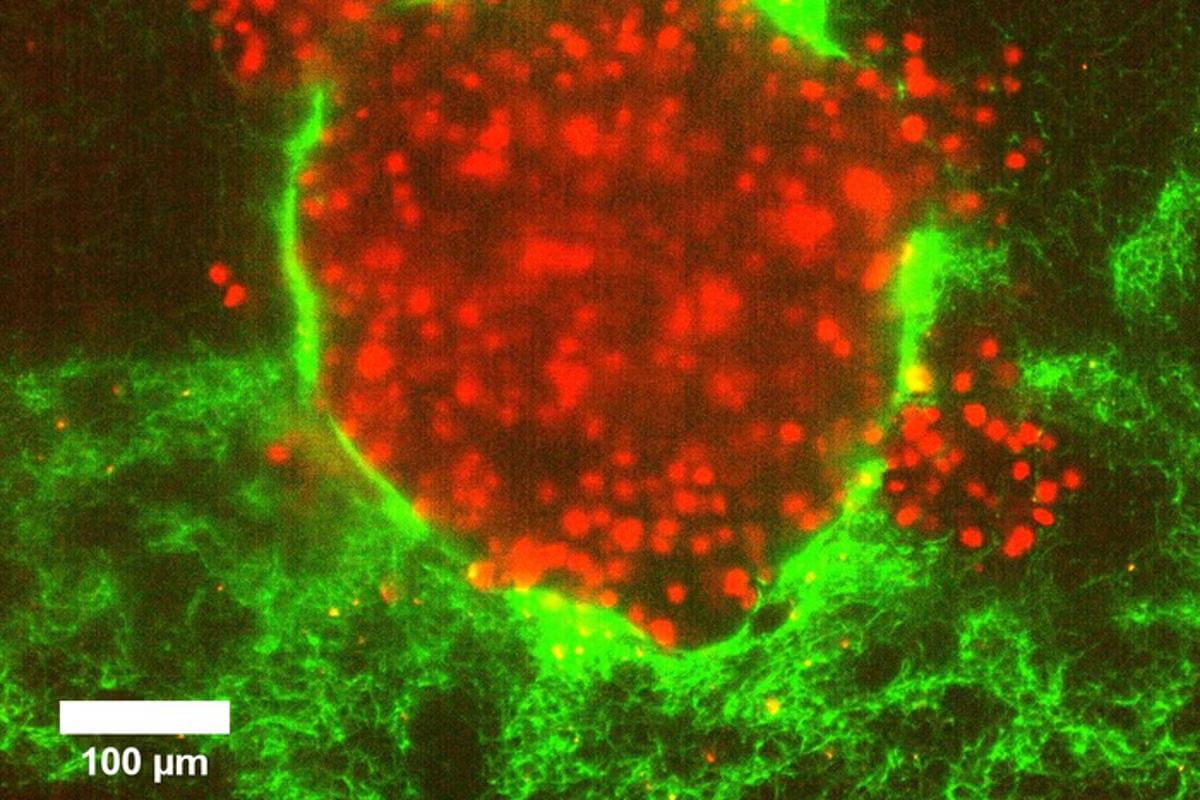
Scientists have long known that whole genome duplication can have major consequences. Cells with extra DNA may stop functioning normally, become inactive, die, change into other cell types, accumulate age related damage, or contribute to diseases including cancer.
Two Different Ways Cells Can Fail