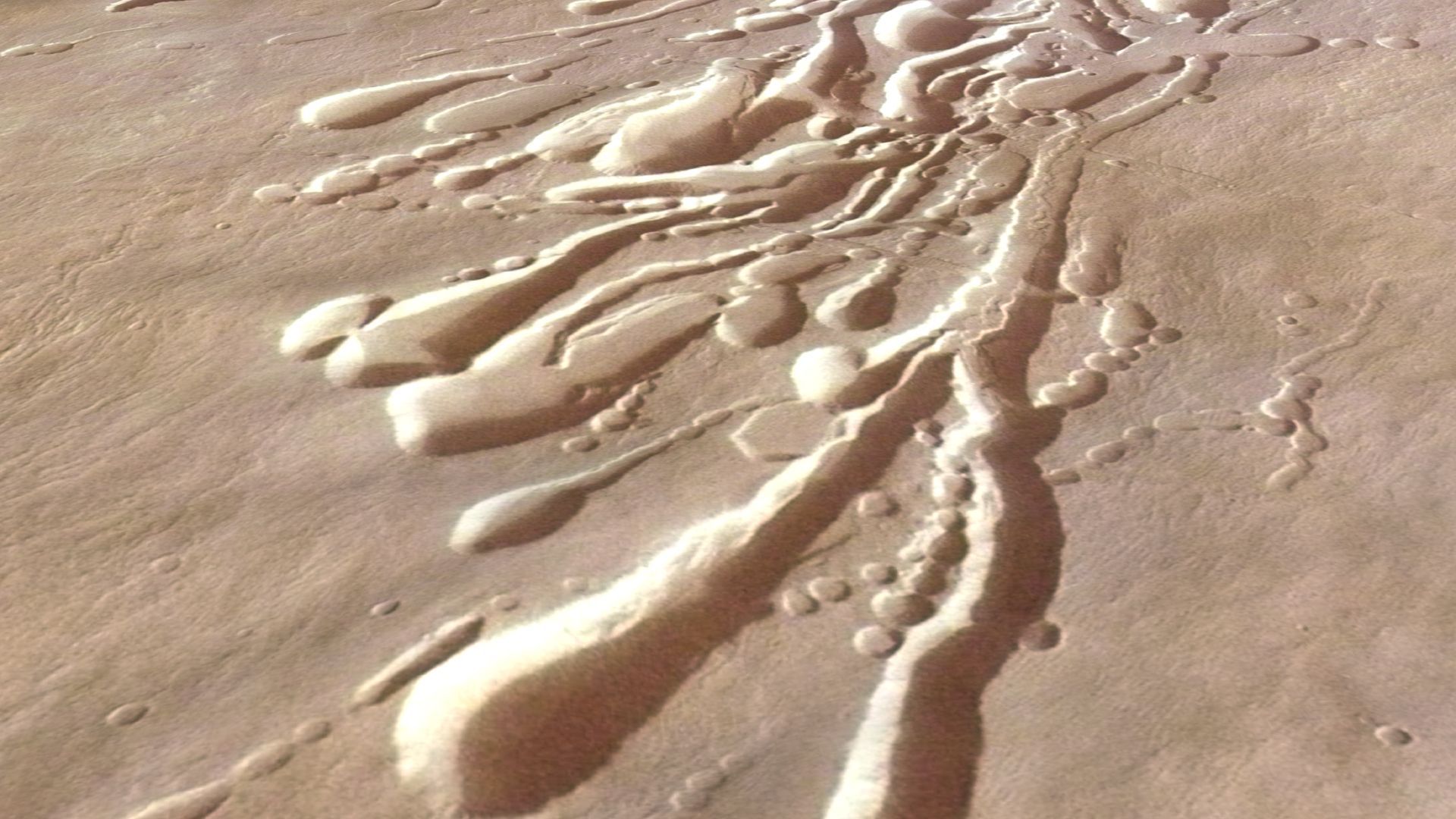
Lava tubes on Pavonis Mons, a Martian volcano.
(Image credit: ESA/DLR/FU Berlin (G. Neukum))
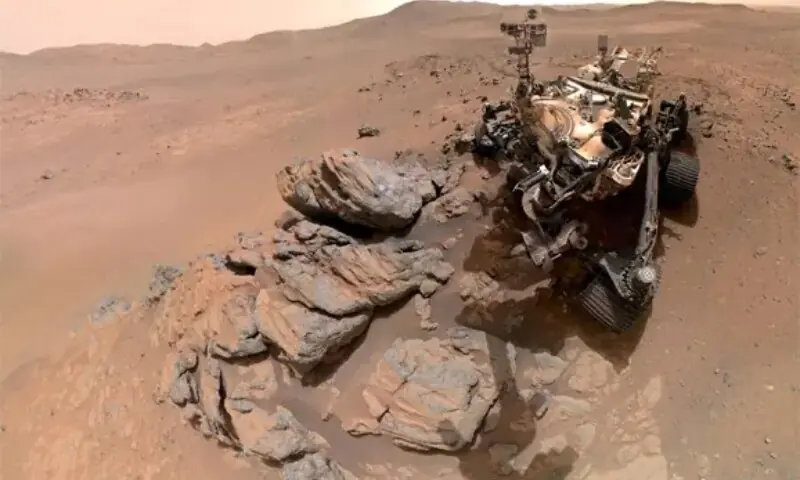
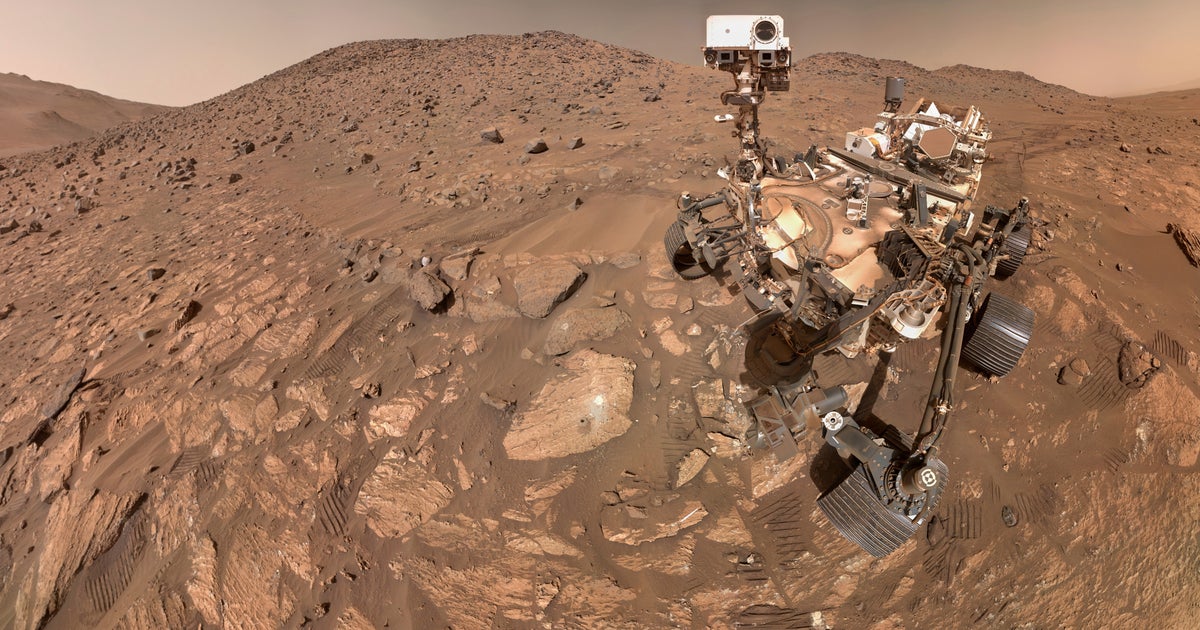
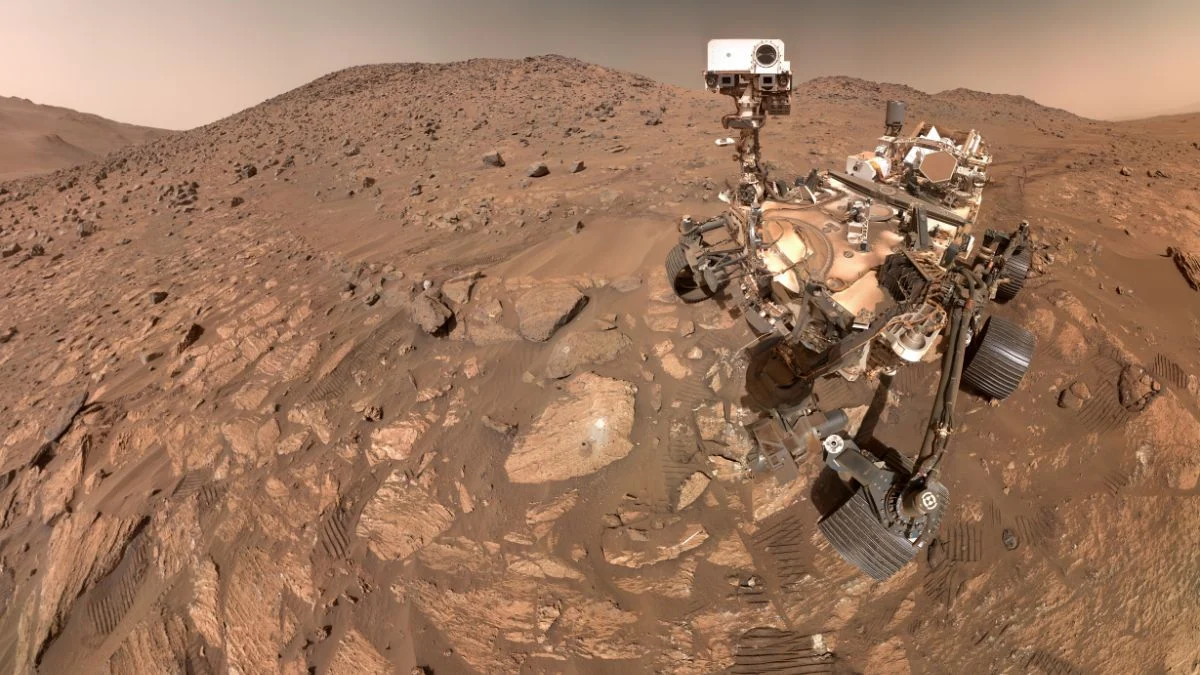
In northeastern California lies a series of caves that formed thousands of years ago when volcanoes erupted lava that later solidified, leaving behind tunnels wide enough for humans to walk through. But Earth isn't the only planet in our solar system with volcanoes — extraterrestrial caves formed all across the solar system.Take Mars, for instance. Millions of years before life on Earth came to be, volcanoes erupted on the Red Planet, too. Martian volcanoes appear to be dormant right now, but that former activity left behind the largest tunnel network in the solar system. The resulting lava tubes stretch over 820 feet (250 meters) across, more than eight times the width of California's tunnels. So far, researchers have found tube systems on Mars reaching over 746 miles (1,200 kilometers), enough to cover the continental United States three times over. Plus, scientists think more tunnels are yet to be discovered.But in order to understand how vast the network is, scientists are pushing at the limits of space exploration. One of these scientists suggests the idea of "dandelion drones."At present, our Mars exploration efforts have been pretty heavily based around rovers, like Curiosity and Perseverance. However, as pioneering as these robotic vehicles are, they're reaching their limitations when it comes to lava tubes."The rovers are the size of a school bus," Mostafa Hassanalian, associated professor at New Mexico Tech, told Space.com. "That's why they can’t get in."