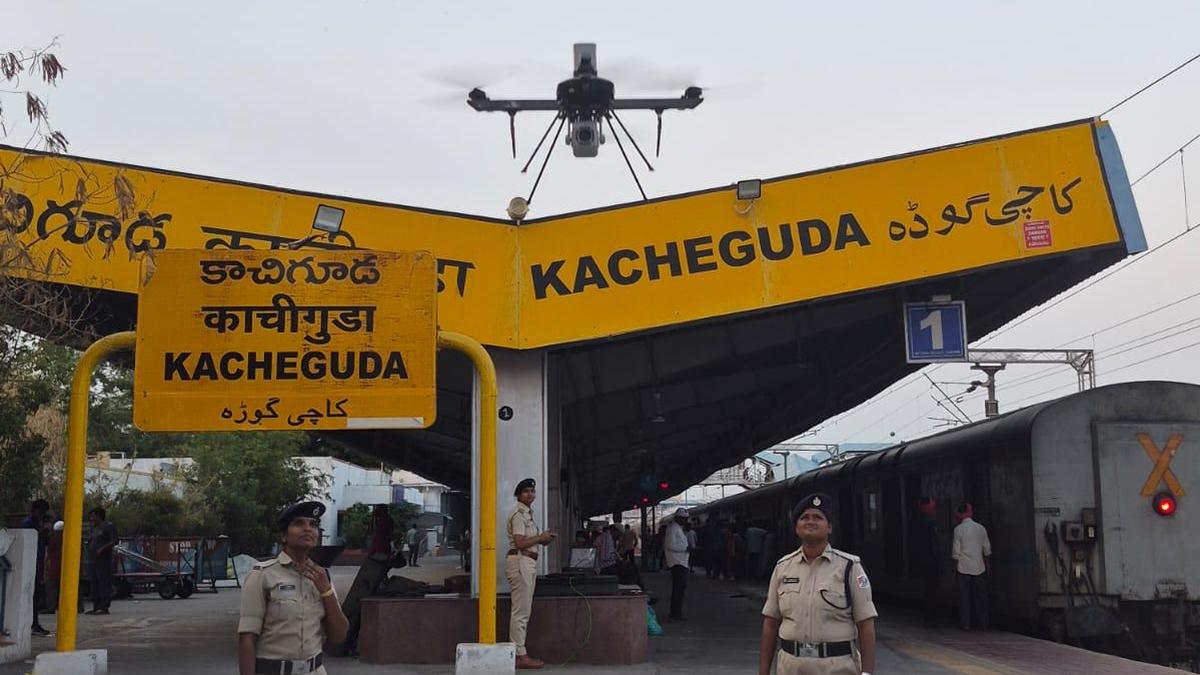
Malkajgiri police are increasingly relying on technology-driven investigations to solve complex crimes in shorter timeframes.
| Photo Credit: By Arrangement
From Subscriber Detail Records (SDR), digital payment trails to CCTV mapping and real-time interstate coordination, Hyderabad police are increasingly relying on technology-driven investigation methods to track suspects and solve crimes faster.The recent apprehension of the accused in the violent house dacoity in Malkajgiri within four days offered a glimpse into this evolving policing model, where investigators used “layered digital tracking” and complex data analysis to follow a gang from Nepal across multiple cities before intercepting the accused near Meerut.The case involved a Nepali domestic help who, along with associates, allegedly tied up and sedated an elderly couple at their residence in a gated community in Jawaharnagar before fleeing with gold, silver and cash.BreakthroughSources familiar with the investigation said the breakthrough came after investigators obtained SDR linked to one of the accused. The data revealed a network of workers from Nepal spread across Hyderabad, Bengaluru and Pune, helping police build the first clear picture of the gang’s possible escape route after the crime.It is learnt that the accused left the scene in hired taxis on the night of May 11 and headed towards Secunderabad Railway Station before splitting across multiple routes to avoid detection.Avoided direct communicationInvestigators then began combining technical evidence with field intelligence. SDR analysis helped identify a Bengaluru-based contact linked to the prime accused, prompting police teams to verify the lead on the ground. During the process, investigators found that the accused avoided direct communication and instead routed messages through family members and intermediaries.Sources said the investigation gained momentum after police traced a UPI transaction linked to the driver of a bus in which the accused traveled from Pune towards Ahmedabad. The payment trail helped narrow the gang’s northbound route.Movement monitoredPolice teams from Malkajgiri were dispatched to Delhi, Uttar Pradesh (UP) and transit points near the Nepal border, while parallel teams monitored movement across Pune and Bengaluru corridors. A shared real-time communication network was also created between deployed teams to continuously exchange location updates, travel patterns and surveillance inputs.The accused frequently changed vehicles and routes to avoid detection, avoiding direct rail and air travel. Meanwhile, investigators further used SDR-based contact tracing and digital payment analysis to anticipate the next transit point.The decisive lead emerged after movement analysis and local intelligence indicated that the accused were travelling from Delhi through UP in a private vehicle and heading towards the Nepal border.Caught just hours away from Nepal borderBased on these inputs, teams were strategically positioned at key highway points in western Uttar Pradesh in coordination with Meerut police. The suspects were eventually intercepted at a petrol pump near Meerut, just hours away from the Nepal border.The arrested accused have since been brought back to Hyderabad, and stolen gold ornaments, silver articles and cash have been recovered. Efforts are continuing to trace the remaining absconding accused and examine whether the network may be linked to similar offences in other parts of the country. Published - May 25, 2026 02:44 pm IST